


UK Analogue Revival: Consumers Swap Screens for Vinyl and Radio to Escape Digital Fatigue
British households are ditching screens for vinyl, cassettes, and CDs to reduce digital distractions, according to new electronics market reports.

POLICY WIRE — London, UK — Households across the United Kingdom are spearheading a resurgence in analog technology, with demand surging for radios, vinyl, cassettes, and CDs as people attempt to limit their time on screens.
A new analysis released by electronics manufacturers Pure and TEAC indicates that listeners are increasingly seeking ways to experience music without the interruption of constant smartphone notifications and endless social media scrolling.
The data reveals that 52% of Gen Z—defined as those aged 14 to 29—have established specific areas in their homes for listening. Furthermore, roughly 23% of this younger demographic intentionally place their phones out of reach while playing music.
The report highlights that many consumers are using ‘retro-inspired’ devices and physical media as a means of self-expression. Notably, 48% of Gen Z respondents expressed interest in purchasing a modern-day cassette player.
Older demographics are also showing interest, with 60% of individuals in their 60s and 70s reporting that radio provides companionship without the need for a visual screen.
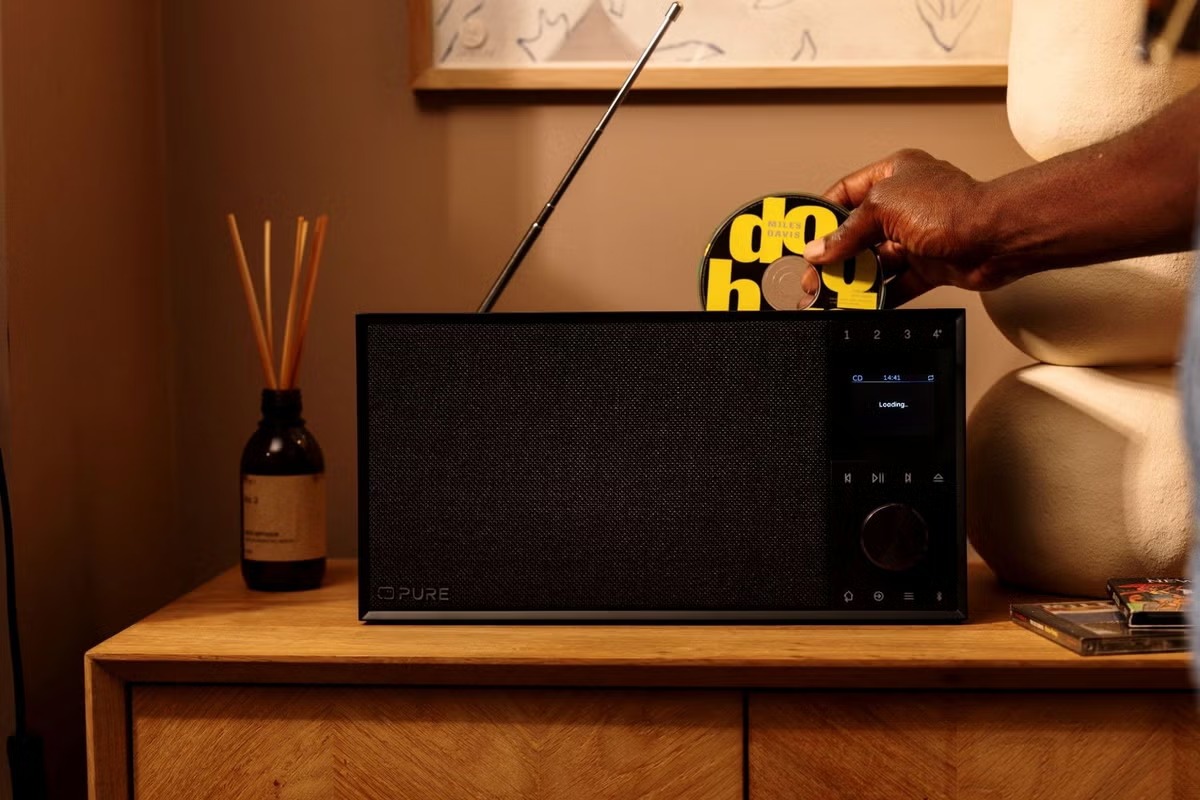
In response to these shifting preferences, Pure introduced the Classic Active, an integrated audio system designed to simplify the traditional hi-fi experience. The company also recently launched the Evoke Home II, a radio featuring a dedicated CD slot.
Hubert Eiter, Chief Marketing Officer at Pure, noted that while radio has never disappeared from the home, the motivations for its popularity are changing.
Eiter explained that for some the appeal lies in ease of use, design, or familiarity, but that the common thread is that the medium creates an atmosphere free from distraction.
Market data from GfK shows that the UK’s digital (DAB+) radio market expanded by 5.5% over the last year.
The UK remains the second-largest radio market in Europe, trailing Germany, a position bolstered by recent government advice for households to maintain battery or wind-up radios for emergencies.
Pure reported that sales of its Elan One—a radio operating on standard AA batteries—increased by 7,360% following the government preparedness announcement in late October.
Currently, nearly 75% of radio listening in the UK occurs via digital or online platforms rather than FM or AM frequencies. According to Joint Audience Research (JAR), 51.1 million adults, or 87% of the adult population, tuned into radio stations weekly during the second quarter of the year.
The average listener now spends 20.3 hours per week consuming live radio. There are currently over 180 DAB+ stations broadcasting in the UK, including 50 national programs, which are accessible to more than 90% of the population.
Reporting by Policy-Wire (PW)