

Trump Leverages French Civil Unrest to Bolster Midterm Campaign Strategy
President Trump cites French riots to push anti-immigration rhetoric ahead of the November 3 midterms, despite polls showing voters prioritize the economy.

POLICY WIRE — Washington, USA — U.S. President Donald Trump utilized the ongoing civil unrest in France on Monday, October 19, 2026, to sharpen his political messaging as his Republican party faces significant challenges ahead of the November 3 midterm elections.
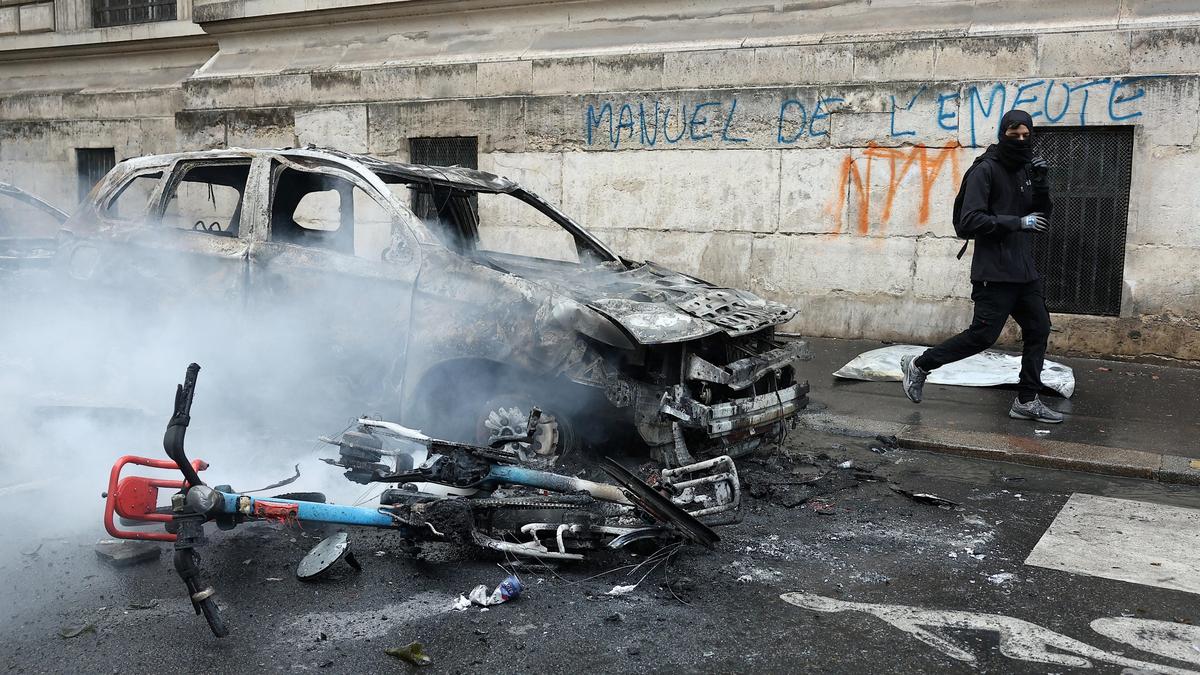
During a rally in Kansas, the 80-year-old President characterized the situation in France as being conquered, looted, and burned to the ground by migrants, jihadists, and communists. He vowed that such a scenario would not be permitted to occur within the United States.
Earlier that day, Mr. Trump posted on his Truth Social platform, asserting that migrants have taken over France and demanding that the nation close its borders immediately. He also recounted a past conversation with French President Emmanuel Macron, claiming he had warned his counterpart that France was making a mistake by allowing global migration and that Paris would soon become a Muslim city.
The recent demonstrations in France, which began over the weekend, were sparked by rising fuel prices and the cost of living. These protests frequently escalated into looting and violence, leading French authorities to implement partial curfews on October 19.
Political analysts suggest the administration is attempting to frame the French crisis as a validation of the anti-immigration platform that defined Mr. Trump’s 2024 reelection campaign. J.C. Lintzenich, a senior fellow at the German Marshall Fund, noted that the campaign is actively turning the French instability into a political argument.
Vice President J.D. Vance echoed these sentiments on X on October 17, 2026, stating that Western liberals had imported the third world into France while ignoring issues of assimilation. Similar rhetoric was shared by media figures including Glenn Beck, Benny Johnson, Nick Sortor, and Jack Posobiec.
Celia Belin of the European Council on Foreign Relations described this commentary as an export of domestic policies intended to fan the flames of culture wars. However, experts like Justin Vaisse of Johns Hopkins University suggest that while this strategy may mobilize the Republican base, it is unlikely to sway undecided voters.
Recent polling from Pew Research indicates that 82% of U.S. voters prioritize the economy, significantly outweighing concerns over immigration at 59% or race-related issues at 36%. Despite his focus on border security, Mr. Trump continues to face record-low approval ratings linked to inflation, tariff policies, and the ongoing conflict with Iran.
Reporting by Policy-Wire (PW)