

The Winding Wire: India’s Green Dream Snags on Bureaucracy
POLICY WIRE — New Delhi, India — India’s pursuit of a renewable energy revolution has long been painted in broad, audacious strokes: a half-terawatt of green power by the decade’s end,...

POLICY WIRE — New Delhi, India — India’s pursuit of a renewable energy revolution has long been painted in broad, audacious strokes: a half-terawatt of green power by the decade’s end, powering an economy of billions. It’s an almost cinematic vision, isn’t it? But scratch beneath that glossy veneer of ambition, and you’ll find the grit and grime of bureaucratic reality—a maze of regulations where good intentions can go to die a slow, administrative death.
The latest plot twist arrives courtesy of the country’s revised grid access rules. Meant to streamline a chaotic system, these new General Network Access (GNA) provisions for inter-state transmission lines are instead throwing a hefty spanner into the works, sending shivers down the spines of the very investors India desperately needs to make its green dreams happen. It’s a classic case of aiming for efficiency but landing squarely on complexity.
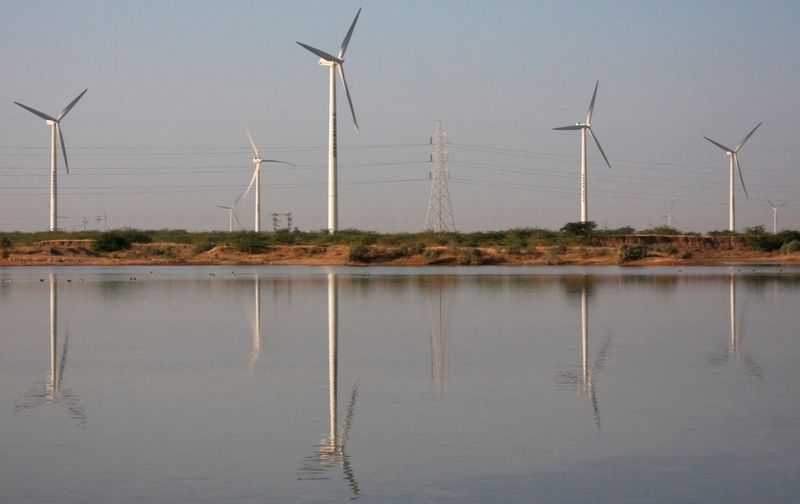
Previously, a renewable project—a sprawling solar farm in Rajasthan, say, or a wind turbine array off Gujarat’s coast—could secure dedicated transmission lines, often tied to a specific buyer. Straightforward enough. Now, under the new GNA regime, developers must purchase transmission capacity upfront, whether they use it or not, then try to offload their fluctuating power into the national grid. Because, let’s face it, the sun doesn’t always shine, — and the wind doesn’t always blow. That means paying for ghost capacity, a financial headache no developer asked for.
“It’s a colossal leap of faith developers aren’t prepared to make without clearer assurances,” grumbled a frustrated Mr. Vijay Singh, CEO of a prominent Bengaluru-based solar energy firm, whose comments echo sentiment from industry consultations we’ve seen. “You’re basically asking us to pre-pay for a highway lane that might only see traffic two-thirds of the time. Who does that in business?” He’s got a point. That kind of uncertainty? It scares capital away.
But the government, to its credit—or perhaps, its stubbornness—insists it’s all for the greater good. Mr. Anil Sharma, a senior official within the Union Power Ministry, framed it as a necessary step for grid stability. “We aren’t just building capacity; we’re building a smarter, more resilient grid capable of handling diverse energy flows,” Sharma stated in a private briefing earlier this month. “These measures prevent speculative booking of vital transmission infrastructure, ensuring genuine projects get what they need.” And, naturally, that makes some sense on paper, but it’s an uncomfortable tightrope walk when you’re relying on private billions.
📄 POLICY WIRE WHITEPAPER PUBLISHED: PAKISTAN'S NATIONAL SECURITY POLICY PRIORITIES
👉 READ BY CLICKING HEREThe numbers speak volumes, too. Experts project that these new rules could hike the tariff of renewable power by as much as 20-30 paisa per unit. That might not sound like much, but it’s enough to erode the competitive edge green energy needs against its fossil-fueled counterparts, not least coal. Just this year, the Economic Survey of India indicated that the country’s grid infrastructure needs investments exceeding $250 billion by 2030 to meet projected demand and integrate renewables—a figure that looks a lot more daunting with investor hesitation.
It’s not just about India’s domestic energy mix either; this plays out on a broader South Asian stage. India’s energy ambitions have long had regional implications, from potential energy trading with Bangladesh and Nepal to the environmental footprint of its continued reliance on coal—an issue that knows no borders, drifting over even into Pakistan. A slowdown here ripples outwards, affecting the entire sub-continent’s energy dialogue — and climate goals. Because climate chaos, as we’ve seen globally with escalating weather patterns, isn’t particularly particular about whose borders it crosses.
What This Means
This isn’t merely a squabble over transmission fees; it’s a direct challenge to India’s stated intent to be a global climate leader. Politically, it complicates Prime Minister Modi’s grand narrative of a rapidly modernizing, eco-conscious India, potentially eroding international confidence in the country’s ability to deliver on its pledges. Economically, expect capital costs for green energy projects to climb, making them less attractive against traditional, carbon-intensive alternatives. We’re likely to see a greater push for hybrid projects (solar, wind, and storage co-located) or even smaller, localized grids designed to circumvent these inter-state complexities. It’s also an unspoken acknowledgment that the sheer scale of India’s grid upgrade—a truly gargantuan undertaking—is becoming its own stumbling block. And let’s not forget the risk of ‘stranded assets’ where investors have committed funds based on older, simpler regulatory environments. The fallout won’t be confined to spreadsheet entries; it’ll manifest in stalled projects, missed targets, and perhaps, a recalibration of how aggressively India can pursue its green aspirations. The bureaucratic hurdles are becoming higher than the renewable energy towers themselves. This isn’t just about kilowatts; it’s about confidence, commitment, — and credibility, both at home and abroad.