

The Price of Control: India’s Democracy Under Strain
In recent years, questions about civil liberties and the rule of law in India have increasingly entered international discussion. Civil society groups, human rights organizations, and some foreign...

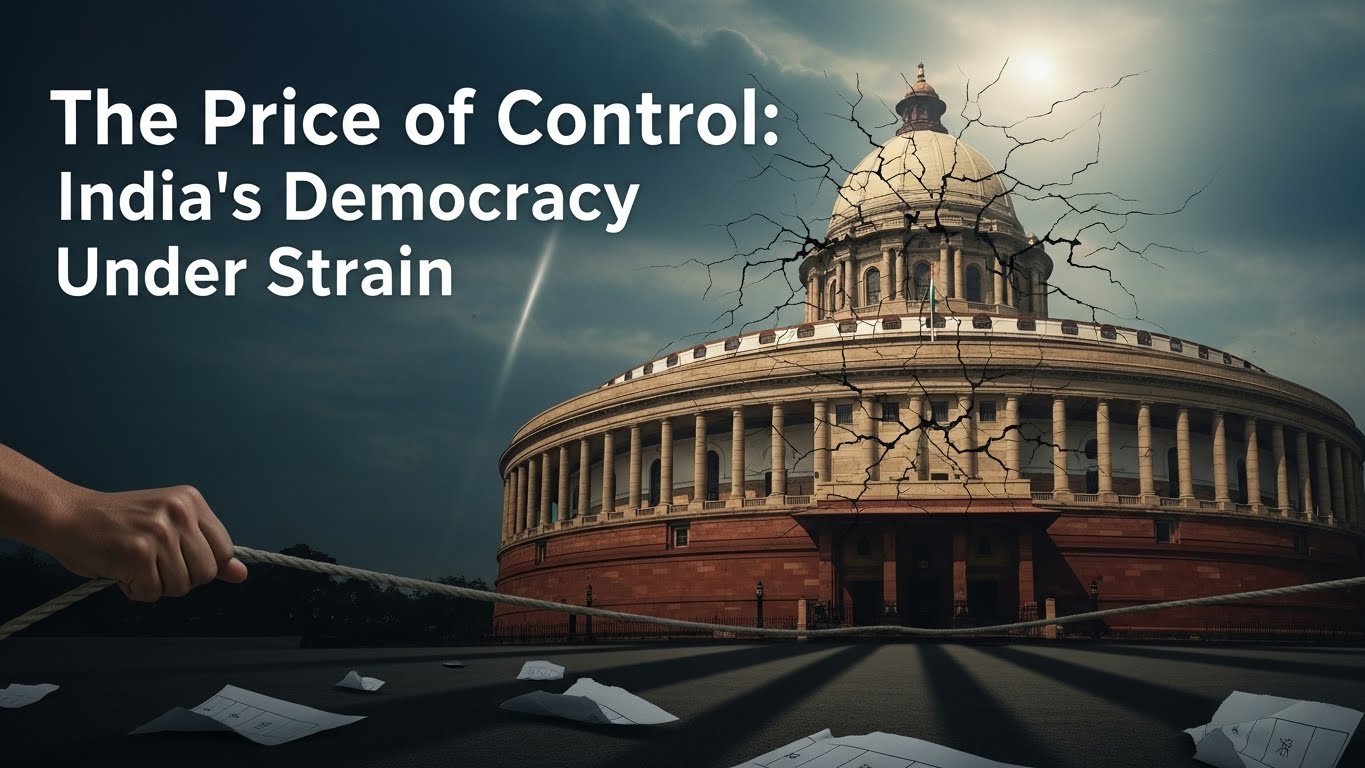
In recent years, questions about civil liberties and the rule of law in India have increasingly entered international discussion. Civil society groups, human rights organizations, and some foreign governments have raised concerns about the behavior of Indian security forces, conditions of detention, and the treatment of political dissent. These issues reveal deeper tensions within India’s democracy, tensions that critics say are rooted in an expanding security state and political centralization.
One widely cited indicator is the high number of custodial deaths and allegations of police abuse. According to human rights monitoring organizations, India’s National Human Rights Commission (NHRC) recorded approximately 2,739 deaths in custody in 2024, including 155 deaths attributed directly to police custody. These figures do not include many deaths that advocacy groups argue go unreported or misclassified as suicides or accidents. Independent reports suggest that only about 4 % of custodial death cases lead to convictions, illustrating the deep challenges of accountability.
In addition to custodial deaths, the Global Torture Index 2025 identified India as a “high risk” country for torture and police brutality, with systemic issues in the prevention of abuse and protection of detainee rights. Marginalized communities, including Dalits, tribal groups, Muslims, and other minorities, are consistently highlighted as disproportionately affected by aggressive policing practices.
These systemic problems are not confined to official detention. Allegations of “encounter killings”, which human rights groups describe as extrajudicial executions masked as legitimate police action have been documented in several states. Between 2020 and 2022, independent trackers reported thousands of such deaths, with Uttar Pradesh, Maharashtra, and West Bengal among the highest in numbers. Critics argue these operations frequently bypass due process and undermine public trust in legal institutions.
The consequences of state actions stretch beyond domestic borders. Diplomatic tensions flared sharply in the aftermath of the 2023 killing of Canadian citizen and Sikh activist Hardeep Singh Nijjar, shot dead near a gurdwara in Surrey, British Columbia. The incident triggered a serious diplomatic dispute between India and Canada after Canadian Prime Minister Justin Trudeau announced that his government had “credible allegations” of involvement by Indian agents in the killing. New Delhi vehemently denied these accusations, calling them “absurd” and politically motivated.
A Canadian public inquiry later addressed foreign interference in electoral processes, noting the broader context of diplomatic mistrust and disinformation campaigns, but concluded that no definitive link to a foreign state in the Nijjar killing itself could be proven within that specific investigation. Still, the episode drew sustained international attention and highlighted concerns about transnational repression, the practice of targeting dissidents abroad, a subject of debate in several Western capitals.
While India’s government insists that it upholds democratic norms and the rule of law, critics argue that the politicization of security forces and the expansion of executive power without adequate checks have contributed to a climate in which civil liberties can be compromised. Opposition leaders, activists, and journalists have also faced legal pressure under broad charges such as “sedition” or “anti-national activity,” raising alarms among free speech advocates. These laws are seen by some observers as overly broad tools for suppressing dissent rather than genuinely protecting public order.
Another area of concern is India’s approach to protest and political mobilization. Large-scale demonstrations whether over land rights, labour laws, or minority protections, have sometimes been met with force. Although peaceful protest is a constitutional right, authorities have occasionally resorted to mass detentions, curfews, and internet shutdowns to control movements, especially in sensitive regions. Critics argue that such responses reflect a preference for order over justice and rights-based engagement.
International human rights watchdogs, including Human Rights Watch and Amnesty International, continue to document cases of torture, unlawful detention, and excessive use of force, calling for structural reforms. These organizations emphasize that beyond individual incidents, the culture of impunity, where security forces act with little fear of legal consequence, remains a core challenge. To restore confidence in justice institutions, they urge transparent investigations, independent oversight, and legal safeguards that protect both citizens and law enforcement personnel.
Despite these criticisms, supporters of the Indian government argue that strong security measures are necessary to counter terrorism, separatism, and violent crime. India faces real threats from insurgent groups in its northeast, militancy in Kashmir, and organized criminal networks. Balancing security priorities with civil liberties is inherently complex, and governments around the world wrestle with these dilemmas.
However, critics insist that true security cannot be achieved at the expense of constitutional rights. They contend that every democracy must be judged not only by its capacity to maintain order, but by its commitment to uphold justice, protect minorities, and ensure that the rule of law applies equally to all citizens.
As India continues to assert itself on the global stage, economically, diplomatically, and militarily, these human rights debates will likely grow louder. International partners and watchdogs will continue to scrutinize how the world’s largest democracy reconciles its security policies with the democratic freedoms it claims to champion. The direction and outcomes of these debates will have lasting implications not only for Indians at home, but for the country’s global reputation and influence.
Author