

In the aftermath of the so-called “Pahalgam attack”, where Indian media has claimed 27 fatalities in what it describes as a major terrorist strike, a barrage of questions arises not just from skeptics within India, but from independent observers across the world. Far from being a straightforward security incident, this event appears to follow a disturbingly familiar pattern: a high-profile tragedy, breathless nationalist media coverage, knee-jerk blame on Pakistan, and an eerie lack of forensic or empirical evidence. This time, however, the façade is cracking faster than before.
The Indian state’s narrative hinges entirely on its monopoly over information. Yet, even the most basic visual proof, images of the dead bodies of either the so-called victims or the alleged attackers, is conspicuously missing. A single image has emerged, showing a woman sitting beside a motionless man, both apparently untouched by violence. There is no blood, no wounds, no distress. Instead of clarity, this staged scene raises suspicion. If 27 people died, where are the corpses? Where are the medics, the bystanders, or the rescue operations? In an age of ubiquitous smartphones and social media livestreams, the absence of raw, citizen-captured footage from such a “major” incident is itself alarming.
More damning is the digital footprint. Within minutes of the incident being “reported,” Indian accounts closely tied to the ruling BJP’s IT cell and suspected RAW affiliates began calling for retaliation against Pakistan. These were not measured responses but pre-scripted hashtags, as if waiting in queue. The timing alone, tweets calling for “punishment” against Islamabad being posted while the supposed attack was still underway, suggests either uncanny clairvoyance or coordinated information warfare.
Historically, India has weaponized such incidents to serve internal and international agendas. Consider the Samjhauta Express bombing of 2007. Initially blamed on Pakistani actors, it was later revealed that Hindu extremist groups, with ties to military officers like Lt. Col. Shrikant Purohit, orchestrated the carnage. Yet years passed before any correction filtered through the propaganda haze. The current Pahalgam incident, in terms of lack of evidence and suspicious timing, is cut from the same cloth.
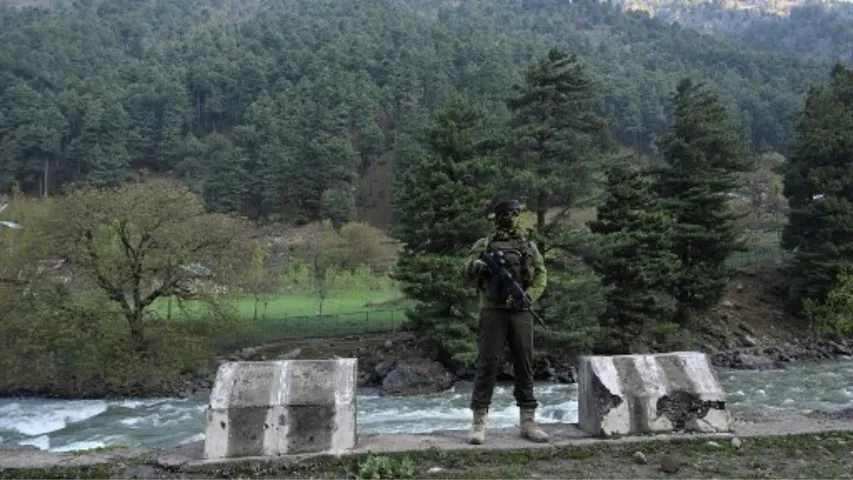
The geographic details alone expose the farcical nature of the claim. Pahalgam is roughly 400 kilometers from the Line of Control, not a contested village near the border, but a scenic, highly fortified tourist hub patrolled by layers of Indian security apparatus: CRPF, BSF, and army units. With over 800,000 personnel deployed in Kashmir, including an “impregnable” anti-infiltration grid, one must ask: How could such an attack even happen in broad daylight, and that too during peak tourism season? Was this a lapse or a deliberate fabrication?
Then there’s the troubling pattern. Such “attacks” tend to occur with suspicious regularity whenever Western delegations are due in India, or when the Modi regime faces international criticism, be it over minority rights, transnational repression, or electoral violations. The motive becomes clearer: create a spectacle, trigger nationalist fervor, distract domestic audiences, and tilt diplomatic discussions in India’s favor. In this light, Pahalgam seems less like a security failure and more like a political theater, an engineered false flag to regain control of the narrative.
False flag operations are not new in the Indian playbook. The Pulwama attack in 2019 was immediately blamed on Pakistan, and media hysteria reached such a pitch that India launched air strikes on Balakot, only for the international community to later note the absence of verified targets hit. Similarly, the 2001 Indian Parliament attack was used to tighten anti-terror laws domestically and corner political rivals. The pattern is too rehearsed to be dismissed as coincidence.
Beyond the Kashmir-centric propaganda, India now faces growing scrutiny over its transnational activities, particularly the extrajudicial killings of Sikh activists abroad. From Canada to the UK and even the U.S., investigations have linked Indian agents to assassinations and surveillance of Sikh leaders. The killing of Hardeep Singh Nijjar in British Columbia, and the subsequent diplomatic fallout, laid bare India’s deep state operations and global overreach. The Pahalgam incident, therefore, must also be viewed through this lens, as a deflection tactic to reclaim moral high ground while global media digs deeper into Delhi’s role in transnational terrorism.
📄 POLICY WIRE WHITEPAPER PUBLISHED: PAKISTAN'S NATIONAL SECURITY POLICY PRIORITIES
👉 READ BY CLICKING HEREThis strategy of aggressive misinformation and blame-shifting has a shelf life. With each fabricated drama, India’s global credibility erodes further. The West may offer polite silence in public for the sake of strategic interests, but behind closed doors, even Washington and Brussels are now demanding explanations for India’s clandestine activities abroad. India’s image as a “rising democracy” is giving way to that of a paranoid security state steeped in disinformation and repression.
To believe the official version of Pahalgam is to suspend logic and history. The questions posed by critics are not inflammatory they are rational, empirical, and necessary. Where is the evidence? Who were the victims? How did the attackers breach one of the most militarized zones on Earth? Why now?
Until India offers coherent answers grounded in facts rather than jingoism, the Pahalgam incident will remain what it appears to be: a poorly executed drama, a smokescreen for diplomatic rot, and another chapter in the long saga of manufactured threats used to silence dissent and vilify neighbors.
The world may have once been fooled, but the questions now are louder than the propaganda.
Author