


The Fickle Hand of Fate: Dodgers’ Bulletproof Bullpen Cracks Under Rocky Ascent
POLICY WIRE — Los Angeles, United States — Perfection, it seems, always has an expiry date. The myth of an unbreakable line, a seemingly impenetrable barrier, often gives way not with a whimper, but...

POLICY WIRE — Los Angeles, United States — Perfection, it seems, always has an expiry date. The myth of an unbreakable line, a seemingly impenetrable barrier, often gives way not with a whimper, but a violent, 431-foot thud. Such was the fate of the Los Angeles Dodgers’ relief corps, whose almost absurd 38-inning scoreless streak — a formidable fortress against opposition offense—came crumbling down not on a walk-off, but on a well-struck baseball, proving once again that in competitive arenas, nothing is truly unassailable.
It was a stretch of pitching wizardry, certainly. The kind that makes fans lean forward, holding their breath through each fastball and curveball, praying for another zero. They’d matched history, having strung together the longest streak since Cleveland in 2017 with 38.2 innings. They weren’t far off the all-time record set by the Detroit Tigers way back in 1962, missing it by a mere 7.2 frames. You don’t often see such sustained brilliance, particularly in the modern, power-driven game. Per the Elias Sports Bureau, no Dodgers bullpen had maintained a longer streak since the pitcher’s mound moved to its current distance in 1893. That’s a long darn time in any context, an eon in baseball years.
And then came Monday’s seventh inning. A singular, defining moment of breakage. Reliever Kyle Hurt, who’d been on a remarkable run of his own, saw his nearly unstoppable form challenged by Rockies shortstop Ezequiel Tovar. Bang. A bomb, off his second pitch of the evening. Before that, Hurt had let only a single runner score all season. He hadn’t given up a run in his last 14 appearances. But the game, like geopolitical landscapes, respects no prior accomplishments indefinitely. Its cold, hard realities invariably reset the playing field. Just as fortunes flicker in the IPL Playoffs, so too do they on a Los Angeles mound.
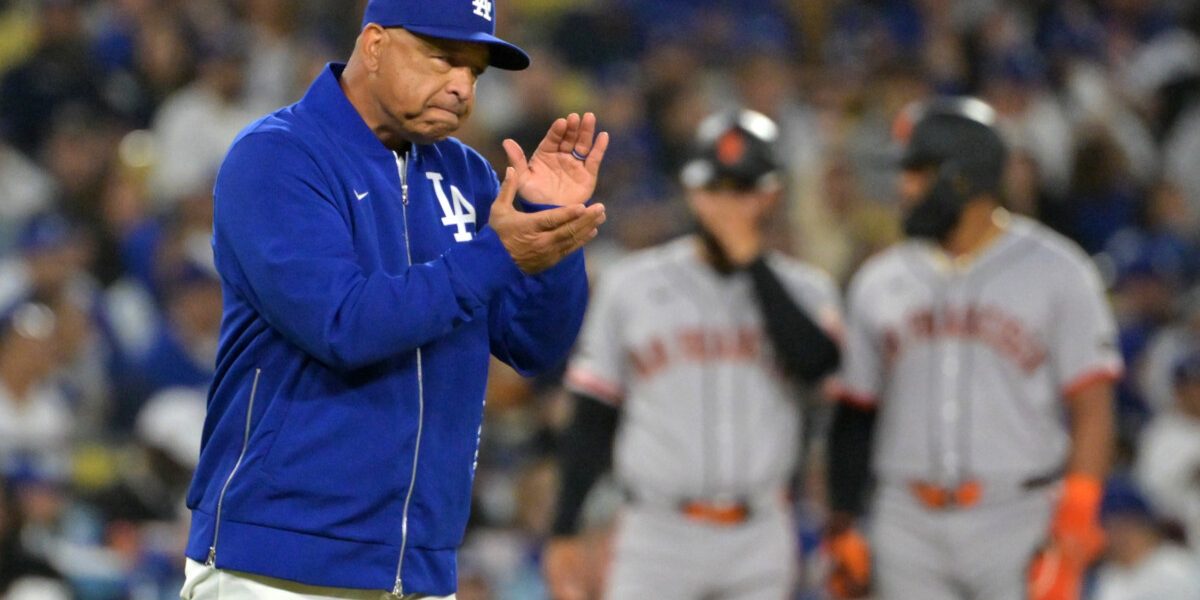
Dodgers manager Dave Roberts, ever the stoic pragmatist, offered what almost sounded like a philosophical resignation, a tacit acknowledgement of the universe’s inescapable order: “All good things are meant to come to an end,” he noted, not a hint of panic in his voice. “And we’ll start another one.” It’s that unyielding resolve, the immediate focus on the next challenge rather than dwelling on the past, which often differentiates transient success from sustained dominance. It’s a mentality not alien to negotiators on the world stage—an unexpected setback isn’t a defeat, but merely a pivot point for the next gambit.
Indeed, even in the immediate aftermath of Tovar’s heroics, the remaining relief arms largely righted the ship. “(The bullpen) got another two (scoreless) innings under our belt after that homer,” Roberts was quick to point out. It’s that bounce-back capability, the short memory coupled with unwavering belief in the squad, that allows organizations to navigate the relentless grind of a long season. He continued, offering a defense of his shaken pitcher: “But yeah, Kyle’s been great for us. Tovar hit a changeup. It was good to see Kyle come back and get that next hitter.” It speaks volumes about the collective psychology of an elite unit. You get knocked down. You get up. You deliver the next pitch.
The numbers speak to a broader, undeniable truth about this bullpen’s efficacy. Despite the recent dent, they currently boast the best bullpen ERA in all of baseball. Think about that for a second. They’re the only team whose relievers collectively maintain an earned run average south of 3.00. That’s not merely good; it’s an institutional achievement. Their 2.8 fWAR, an advanced metric for measuring player value, positions them second only to the San Diego Padres, largely powered by their high-fWAR reliever Mason Miller. Since this vaunted streak began on May 13, the Dodgers have tasted defeat in only two contests, while logging ten victories. This isn’t coincidence; it’s a direct correlation between bullpen performance — and winning outcomes. For a region like South Asia, where the national team’s performance can spark fervent public celebration or national despair, the economic implications of a winning sporting franchise—from ticket sales to merchandising to broadcast rights—can’t be understated. Even if cricket rules the subcontinental psyche, the universal appeal of excellence is deeply understood.
What This Means
This bullpen’s minor stumble—and make no mistake, it was minor in the grand scheme—isn’t an omen of collapse, but a reset. It’s a psychological adjustment for the unit. The pressure of maintaining an unbroken streak can be its own form of invisible hand, creating a burden that, once lifted, might actually free pitchers to perform with a renewed sense of liberty. Think of a nation burdened by unrealistic growth projections or diplomatic expectations; sometimes a temporary retreat allows for a more sustainable, long-term strategy. The Dodgers’ management understands this, and Roberts’ casual, yet firm, dismissal of the streak’s end signals that the focus remains on the ultimate prize: championships, not statistical curiosities.
Economically, a team maintaining such high performance in key statistical areas—like bullpen ERA—can draw greater fan engagement and drive revenue. This extends beyond simple gate receipts; it can enhance regional pride, create spillover economic effects for local businesses, and potentially attract a broader global audience. While Los Angeles isn’t Rawalpindi, the principles of collective success translating into tangible economic benefit are universal. Because at the end of the day, winning sells. And the Dodgers are still doing a whole lot of it.
For a country like Pakistan, perpetually navigating complex international relations and domestic economic challenges, the ability of an organization to absorb a setback and project confidence—as Roberts has done—is a pertinent, albeit abstract, lesson. Leadership isn’t just about celebrating the peaks; it’s about steadfastness in the valleys. And that’s what we’re seeing here—a well-managed outfit already eyeing the next opportunity to stamp their authority, starting Tuesday against the Rockies.