



The Curious Case of Redundant Tech: Do You Really Need Another App?
POLICY WIRE — Albuquerque, N.M. — The digital graveyard of our smartphones isn’t just full of abandoned dating apps and forgotten games. It’s also home to a more insidious breed of software:...

POLICY WIRE — Albuquerque, N.M. — The digital graveyard of our smartphones isn’t just full of abandoned dating apps and forgotten games. It’s also home to a more insidious breed of software: the perfectly functional application rendered moot by something you already own, something built right into the very hardware you clutch. It’s a recurring economic parable, a minor but telling symptom of an attention economy perpetually seeking a new revenue stream, even if it’s for something indistinguishable from vaporware.
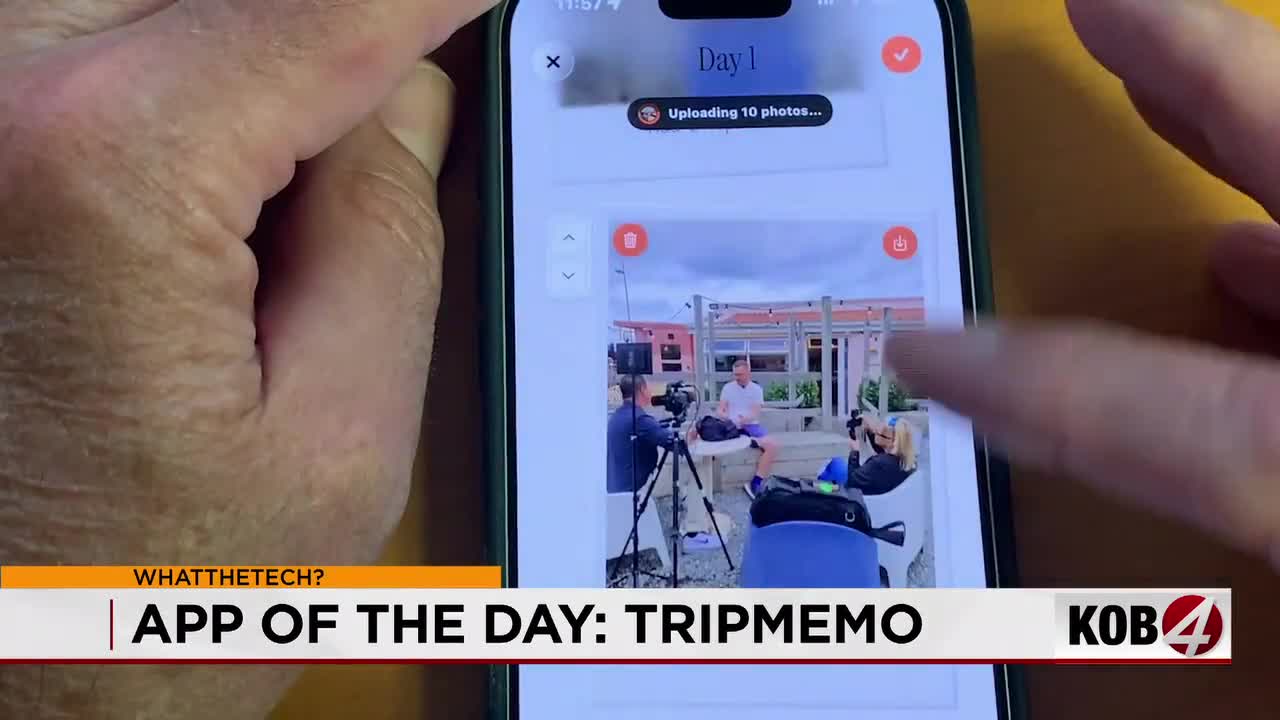
Indeed, consider the latest entry in this curiously redundant sweepstakes, an application branded TripMemo. Marketed with the digital-age promise of turning chaotic camera rolls into neatly curated travel narratives, it purports to solve a problem most of us probably don’t realize has already been quietly—and competently—addressed. The marketing pitch is familiar enough: [QUOTE_PLACEHOLDER] Fair enough, a sentiment few would contest.
But here’s the rub, isn’t it? The solution, we’re told, lies in yet another download, yet another digital subscription model to manage. [QUOTE_PLACEHOLDER] It’s not quite selling ice to Eskimos, perhaps, but it’s certainly selling ice to someone standing next to a perfectly good freezer.
The mechanics sound alluring on paper, a well-trodden path in app development. You’re meant to [QUOTE_PLACEHOLDER] Then, with what’s described as quick efficiency, [QUOTE_PLACEHOLDER] It then provides the functionality for users to [QUOTE_PLACEHOLDER] All quite neat. Quite tidy. The kind of feature set that, say, a multinational tech behemoth with billions in R&D might, hypothetically speaking, already have deployed across its ubiquitous mobile ecosystem years ago.
And that, exactly, is where the story pivots from curious to almost comically stark. A reporter, in a moment of empirical discovery that borders on the profound, observed a crucial detail: [QUOTE_PLACEHOLDER] This isn’t just an incidental detail; it’s the entire plot twist. It’s the reveal that the Emperor’s new clothes were, in fact, the same threads he’d worn yesterday.
[QUOTE_PLACEHOLDER] the observation continued, hitting the nail squarely on the head. Because they do. Consider the scenario presented: a user “After creating a journal of my trip last year to Ireland in TripMemo, I tried the same thing in the Apple Photos app.” The results, one might generously observe, were startling in their predictability. “Simply searching for ‘Ireland’, the app loaded every photo and video I took.” Not only that, [QUOTE_PLACEHOLDER] And because good ideas often exist in parallel, [QUOTE_PLACEHOLDER] offering similar capabilities like turning them into slideshows and adding music. But wait, there’s more. These native platforms allow users to [QUOTE_PLACEHOLDER] Suddenly, the dedicated new app feels a touch redundant, doesn’t it?
Indeed, a casual assessment leads to the inevitable conclusion: [QUOTE_PLACEHOLDER] And perhaps this niche distinction is its sole justification for existence—the highly specific user seeking an almost archival level of annotation. But [QUOTE_PLACEHOLDER] It’s a truth so self-evident it almost pains one to type it.
The average smartphone user, according to App Annie’s 2021 State of Mobile report, spends over 4 hours a day on their device, interacting with dozens of applications. This constant quest for digital supremacy creates a market rife with overlap and, frequently, outright imitation. You don’t need a fresh coat of paint on a perfectly good wall when the issue was never the color. It was the sales pitch. It’s often the same dynamic you find with other common digital complaints, like distinguishing stress from actual burnout—sometimes the label just masks the underlying sameness.
What This Means
This little tale of TripMemo, or indeed any other application mirroring existing functionality, isn’t just a minor blip in the vast tech landscape; it’s a window into the prevailing economic incentives driving much of the digital economy. Economically, it represents the endless quest for new user data and advertising eyeballs, even if the innovation offered is marginal to non-existent. These apps often leverage a freemium model, enticing users with a basic service then charging for features already accessible natively, creating unnecessary micro-transactions for things consumers already, effectively, paid for with their phone purchase. It’s an economy built on perceived necessity, not genuine innovation.
Politically, the proliferation of redundant apps highlights concerns around data sovereignty — and privacy. Every new app represents another potential vector for data collection, often under less transparent terms than the major platform providers. In regions like South Asia, where smartphone penetration is rapidly increasing and data literacy can vary, this dynamic takes on added significance. Governments across Pakistan, India, and Bangladesh, for example, wrestle with policies regarding digital privacy and cross-border data flows. Users in these markets, perhaps eager for new tools, might unwittingly grant extensive permissions to apps offering little beyond what Google Photos or Apple Photos already provide, exposing their personal travel histories and location data to an additional, often less accountable, third party. It’s an interesting parallel to the way political narratives sometimes simplify complex international legal battles into digestible, if less accurate, soundbites. This continuous ‘innovation’ through duplication essentially fragments user data across more silos, creating a more opaque environment for oversight and individual control. The market, it seems, can always find a way to resell the familiar, especially when cloaked in the allure of something ‘new’.
