


The $5 Billion Strategic Shift
Pakistan’s crude oil supplies remain closely linked to the Strait of Hormuz, with nearly 80% of imports passing through the strategic waterway and reserves covering around 10 days. The situation...

Pakistan’s crude oil supplies remain closely linked to the Strait of Hormuz, with nearly 80% of imports passing through the strategic waterway and reserves covering around 10 days. The situation highlights the country’s growing focus on energy diversification, strategic stockpiles, and strengthening long-term energy security. Every time tension rises in the Middle East, Pakistan feels it within days, at the pump, in the currency market, and on the government’s books. That vulnerability has pushed Pakistan to accelerate a long-delayed effort to strengthen domestic refining, diversify its energy mix and reduce exposure to international oil shocks. Last year alone, the country spent $16.86 billion importing oil, a bill that ate up more than 22% of everything Pakistan bought from abroad.
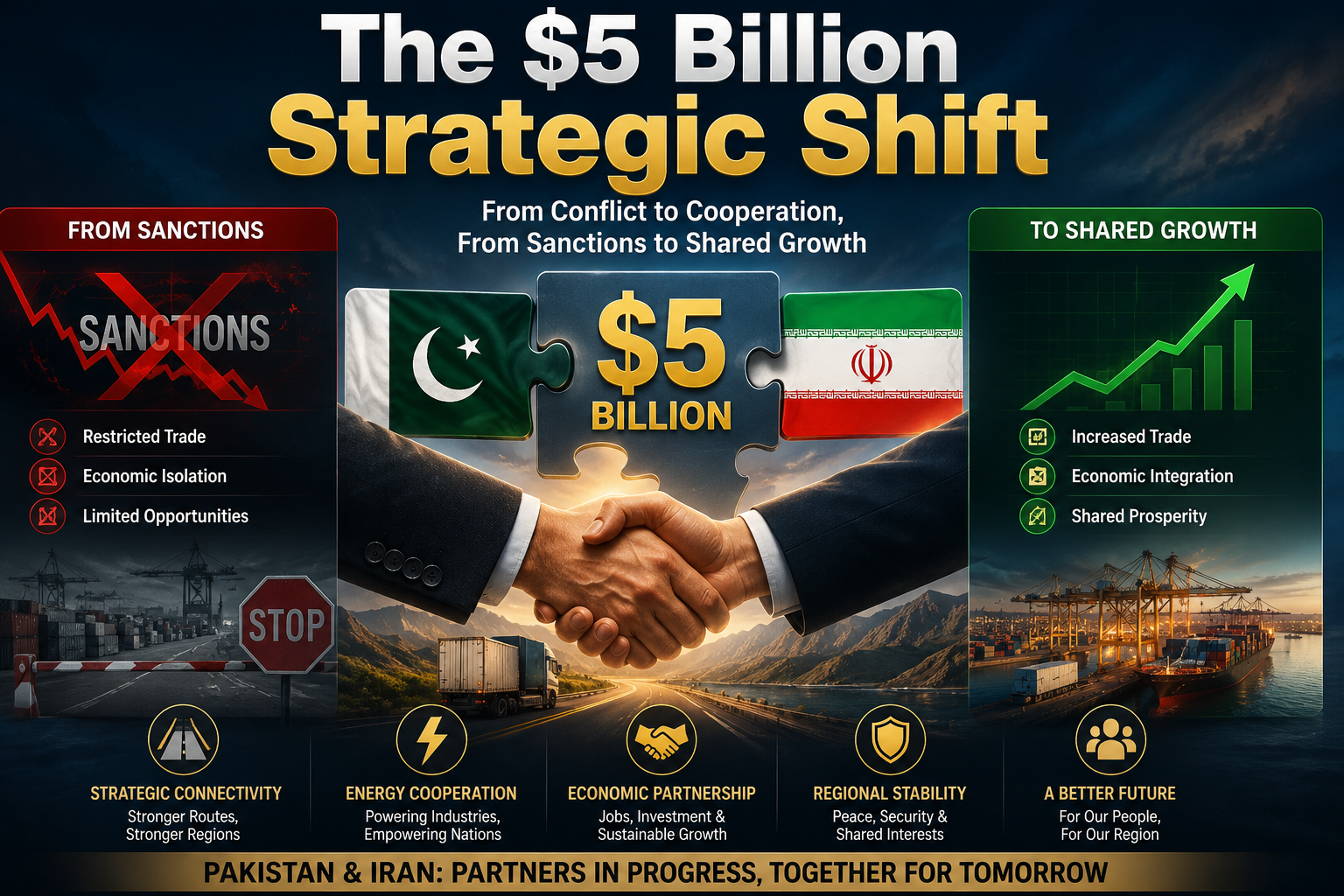
This is the backdrop against which Pakistan’s refineries are finally moving. Five companies have agreed to invest between $4.5 billion and $5 billion to modernize their plants, cut dirty fuel output, and meet cleaner Euro-V standards. It will not fix the import bill overnight. But for a country that has spent decades patching an ageing refining sector while spending billions of dollars each year on imported petroleum, it represents one of the most significant coordinated investments in Pakistan’s refining sector in years.
A Breakthrough at Parco
Pak-Arab Refinery Company, known as Parco, runs the country’s largest refinery. It spent a long time weighing its options through two separate studies. Now it has settled on a $600 million green fuel project instead of a smaller “bottom of barrel” upgrade.
The numbers tell the real story. Parco has already trimmed its furnace oil output from around 20% to 14% of production. Once the new project is running, that share should fall to 10-11% in the first phase. The second phase aims to end furnace oil production altogether. Motor gasoline output is expected to climb from about 3,678 tons a day to 4,023 tons, with diesel production rising too.
Four More Refineries, One Deadline
Parco is not moving alone. Pakistan Refinery Limited has picked the boldest plan on the table; a $1.8-2 billion bottom of barrel project that would double its crude processing capacity from 50,000 to 100,000 barrels a day.
Attock Refinery Limited is preparing to sign a roughly $600 million deal covering a new catalytic reformer, an upgraded desulphurizing unit, and a biofuel facility. That should lift gasoline output by about a quarter.
Cnergyico, the country’s largest private refinery, is planning a $1.2 billion, three-phase expansion that would push its capacity from 156,000 to 200,000 barrels a day and add a new offshore mooring facility for importing and exporting crude.
National Refinery Limited is still finalizing its approach, weighing a hybrid project worth $300-800 million that would raise its capacity from 50,000 to 70,000 barrels a day.
Under Pakistan’s amended Brownfield Refineries Upgradation Policy, every one of these companies now has only 45 days to sign a binding implementation agreement, down from 60. Officials say the deals are expected to be signed together at a single ceremony, with Prime Minister Shehbaz Sharif in attendance.
Why This Matters More Than It Sounds
Furnace oil is the leftover, dirty byproduct of crude refining. Selling it barely covers costs, and burning it pollutes far more than diesel or petrol. Every ton of furnace oil a refinery stops producing is a ton of cleaner fuel it can sell instead, and less crude it needs to import for the same output.
The scale of the problem explains why that matters so much. Pakistan’s oil import bill has climbed for three straight years: $15.94 billion in FY2024-25, then $16.86 billion in FY2025-26, already $1.58 billion above what the IMF had projected. The Fund expects the bill to stay above $16 billion again this year. In April 2026 alone, crude oil imports hit a record $1.187 billion for the month, roughly double what Pakistan paid a year earlier. Finance Minister Muhammad Aurangzeb told the National Assembly that petroleum now eats up nearly a quarter of the entire import bill, making the country’s current account hostage to whatever oil prices do next. Newer, more efficient refineries that produce more usable fuel per barrel of crude, and less unsellable furnace oil, chip directly away at that number.
A One-Refinery Country, Fifty Years On
Pakistan’s push looks even sharper next to a country in a similar spot: Bangladesh. Bangladesh still runs on a single crude refinery, Eastern Refinery Limited, built back in 1968, when the country was still East Pakistan. More than five decades on, that one plant still processes only about 1.5 million tonnes of crude a year, almost unchanged for the past five years. National demand, meanwhile, runs to roughly 6.5 million tonnes. That leaves Bangladesh’s own refining industry meeting barely 20-23% of what the country actually burns, with imports covering the rest.
Dhaka has approved a $1 billion loan from the Islamic Development Bank to finally build a second refining unit but construction is not expected to finish before 2030, and the project’s price tag has already jumped more than 12%, from an original $2.24 billion estimate to $2.52 billion. Even a private expansion by Bangladesh’s TK Group, due in 2027, would only lift the country’s domestic refining share to around 57%, still leaving nearly half of its fuel needs dependent on imports.
The comparison highlights an important structural advantage for Pakistan: unlike Bangladesh, which remains heavily dependent on a single ageing refinery, Pakistan already has five operating refineries and is pursuing modernization across the sector simultaneously. Instead of a single delayed mega-project, it has a fixed 45-day legal deadline pushing every major refiner to sign upgrade agreements at once. That is a faster, broader route toward energy self-reliance than most of its neighbours can currently claim.
What Comes Next
Agreements still have to be signed, financing has to be arranged, and construction on projects this size can run into delays anywhere in the world. But the intent is now on paper, backed by real feasibility studies and firm cost estimates, not vague promises.
If Parco, PRL, ARL, Cnergyico, and NRL deliver even most of what they have committed to, Pakistan’s fuel mix will look very different by the early 2030s: less furnace oil, more Euro-V petrol and diesel, and a smaller import bill. For a country that has spent years patching an ageing refining sector, that would count as real progress.
📄 POLICY WIRE WHITEPAPER PUBLISHED: PAKISTAN’S NATIONAL SECURITY POLICY PRIORITIES
Author