


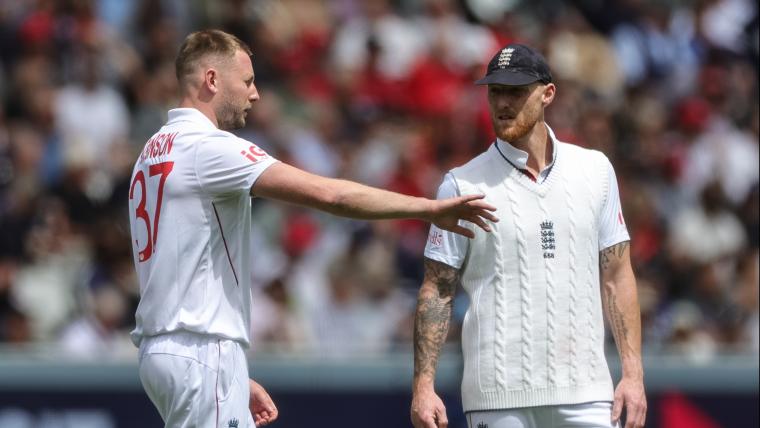
Stokes’ Shadow: Club Chaos and Cricket’s Uncomfortable Reckoning
POLICY WIRE — London, UK — When a nation’s sporting hero extends a friendly invitation, one might anticipate good cheer. But for England’s cricket captain Ben Stokes, what started as a seemingly...

POLICY WIRE — London, UK — When a nation’s sporting hero extends a friendly invitation, one might anticipate good cheer. But for England’s cricket captain Ben Stokes, what started as a seemingly innocuous social overture quickly spiraled into yet another public relations skirmish, forcing England Rugby’s skipper Jamie George to play clean-up on a mess he’d narrowly dodged himself. It’s a familiar story, isn’t it? The blurry line between personal revelry and professional conduct, especially when you’re constantly under the unforgiving gaze of the public lens. You’d think by now they’d all have a playbook.
George, confirmed as England’s rugby captain for the summer campaign, wasn’t exactly front and center when the now-infamous nightclub incident unfolded. And good for him, too. He candidly admitted he was tucked safely in an Uber—presumably thinking about an early start, or maybe just dreaming of a good cuppa—when the phone call came, dragging him back into the chaos. He’d left before things went sideways, but not before confirming Stokes had personally reached out. He’d been celebrating with his Saracens teammates, winding down from their own season, when Stokes messaged, wanting to link up for England’s post-victory festivities. A coming-together of codes, really. And why not?
Because that’s how these things begin. Innocent enough, yet primed for disaster in a world where every move, every stumble, can and will be scrutinized to oblivion. George himself downplayed it. “I think it has been blown out of proportion a little bit,” he mused, a sentiment echoed by countless public figures before him caught in similar gales. But that’s the deal when you’re paid to represent a country. Perception, as they say, often trumps reality—and often with sharper consequences.
The core of the imbroglio involved Saracens academy prospect Totoa Auvaa — and England fast bowler Gus Atkinson. The England and Wales Cricket Board (ECB) — an organization perpetually looking for new headaches, it seems — concluded Atkinson was the victim of “unprovoked attacks.” George, while trying to contextualize his young teammate’s actions, couldn’t quite skirt the plain truth. “He’s a young kid who has only left Samoa once. He is immature… He’s a good kid, but he’s got it wrong. There’s no disputing that,” George conceded, offering a humanizing but ultimately damning appraisal. He knows full well that “getting it wrong” when you’re a professional athlete tends to stick like superglue. We’re not talking about missing a bus here; we’re talking alleged physical contact that sidelines a national player.
But the ramifications stretch further than a few bruised egos or a suspended rugby player. The entire affair has undoubtedly cast another shadow over Stokes, the cricketing maverick whose career has been punctuated by dazzling highs and decidedly uncomfortable lows. It put Atkinson, a player on the rise, out of commission for a Test match. And it certainly didn’t do much for the optics of professional athletes managing their off-pitch lives. This isn’t just about one drunk night in London; it’s about the continuing, vexing question of accountability for sports icons. Globally, nations that hold their cricketers in quasi-religious esteem, from the dusty pitches of Karachi to the manicured grounds of Melbourne, pay close attention. In places like Pakistan, where public morality often dictates the reception of cultural figures, such incidents can chip away at the almost mythological status of British sportsmanship. But don’t believe me? A 2023 study by Nielsen Sports found that athlete endorsement value can plummet by up to 20% following public scandals. That’s cold, hard cash for questionable conduct.
📄 POLICY WIRE WHITEPAPER PUBLISHED: PAKISTAN'S NATIONAL SECURITY POLICY PRIORITIES
👉 READ BY CLICKING HEREBecause ultimately, these athletes are not just athletes. They’re brands. They’re representatives. And their missteps carry commercial — and diplomatic weight. A spokesperson for the England and Wales Cricket Board, speaking off the record due to the ongoing sensitivity of disciplinary matters, recently told Policy Wire, “Our athletes carry the badge of English cricket. Their conduct, both on — and off the field, reflects upon the entire institution. We’re continually working to reinforce those standards, but frankly, we expect more from them—always.”
What This Means
This whole sorry episode, however small in the grand scheme of geopolitical turmoil, highlights a persistent tension: the struggle of sporting bodies to control the narrative when their highly-paid, often very young, and always very public stars step out of line. Economically, sponsorships are fragile; reputation, priceless. For teams like England’s cricket and rugby squads, repeat incidents like this erode public trust, making it harder to attract commercial partners and, frankly, harder for fans to cheer unequivocally. Politically, it’s not an election-decider, but it plays into a broader cultural conversation about entitlement and celebrity — a tiresome topic for any government spokesperson tasked with praising national heroes. This wasn’t a solitary lapse in judgment; it’s a symptom of a larger culture where intense pressure meets unrestricted freedom. And sometimes, those two just don’t mix.
So, Stokes, once again, finds himself in the spotlight for something other than his prodigious talent. Atkinson missed a Test. And a young Saracens player is learning a very public, very painful lesson about consequence. All stemming from a night that was meant for celebration. But these days, with cameras everywhere and social media acting as judge and jury, it seems celebration, for these figures, has become an exercise in extreme risk management.