


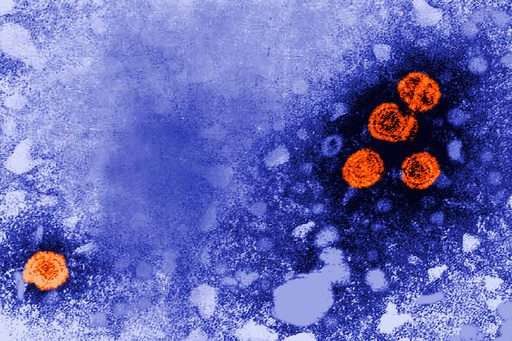
Silent Epidemic Under Siege: Novel Drug Challenges Hepatitis B’s Decades-Long Grip
POLICY WIRE — Washington, D.C. — For millions across the globe, the liver is a quiet battleground. Hepatitis B, a cunning and persistent foe, digs in deep, often for a lifetime, exacting a heavy toll...

POLICY WIRE — Washington, D.C. — For millions across the globe, the liver is a quiet battleground. Hepatitis B, a cunning and persistent foe, digs in deep, often for a lifetime, exacting a heavy toll in silently brewing liver cancer and failure. Today’s standard treatments? A daily, lifelong regimen that — let’s be frank — is a marathon many simply cannot finish or, in vast swathes of the world, can’t even begin. And that’s where the story usually ends, in a kind of grim medical stalemate.
But then, every so often, the tide seems to turn. Researchers have just pulled back the curtain on an experimental drug that, for a select cohort, offers something akin to a reprieve. They call it a functional cure, an astonishing term given hepatitis B’s infamous ability to evade outright eradication by hiding its genetic blueprint within the body’s own cells, ready to bounce back at the slightest cessation of therapy. This isn’t a silver bullet for everyone, no, but it’s a hell of a disruption to a disease long considered unconquerable.
And what’s the headline from two major international studies? Roughly 1 in 5 patients who got this experimental medicine saw their viral loads drop low enough that their own immune systems could keep the rest in check. It’s an unprecedented win, at least according to Dr. Seng Gee Lim of the National University Health System of Singapore, who helped shepherd these GSK-funded studies. He told reporters before dropping these findings at a scientific meeting in Barcelona, Spain: “We have not had a treatment which has come to this level of cure.”
The numbers don’t lie. Chronic hepatitis B kills about 1.1 million people around the world each year. Think about that for a second. More than 250 million people worldwide contend with its chronic form, a slow, insidious march toward organ destruction. Standard pills might suppress it, but they don’t get rid of it. That’s the crux. This new compound, bepirovirsen – or just bepi, for short – goes after the virus’s genetic bits, putting the kibosh on viral replication and taking down a key protein (the ‘S’ or surface protein), while simultaneously giving the immune system a much-needed kick in the pants. It’s a multi-pronged assault.
But, like all scientific breakthroughs, there’s a footnote. Dr. Anna Lok, a University of Michigan hepatitis expert, noted in the New England Journal of Medicine, where the data was also published Thursday, that more study is needed. How long does this remission-like state stick around? That’s the million-dollar question, isn’t it? Initial tracking from earlier studies suggests most patients are still doing well up to three years later, but longevity matters for a lifelong affliction.
The trials involved nearly two thousand patients. These folks received either a bepi shot or a dummy shot every week for six months, alongside their regular meds. If the virus stayed undetectable for six months after the shots stopped, they could ditch their daily pills too. In about 20% of those getting bepi, the virus was still gone for another six months after all treatment halted. Not a single person in the dummy-shot group saw that kind of durable remission.
📄 POLICY WIRE WHITEPAPER PUBLISHED: PAKISTAN'S NATIONAL SECURITY POLICY PRIORITIES
👉 READ BY CLICKING HEREIt’s heading for a fast-track review with the U.S. Food — and Drug Administration, with a decision penciled in for October. Regulators in Japan, China, — and Europe are eyeing it too. The globe is watching. For countries like Pakistan, where hepatitis B, C, and E are major public health crises — sometimes infecting entire families in regions with poor healthcare infrastructure and unsafe practices — this could change everything. Or at least, some things. But what it doesn’t change, not yet, is the disparity in access that defines so much of global health. Because, while a vaccine exists for prevention, for those already carrying the viral burden, therapies are sparse, pricey, or simply out of reach. Just imagine the policy battles that lie ahead over pricing and distribution.
What This Means
This isn’t just about a drug; it’s a tectonic shift in the long, arduous war against chronic infectious diseases. It means hope for populations disproportionately affected, especially across South Asia and parts of the Muslim world, where Hepatitis B prevalence remains stubbornly high. Pakistan, for instance, has long wrestled with endemic hepatitis, often with disastrous economic consequences for families, not to mention the drain on an already stretched healthcare system. A functional cure, even for a subset, fundamentally redefines the policy calculus from palliative management to potential eradication efforts. Imagine the sheer economic gain from a healthier workforce, reduced healthcare expenditure on lifelong treatments, and the alleviation of a massive public health burden.
But, let’s be clear: this isn’t a panacea appearing out of thin air to solve all our problems. The political implications are immense. Who gets it? At what cost? Big Pharma, like GSK and Ionis Pharmaceuticals who developed bepirovirsen, stands to make fortunes, and rightly so for the innovation. But the ethical tightrope walk for governments — and global health organizations is going to be dizzying. Ensuring equitable access in regions without robust public health systems is an immense challenge—perhaps the greatest. How can countries like Pakistan afford mass distribution, especially for a chronic illness requiring sophisticated diagnostics? The battle for affordable access will inevitably be fiercer than the fight to develop the drug itself. this sets a new benchmark, raising expectations for cures for other similarly tenacious viruses. The embers whisper of change, reminding us that even the darkest global blights on childhood dreams can sometimes be dampened. The real work—the policy, the logistics, the economic will—is just beginning.