


Silent Credits Roll: China’s Tech Ambition Struck by a Poisoned End, Echoes Reach Distant Shores
POLICY WIRE — Shanghai, China — Not every business rivalry concludes with a hostile takeover bid or a shareholder dispute. Sometimes, the curtain falls in far grimmer fashion, sealing a corporate...

POLICY WIRE — Shanghai, China — Not every business rivalry concludes with a hostile takeover bid or a shareholder dispute. Sometimes, the curtain falls in far grimmer fashion, sealing a corporate saga with an iron-clad verdict and a silent end. That appears to be the narrative etched into the annals of China’s fast-moving tech sector this week, an episode that peels back the polished veneer of innovation to expose something deeply, profoundly unsettling.
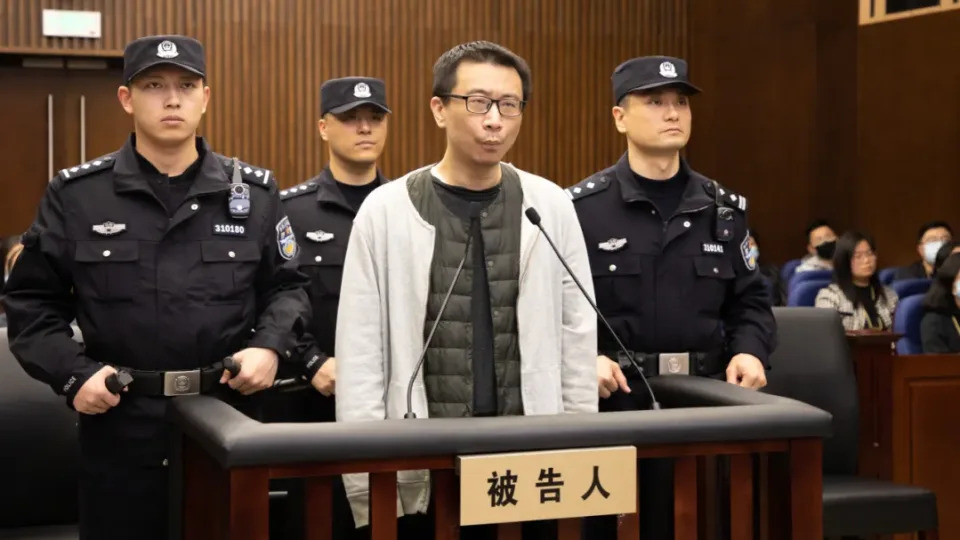
The man who held the keys to bringing the sprawling universe of The Three-Body Problem to a global streaming audience has been avenged, if such a term even applies here. Lin Qi, the visionary — some would say ruthless — CEO of Yoozoo Games, died tragically, poisoned by a colleague. And now, four years later, that colleague, Xu Yao, a former executive at a Yoozoo subsidiary, has met his own end. It’s a stark, brutal period at the close of a very public, very nasty chapter, revealing the often-invisible costs of ambition and the sharp teeth of justice within a state known for its decisive actions.
Lin, a young billionaire, had reportedly clashed with Xu Yao over a myriad of business operations—a familiar tale in high-stakes industries, but one that spiraled beyond spreadsheets and boardroom arguments. What began as alleged [QUOTE_PLACEHOLDER] metastasized into something truly sinister: poison administered through food and drinks over several days in late 2020. Lin clung to life for days before succumbing, his demise sending ripples of shock across a tech landscape usually more accustomed to tales of IPO windfalls and product launches than fatal internal strife.
The Shanghai No. 2 Intermediate People’s Court convicted Xu Yao of intentional homicide. They didn’t mince words; the court determined his motives were heinous — and his methods cruel. And there you have it: a death sentence upheld, then carried out. It’s not just a statistic, but a brutal punctuation mark on a story about unchecked ambition and—yes—betrayal. Tech’s golden handcuffs loosen sometimes, but other times, they become something far more constricting.
Think about the sheer audacity. The calculated cruelty of multiple poisonings. This wasn’t some spur-of-the-moment outburst; this was sustained, deliberate malice within the very ecosystem meant to foster creativity and collaboration. And for what? For control over a project, over an empire? The underlying reasons, the court heard, stemmed from serious disputes over the company’s direction. It feels less like corporate espionage and more like a twisted feudal court intrigue playing out in the digital age, a saga befitting the very dystopian science fiction Lin himself sought to bring to screens.
Many folks overseas might view China’s legal processes with a critical eye, questioning transparency or due process. But in cases of violent crime, particularly those against prominent figures, the machinery of state justice tends to operate with grim efficiency. According to Amnesty International’s 2023 report, China remains the world’s leading executioner, though precise figures are considered a state secret. You just don’t contest a conviction of intentional homicide in such a high-profile case without meeting the full, unsparing force of the law.
But the story’s implications don’t just stop at China’s borders. The international cultural production involved—Netflix’s adaptation of a seminal Chinese sci-fi work—links this tragic corporate drama to a global stage. The creative industries, like any other, are magnets for talent and, regrettably, sometimes for conflict that can turn ugly. This case serves as a dark parable for any entrepreneur or creative trying to navigate the choppy waters of cultural exchange and commercialization, especially in high-growth, high-pressure environments.
What This Means
This episode, chillingly punctuated by an execution, doesn’t just represent a personal tragedy; it mirrors a profound reality about power dynamics within China’s rapidly industrializing—and digitalizing—society. Politically, it reaffirms the state’s uncompromising stance on serious criminal offenses, regardless of the socio-economic status of those involved. For every soaring narrative of tech success, there’s a lurking reminder that the rule of law, as defined by Beijing, applies with chilling finality.
Economically, it throws a cold bucket of water on the romanticized image of frictionless innovation. Companies operating within China, both domestic and foreign, often wrestle with internal governance structures that might not align with Western norms. The sheer, aggressive competition within sectors like gaming and entertainment breeds an environment where stakes are unimaginably high. This verdict, delivered with the ultimate punishment, acts as a potent disincentive against internecine corporate warfare, however crude or violent. But it doesn’t solve the underlying pressures that can lead to such catastrophic breakdowns.
And speaking of South Asia, the ripple effects, while not direct, touch upon the wider perception of stability and predictability in doing business across the region. As countries like Pakistan look to foster their own tech hubs and attract foreign investment, they too must contend with the narratives surrounding corporate governance, personal safety, and the efficacy of justice systems. When such a dramatic case unfolds in an economic titan like China, it invariably raises questions among investors and partners throughout the developing world. The very idea of establishing a robust framework for intellectual property or contract enforcement depends on much more than quiet dances between bureaucrats—it depends on basic trust and a predictable, firm legal response to transgression. This incident—extreme as it’s—is part of the complex, global calculus of risk.
For China itself, this might simply be seen as justice served. But for the global creative economy and those who champion transparent governance, it’s a stark reminder: behind every blockbuster streaming deal and every celebrated adaptation, human ambition and human flaws continue to play out, sometimes with lethal consequences.