


Seventh-Inning Surge: Ole Miss’s Diamond Heist Echoes Larger Policy Shifts
POLICY WIRE — Starkville, Mississippi — They say fortune favors the bold, but sometimes, it’s just a matter of who cracks first under an almost unbearable weight. A college baseball game, not...

POLICY WIRE — Starkville, Mississippi — They say fortune favors the bold, but sometimes, it’s just a matter of who cracks first under an almost unbearable weight. A college baseball game, not usually the grist for high-minded policy dissection, proved last night to be a masterclass in this very phenomenon. Auburn, meticulously holding court for seven innings, saw their College World Series dreams evaporate in a two-inning surge from Ole Miss—a stark reminder that in any high-stakes arena, whether the diamond or the negotiating table, precision can vanish quicker than a relief pitcher’s ERA. You see this play out constantly, in Washington, in global capitals, heck, even in your local city council meetings. It’s that fragile, isn’t it?
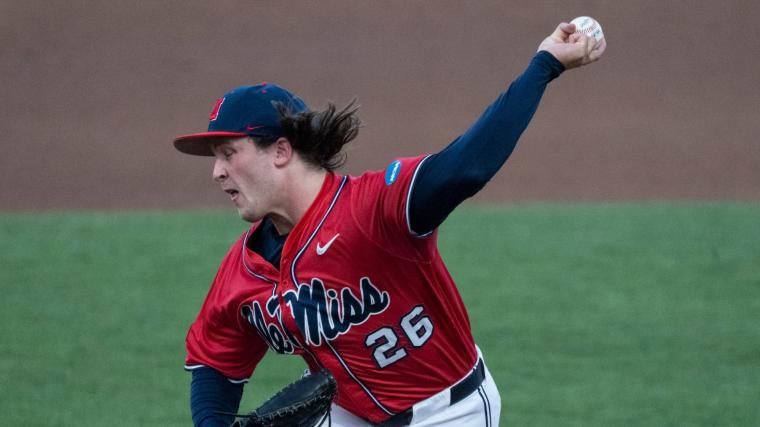
The 2026 NCAA Baseball Championship Super Regional Game 2—an alphanumeric designation belying the raw, gut-wrenching drama unfolding on the field—wasn’t merely a contest between two Southeastern Conference titans. No, it was a miniature study in strategic collapse — and opportunistic ascendancy. For seven innings, Auburn’s Tigers, with their 42-21 season record, seemed to be navigating a clear path to Omaha. Their pitching, stout. Their defense, locked in. But then, as it often does when the pressure ratchets up to an almost unbearable hum, the narrative spun on its axis. Two runs in the seventh, three in the eighth, five more in the ninth for Ole Miss. The Rebels, now 40-21, didn’t just win; they capitalized, mercilessly.
It’s this kind of dramatic swing that keeps Athletic Directors up at night, and frankly, plenty of senior policymakers, too. The investment—both emotional and financial—in programs like these runs deep. Millions, you know, flow through these collegiate sports ecosystems, impacting everything from student recruitment to alumni giving. Losing when you’re that close, it isn’t just about a score. It’s about optics. It’s about perception. And that stuff, that bleeds into the larger university’s standing, it truly does.
Coach Matt Ramsey, at the helm of the Ole Miss Rebels, captured the prevailing sentiment after the game, still a little breathless, perhaps. “You plan, you prepare, but sometimes, it’s just about holding your nerve when everything’s on the line,” he offered, sweat still beading on his brow. “Tonight, our guys, they just *got it done*. You don’t get second chances at this level. You *don’t*.” And he’s right, isn’t he? A narrow window, swiftly seized.
On the flip side, Auburn’s Head Coach, Ron Wallace, spoke with the weary resignation of a man who’d just watched an edifice crumble brick by brick. “It stings, no doubt it does. We played solid ball for seven innings, saw the finish line. Then, the eighth… it unravels,” Wallace stated, a discernible rasp in his voice. “That’s baseball. But it’s also a stark reminder that focus can’t waver. Not for a pitch. Not for a policy review.” He couldn’t have been more spot on.
📄 POLICY WIRE WHITEPAPER PUBLISHED: PAKISTAN'S NATIONAL SECURITY POLICY PRIORITIES
👉 READ BY CLICKING HEREWhat This Means
This dramatic reversal isn’t just a feel-good story for Ole Miss fans or a tough pill for Auburn’s. Oh no. It carries significant, albeit subtle, political — and economic ramifications. These Super Regional victories, they don’t just fill seats. They pump measurable dollars into local economies, with hosting cities often seeing a direct economic impact exceeding $5 million for each NCAA baseball regional, according to a recent analysis by the Sports Business Journal. That’s real money, people.
More abstractly, the suddenness of the Auburn collapse provides a poignant metaphor for governmental policy. Consider how carefully crafted legislation, passed with painstaking negotiations, can unravel with a single judicial ruling or an unexpected turn in public opinion—especially when you don’t keep all your ducks in a row. It’s a matter of political capital, you know? Leaders, much like baseball coaches, spend it. They gain it with victories — and squander it with missteps. But what happens when the unraveling is not due to a flaw in strategy, but simply the sheer, unpredictable will of the opposing force?
But the impact isn’t confined to North American shores. When these dramas unfold on a global stage, broadcast far beyond SEC strongholds, they feed into a wider narrative about American competitiveness. You wouldn’t think it, but perceptions ripple. Consider Pakistan, for instance, a nation often grappling with its own internal — and external pressures. While baseball certainly doesn’t hold the cultural sway of cricket there—and it won’t anytime soon—the stories of grit, defeat, and unexpected triumph, those do resonate. They feed into a universal understanding of aspiration and disappointment, something that nations, even with vastly different cultural touchstones, appreciate. It’s a lesson in persistence, a brutal but simple demonstration that you’ve got to keep fighting until that very last out. Sometimes, it takes a dramatic swing, or a string of them, for the true policy ramifications—the ripple effects—to make themselves fully known. This isn’t a game, it’s a lesson. And frankly, it’s a pricey one for Auburn, for their fan base, for everyone who banked on certainty.