


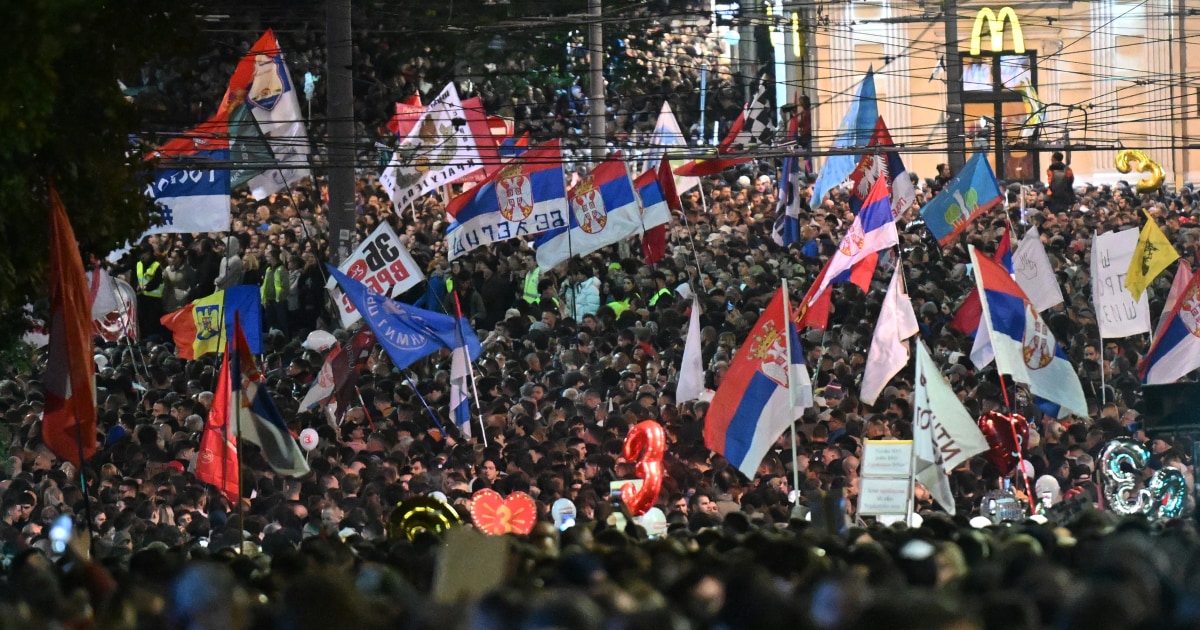
Serbia Heads to Polls as Student Movement Challenges Aleksandar Vucic
Serbian voters cast ballots in a high-stakes snap election as a student-led movement seeks to unseat long-time leader Aleksandar Vucic amid rising tensions.

POLICY WIRE — Belgrade, Serbia — Voters across Serbia headed to the polls on Sunday for a snap parliamentary election that represents the most significant threat to the tenure of long-time populist leader Aleksandar Vucic in over a decade.
The election, which Vucic initiated in September, follows nearly two years of intense, student-led demonstrations. The movement gained momentum following the tragic collapse of a train station canopy in Novi Sad in 2024, which resulted in 16 deaths and fueled public anger over systemic corruption and authoritarianism.
Polling stations in Belgrade and Novi Sad saw heavy turnout, with long queues forming well before the 7 a.m. opening. Voting is scheduled to conclude at 8 p.m., with initial projections expected to emerge shortly thereafter.
A potential victory for the student coalition would mark a historic shift for the nation of 6 million people. Observers suggest the movement could serve as a model for similar youth-led protests across Europe, where demonstrators have recently mobilized against declining educational standards and limited economic opportunities.
Despite the challenge, Vucic remains a formidable incumbent. Having stepped down from his second presidential term to seek the office of prime minister, he maintains a loyal base that credits him with modernizing the country through infrastructure projects, including new hospitals, schools, railways, and highways.
Voter Ana, 30, explained her early arrival at a Belgrade polling station by stating, I came out early today because the students called us.
On the domestic front, Vucic has campaigned on promises of increased public sector wages, higher pensions, and subsidies for young families. Internationally, he has navigated a complex path, maintaining strong ties with China and Russia—his primary natural gas supplier—while keeping the possibility of European Union membership on the table.
The student platform focuses on eradicating graft and reforming the education system, though their international policy remains less defined. Their candidate list of 250 individuals, led by cardiologist Ilija Srdanovic, includes a diverse mix of farmers, actors, and academics.
Recent polling indicates a volatile race. An Ipsos survey released Thursday placed Vucic’s Serbian Progressive Party (SNS) ahead with 47% of the vote compared to 40% for the student movement, though other polls have suggested the students hold a narrow lead.
The protests, which grew into the largest in a generation, have faced accusations of state repression. Bogdan Pavkovic, who attended a final student rally in Belgrade on Thursday, expressed his desire to dismantle “this awful, horrendous system which cheats on us, which spies on us, which beats us.”
Vucic and the SNS have consistently denied allegations of corruption, spying, or repression. During a campaign event on Thursday, Vucic told supporters, This has been one of the most difficult but the most emotional campaigns. We stood against those who wanted to destroy Serbia. He has further alleged that the student movement is backed by foreign interests in Montenegro and Croatia, a claim the students have rejected.
Meanwhile, relations with the European Union have become strained due to concerns over Serbia’s progress on rule of law, judicial independence, and corruption. A recent Council of Europe delegation report highlighted the use of aggressive and hostile rhetoric against political opponents.
Additionally, E.U. Commission President Ursula von der Leyen criticized the public funeral held in Belgrade for convicted war criminal Ratko Mladic in September, noting that such events are incompatible with the values required for Serbia’s integration into the European Union.
Reporting by Policy-Wire (PW)