


Searing Heatwave Bakes Poland, Rewriting Climate Norms for Europe’s East
POLICY WIRE — Warsaw, Poland — The collective memory of summer in Central Europe once conjured images of crisp forest air, pleasant lake breezes, and perhaps a gentle sweat earned from a hearty...

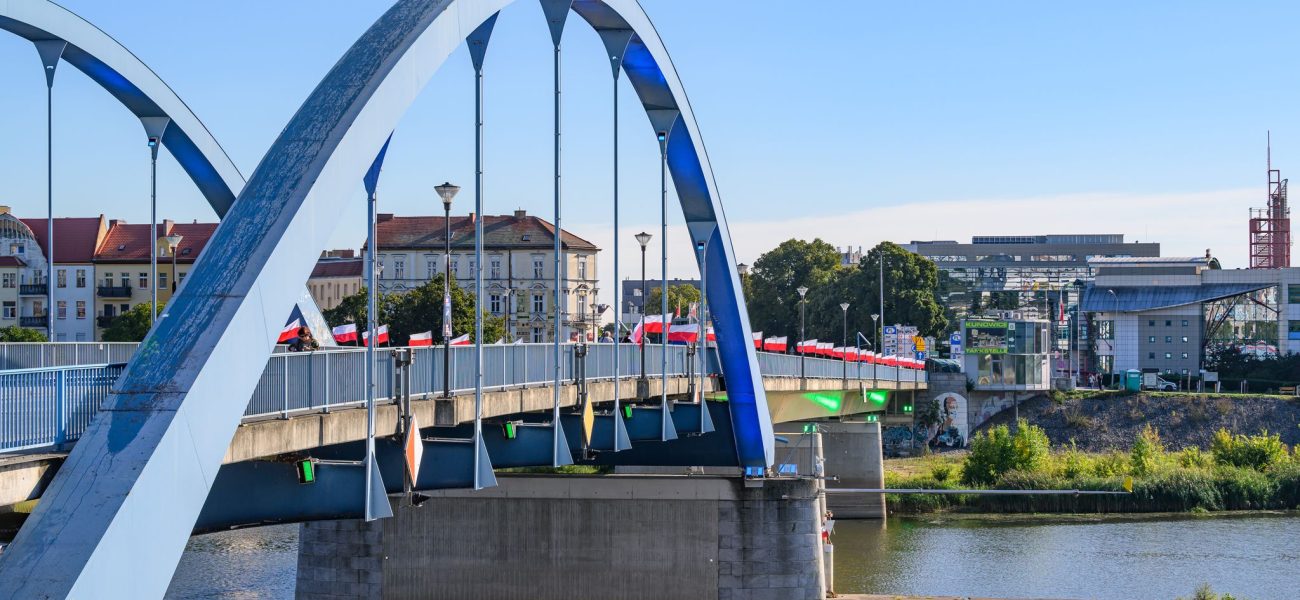
POLICY WIRE — Warsaw, Poland — The collective memory of summer in Central Europe once conjured images of crisp forest air, pleasant lake breezes, and perhaps a gentle sweat earned from a hearty midday meal. Now? Not so much. The postcard visions are crumbling under an insistent, unwelcome furnace. The quiet Polish border town of Słubice, usually a waypoint for cross-border shoppers heading to Germany, has become an unlikely poster child for a new, unnerving normal. It just scorched its way into the history books, smashing a century-old temperature record by several painful degrees. But this isn’t just a local headline; it’s a shriek in a continental symphony of rising mercury, pushing countries unprepared for such sustained heat closer to a future already grimly familiar elsewhere.
For days, thermometers in Słubice soared, climaxing at a sweltering 40.3 degrees Celsius (104.5 Fahrenheit). That’s not just warm; that’s the kind of heat you’d usually associate with Marrakech, not a town on the Oder. Its previous record, a mere 37.8C, stood firm for 110 years. Not anymore. The air hung thick, almost chewy, — and the asphalt shimmered with the heat-haze mirage of an desert highway. People were moving slow. Kids, normally buzzing, seemed sapped of all their usual energy. It felt foreign.
And Słubice isn’t alone. This relentless summer bake-off stretches across much of Eastern and Central Europe, a region historically insulated from the most ferocious climatic swings felt closer to the equator. We’ve seen it creep across France and Germany too, where even modest increases in temperature now cause significant social and economic upheaval. For instance, just recently, another Policy Wire report charted how Germany is undergoing its own “slow roast,” feeling more like a subcontinent than temperate Europe. This pattern isn’t coincidence.
Local authorities, already grappling with seasonal tourism and infrastructure maintenance, found themselves pivoting to crisis management. “We’re not built for this, plain and simple,” stated Janusz Grabowski, the visibly tired Mayor of Słubice, in an exclusive chat with Policy Wire. “Our public cooling centers are stretched, — and frankly, people are scared. This isn’t just about turning up the air conditioning; it’s about the very fabric of our public life. Farmers are desperate, older residents are isolated—it’s a brutal reality check.”
Indeed, the health implications are dire. Hospitals report a surge in heat-related illnesses—dehydration, heatstroke, respiratory distress exacerbated by poor air quality. The European Environment Agency reported last year that heatwaves contribute to hundreds of premature deaths annually across the continent, a statistic that seems set to rise. But then, Europe isn’t unique in its discomfort; places like Pakistan, historically familiar with punishing temperatures, face similar, often worse, struggles on a magnified scale. Karachi’s 2015 heatwave, for example, claimed over 1,200 lives, largely due to a combination of extreme heat, power outages, and inadequate urban planning. Comparing these events is like peering into Europe’s possible, more extreme future.
“The statistics scream at us,” asserted Anna Kowalczyk, Poland’s Minister for Climate and Environment, her voice stern during a press briefing. “This isn’t an anomaly; it’s a trend. And ignoring it? That’s not merely irresponsible governance; it’s an existential gamble for our future, for our children. We simply cannot pretend this is merely a ‘hot summer’ anymore.” She didn’t mince words.
📄 POLICY WIRE WHITEPAPER PUBLISHED: PAKISTAN'S NATIONAL SECURITY POLICY PRIORITIES
👉 READ BY CLICKING HEREWhat This Means
Słubice’s record-shattering heat, coupled with similar extremes across the region, isn’t just a weather story; it’s a stark geopolitical signal. Politically, this relentless heat will invariably ratchet up public pressure on governments—especially those with a history of soft-pedaling climate action—to prioritize adaptation and mitigation. Expect to see renewed debates on national energy grids, urban infrastructure resilience, and even the future of agricultural subsidies. It’s tough to spin a blazing sun — and cracked earth.
Economically, the impact is a slow, steady bleed. Agriculture takes an immediate hit, but it’s more than that. Labor productivity dips dramatically in scorching conditions, health system costs climb, and sectors like tourism (ironically, sometimes a boon in sunnier climes) could suffer as people flee increasingly unpleasant conditions. And because these extremes strain infrastructure, we’re likely to see bigger capital expenditures required for basic services. Utilities, especially electricity providers, are struggling with unprecedented demand as air conditioning units hum non-stop, sometimes triggering blackouts or price hikes. Think about it: a less stable power grid in Eastern Europe has far-reaching economic implications, especially for industries dependent on continuous operation.
The Pakistan angle serves as a sobering preview. Nations like Pakistan have been contending with devastating heat, water scarcity, and the specter of climate migration for years. Their often-strained public services — and lack of resources mean the human cost is immeasurably higher. Europe’s relatively robust infrastructure — and wealth provide some buffer, but the gap is narrowing. These heatwaves are a democratizing force for misery, slowly eroding regional distinctions. Europe’s comfortable delusion of climate exceptionalism, its sense that these issues are ‘elsewhere,’ is melting faster than the ice caps. This isn’t just a local news story anymore. It’s a dress rehearsal for an uncomfortable tomorrow, reminding everyone that climate change doesn’t recognize borders, only vulnerability.