


Rubio’s Taiwan Reaffirmation: The Geopolitical Balancing Act That Never Ends
POLICY WIRE — Washington, D.C. — Nobody really buys the claim of ‘no change’ anymore, do they? The geopolitical winds shift, Beijing flexes, — and still, the worn-out phrase gets trotted...

POLICY WIRE — Washington, D.C. — Nobody really buys the claim of ‘no change’ anymore, do they? The geopolitical winds shift, Beijing flexes, — and still, the worn-out phrase gets trotted out. The U.S. position on Taiwan—a delicately constructed house of cards known to insiders as ‘strategic ambiguity’—remains exactly that: ambiguous, yet stubbornly consistent. Or so we’re told.
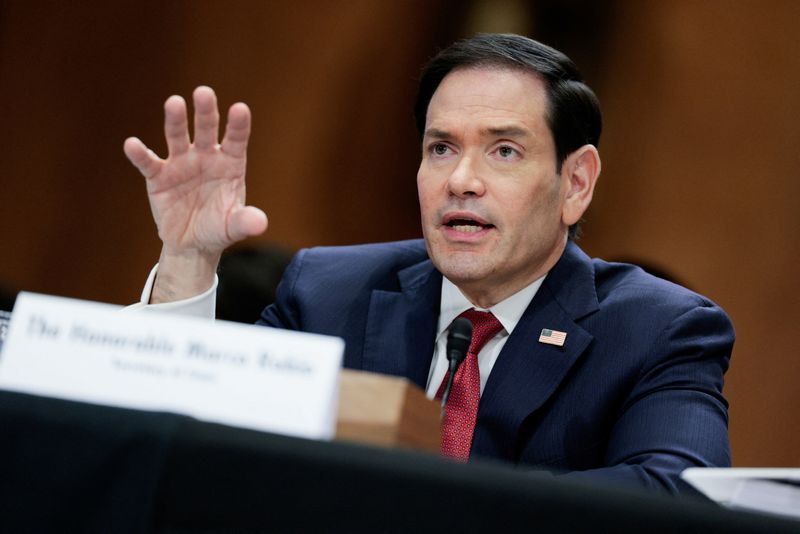
Senator Marco Rubio, Republican from Florida and a notable hawkish voice on foreign policy, recently chimed in with what ostensibly appeared to be a reaffirmation. He stated, in no uncertain terms, that there’s no shift in America’s long-held stance toward Taiwan. This wasn’t a bombshell, but a carefully placed marker in a game of global high-stakes poker, designed to soothe allies and subtly needle adversaries without tipping the entire board over. It’s Washington’s version of a shrug—a message meant to imply: ‘We’re here, we’re watching, and we’re not going anywhere.’
But the ‘no change’ mantra carries less weight than it used to. Because everything around it’s, in fact, changing. Beijing’s military might, its economic reach, and its increasingly aggressive rhetoric against what it considers a rogue province have made the waters around Taiwan decidedly choppier. Every patrol, every statement, every arms sale is scrutinized, parsed, and often overblown, both by those who seek confrontation and those desperate to avoid it. It’s a high-wire act—one we’ve perfected, for better or worse, over decades.
Rubio, leaning into his reputation for unyielding conviction, didn’t mince words, though. “Look, our One China Policy has always been conditional. It recognizes Beijing’s position but also acknowledges our commitment, by law, to Taiwan’s self-defense,” he articulated, during a closed-door briefing Policy Wire accessed excerpts of. “It’s not just about what Beijing demands we say, it’s about our enduring interests, and quite frankly, the democratic values we uphold across the globe.” It’s the kind of soundbite designed for both domestic consumption and a stern, albeit indirect, message across the Pacific. And frankly, it’s the sort of statement that sends shivers down spines in certain government offices in Beijing.
The U.S. strategy involves a delicate two-step: formally acknowledging Beijing’s ‘One China’ principle while simultaneously selling Taiwan advanced weaponry and training, ensuring it has the capability to defend itself against an invasion. This diplomatic dance has kept the peace—mostly—since the 1970s, but cracks are starting to show. China’s air force, for instance, has reportedly increased its incursions into Taiwan’s air defense identification zone by over 300% since 2020, a stark statistic reported by Taiwan’s Ministry of National Defense.
“Consistency in foreign policy, particularly concerning flashpoints like Taiwan, isn’t about being stagnant, it’s about managed risk,” noted Senator Tim Kaine (D-VA), a member of the Senate Foreign Relations Committee, when asked to comment on the broader approach. “We’re navigating an exceptionally complex global landscape. We have to signal resolve without pouring fuel on an already volatile fire—that’s the whole game.” His sentiment suggests a pragmatic, perhaps even weary, acceptance of the tightrope walk required when dealing with rival superpowers.
📄 POLICY WIRE WHITEPAPER PUBLISHED: PAKISTAN'S NATIONAL SECURITY POLICY PRIORITIES
👉 READ BY CLICKING HEREBut the echoes of this tension aren’t confined to the strait. They resonate far — and wide, touching corners of the globe one might not immediately connect. In Pakistan, for example, a nation historically tied to both Chinese financial muscle and Western aid, this dynamic is watched with almost excruciating attention. Islamabad, ever adept at balancing regional powers, understands that a misstep over Taiwan—either by Washington or Beijing—could send ripples through its own intricate relationships. Beijing’s ambitious Belt and Road Initiative, with its massive investment in the China-Pakistan Economic Corridor (CPEC), ensures Pakistan has more than a passing interest in China’s global standing. Pakistan isn’t just looking at Taiwan’s immediate security; they’re assessing the wider implications for global trade, stability, and the geopolitical chess game in Asia, where Chinese influence now extends deep into formerly Western-dominated spheres. They’re acutely aware of the leverage, economic — and otherwise, that Beijing increasingly wields across South Asia.
The White House, despite the public pronouncements, finds itself performing a constant tightrope act. It must reassure democratic allies in the Pacific Rim—from Tokyo to Manila—that America still has their back, without provoking a direct military confrontation with a nuclear-armed China. It’s about projecting strength, yes, but also exercising extraordinary restraint. Every U.S. Navy transit through the Taiwan Strait is a statement. Every sale of a Patriot missile battery. Each of these actions, small though they might seem in isolation, stitches together a narrative.
What This Means
Rubio’s comments, far from being simply boilerplate, highlight a fundamental and uncomfortable truth about contemporary international relations: rhetoric often lags behind reality. The ‘no change’ dictum doesn’t reflect a static situation but rather an intense, constant calibration of strategic signals in an increasingly dangerous arena. Economically, any destabilization in the Taiwan Strait—a major shipping lane and home to a critical semiconductor industry—would send shockwaves that dwarf even recent supply chain disruptions. Think trillions wiped off global markets overnight, an economic catastrophe that would impact everyone, everywhere.
Politically, the U.S. posture acts as a barometer for its global credibility. If Washington appears weak or indecisive regarding Taiwan, it weakens its hand not just in Asia, but in other contentious regions too. This could empower revisionist powers, like those keen to test international norms elsewhere, perhaps even emboldening those involved in other complex situations such as Beijing’s internal regulatory crackdown, showing its authoritarian regime its control is absolute. And it’s this ripple effect that makes every seemingly benign statement about ‘no change’ in U.S. policy less about Taiwan — and more about the entire brittle framework of global order.