

Robots Ascend China’s Sacred Mount Tai in Grueling Endurance Challenge
Autonomous robots test real-world durability by racing up Mount Tai, carrying fragile watermelons and eggs across rugged UNESCO World Heritage terrain.

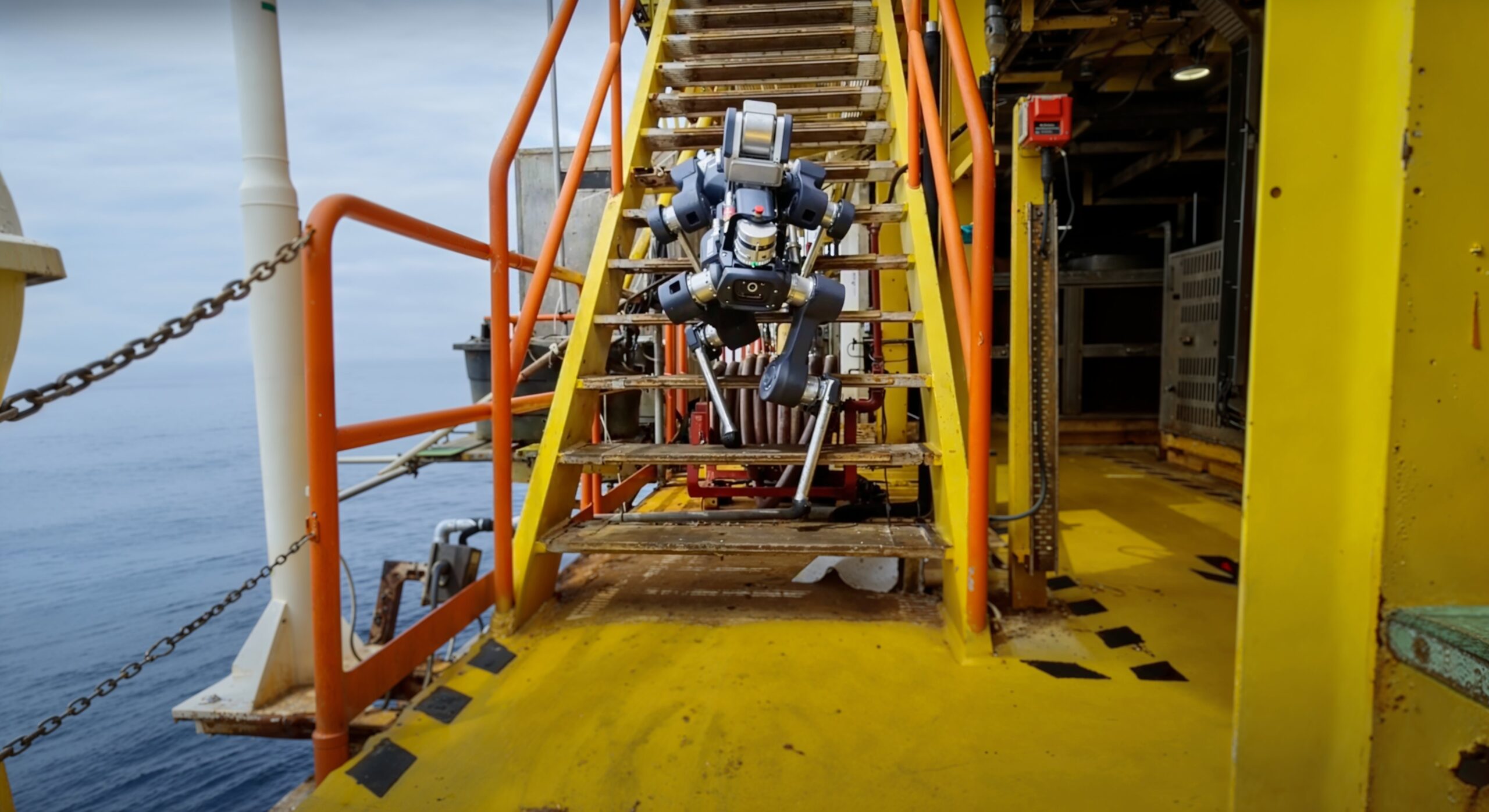
POLICY WIRE — Shandong, China — Dozens of autonomous machines faced a grueling ascent of over 3,000 steps on one of China’s most iconic peaks on Monday during a unique test of mechanical stamina.
The event, known as the World Mountain Robot Challenge, saw various technologies attempt to prove they could handle the unpredictable conditions of real-world environments.
Mount Tai, the highest point in the eastern Shandong province, has historically served as a vital pilgrimage site for emperors for centuries and remains a central figure in Chinese mythology.
The rugged landscape of the UNESCO World Heritage site presented significant obstacles for several participants. One humanoid model featuring a bandana collapsed on the stone path, requiring immediate intervention from its engineering team.
Another competitor lost its footing and tumbled down a set of stairs, ending its journey near a trash receptacle.
Video from state broadcaster CCTV revealed that the course spanned a 2.4-mile path with an elevation gain of nearly 2,000 feet.
Participants from approximately 90 teams competed, aiming either to reach the summit in record time or to successfully transport delicate cargo like watermelons and fresh eggs.
A four-legged canine-style robot developed by the subsidiary Beijing Lingyi Technology—a branch of the major firm Unitree—won the speed category with a time of 43 minutes and 41 seconds.
To provide context, CCTV noted that human tourists typically require at least two hours to navigate the same route.
In the humanoid division, the fastest machine from the Beijing-based team Zhishen Lingyue finished a shorter version of the course in 27 minutes and 26 seconds.
Local media described the rocky terrain of Mount Tai as a “natural extreme testing ground” designed to refine robotic performance for practical future applications.
The competition was coordinated by the state-run China Media Group, offering financial rewards for the fastest machines and the most effective quadrupedal load carriers.
Reporting by Policy-Wire (PW)