



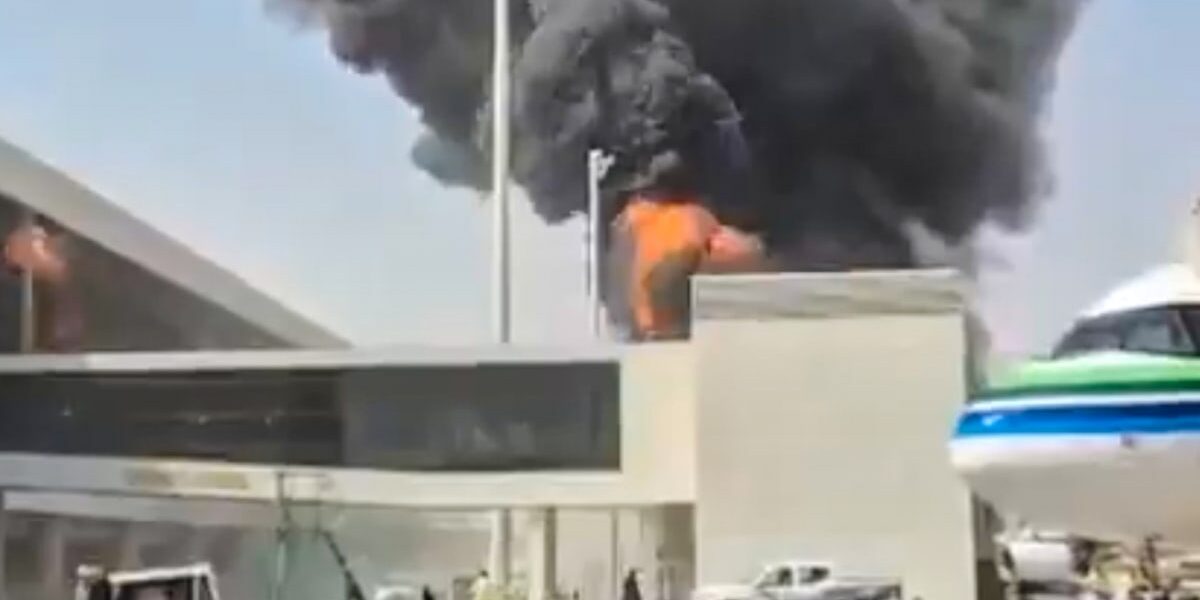
Riyadh Airport Evacuated Following Fresh Explosions in Saudi Capital
Riyadh's King Khalid International Airport faces evacuation after new explosions. Discover the latest on flight cancellations and regional security risks.

POLICY WIRE — Cairo, Egypt — The international airport serving Riyadh, Saudi Arabia, underwent an emergency evacuation on Saturday following a fresh attack, according to two regional officials. This incident follows a deadly assault just two days prior that claimed the lives of three Saudi citizens, including a pilot, marking a volatile escalation in the ongoing regional conflict.
Flightradar24 reported that incoming flights were diverted away from the capital nearly four hours after the final aircraft touched down at 2:05 p.m. Kuwait Airways confirmed the suspension of its services due to the airport closure, while the Canadian embassy issued a travel advisory urging citizens to avoid the facility, citing persistent military activity.
King Khalid International Airport has faced repeated strikes since a Saudi-led coalition initiated a major offensive against Iran-backed Houthi rebels in Yemen. While the Houthis claimed responsibility for previous attacks—including a Wednesday strike that killed a Sudanese national—there was no immediate statement from the group regarding Saturday’s events.
Local resident Ahmed Sayed reported hearing at least two powerful explosions that shook the city. FlightAware data indicates that at least 225 flights have been canceled at the airport within the last 24 hours, and the facility has issued an alert advising passengers to verify flight statuses before traveling.
The Saudi government-run Center for International Communication did not immediately provide comment on the situation. Meanwhile, Saudi authorities have issued a stern warning to the public, stating that filming or sharing information regarding missile and drone impacts could result in legal consequences.
📄 POLICY WIRE WHITEPAPER PUBLISHED: PAKISTAN’S NATIONAL SECURITY POLICY PRIORITIES
The conflict has intensified as the Saudi-led coalition provides air support to Yemeni government forces to counter Houthi gains near the Red Sea. These territorial shifts have granted the rebels increased surveillance capabilities over a vital shipping corridor, raising concerns about the security of global maritime routes.
U.S. President Donald Trump addressed the situation on Friday, telling reporters that the attacks were not good and that he was not happy with the developments. Despite ongoing intelligence sharing and planning assistance from the U.S., there has been no indication of direct American military intervention.
Diplomatic efforts are underway, with the Saudi and Omani foreign ministers discussing the necessity of de-escalating regional tensions. Oman has historically served as a mediator in the region, though the Houthis have recently issued a final warning to global airlines regarding operations within Saudi airspace.
Major carriers including Air India, FlyDubai, Lufthansa Group, and Pakistan International Airlines have suspended operations to and from Saudi airports. The European Union Aviation Safety Agency has updated its guidance, warning that the risk of misidentifying civil aircraft has increased due to the frequency of drone and missile interceptions.
Reporting by Policy-Wire (PW)