
Rio Rancho 4th of July: Unity in a Divided Nation
Amidst division, Rio Rancho's Fourth of July unites. This analysis explores how local celebrations foster community, offer respite, and hold political significance.

POLICY WIRE — Rio Rancho, N.M. — It’s a strange thing, this impulse to gather under the expansive New Mexico sky, to mark a nation’s birth with parades and pyrotechnics. In an era where even daylight can feel filtered through a partisan lens, these civic rituals endure—predictable, yes, but perhaps necessary. You wouldn’t think a parade down a suburban street, ending in firework displays, could hold much meaning beyond fleeting amusement. But it does, even in its quiet way. This isn’t just about explosions; it’s about people deciding, even for just one night, to participate in something bigger than their daily grind, a moment of shared existence in a largely fragmented political landscape.
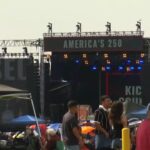
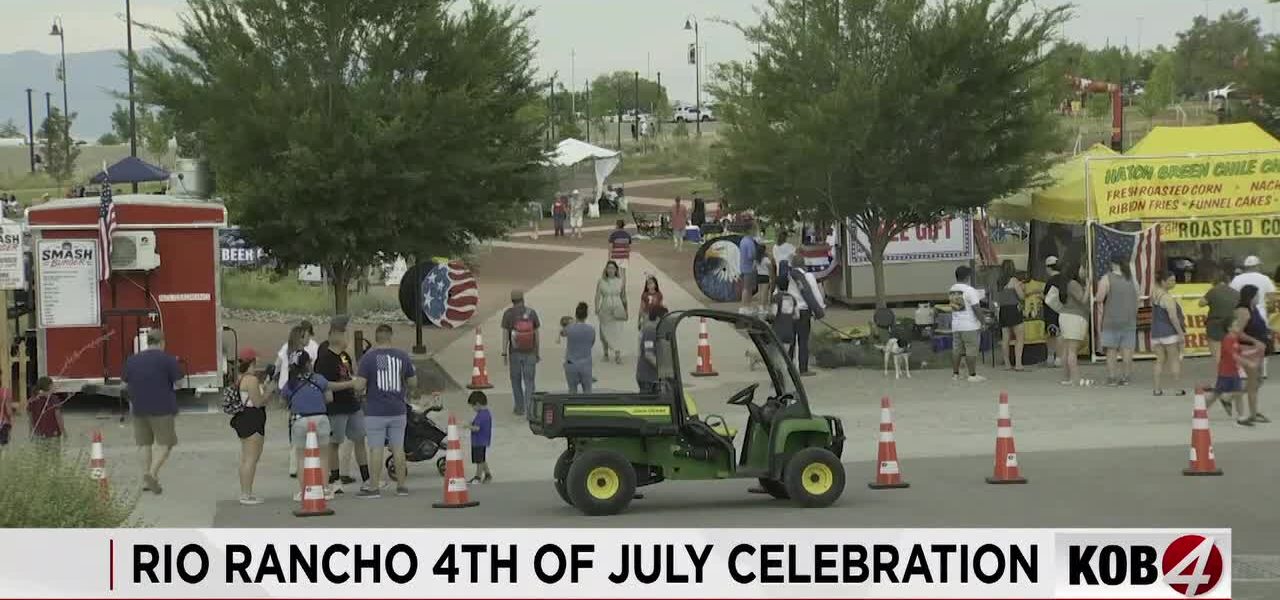
Rio Rancho residents didn’t just attend a party. They descended upon Campus Park at Rio Rancho City Center—it’s quite the mouthful, isn’t it?—for a communal exhalation, a respite. Families turned out in droves, spilling into every available space. They came, presumably, for the promise of a collective experience, the kind you can’t get from a smart screen. Admission was free for the event. This might seem like a small detail, but it’s an important one. In an economy that squeezes so many, a cost-free opportunity to witness something spectacular, to simply *be* with neighbors, is actually a pretty big deal. But, what’s actually happening underneath that veneer of shared joy? [QUOTE_PLACEHOLDER]
People lined up for the parade, which started at 5:30 p.m. at Campus Park at Rio Rancho City Center. Imagine it: children clutching tiny flags, grandparents in folding chairs, all craning their necks, waiting for the procession. Floats, local dignitaries waving, maybe even a marching band – it’s the classic small-town Americana tableau. After the parade’s charmingly modest fanfare, the real draw wasn’t just the spectacle, but the sustenance. Food trucks lined up, hawking everything from greasy fries to gourmet tacos. There was even a beer garden for adults. See? The planners really did think of everything. And then, as dusk settled, live music swelled, a warm-up act before the sky quite literally lit up.
The night concluded, naturally, with fireworks. Because what’s the Fourth of July without explosives? It’s a powerful symbolism, isn’t it, marking freedom with controlled explosions? A local veteran, caught in the midst of the merriment, articulated a sentiment common to these events, perhaps with more directness than some. We’re celebrating our freedom, we’re celebrating a Fourth of July get together. I see a bunch of people eating, just having a great time. There’s an undeniable simplicity to that, a straightforward desire for connection and celebration, especially when framed against the backdrop of national service. It’s hard to argue with a statement so universally understood: Any time we can come out and be with our citizens and have a good time and celebrate our freedom I think it’s a good day.
And so, as thousands craned their necks towards the sky, watching choreographed explosions burst over Rio Rancho, you couldn’t help but consider the stark contrast. While families here savored simple moments of collective identity, millions across the globe grapple with the very essence of freedom, or even the right to gather peacefully without fear. Think of cities in South Asia, where similar spectacles of national pride, or even religious observance, sometimes unfold under the heavy shadow of geopolitical tensions or internal instability. There’s a particular type of casual certainty to these American holidays—a trust in the system—that often feels alien to those in other parts of the world, like Pakistan, for example, where national days are steeped in histories of partition, conflict, and ongoing socio-economic struggles. That public joy isn’t always so straightforward there.
Yet, here in Rio Rancho, on this one night, those deeper, heavier thoughts likely drifted away like smoke. That’s probably the point. These local gatherings, often overlooked in the grand scheme of political machinations, serve as critical, if temporary, anchors. According to a recent report from the Rio Rancho Parks and Recreation Department, attendance at major civic events in the city has surged by an average of 15% over the past five years. This indicates a robust, if unspoken, public craving for shared experiences and community validation, a yearning for moments when we can set aside our differences, if only to gawk at bright lights and listen to loud noises.
📄 POLICY WIRE WHITEPAPER PUBLISHED: PAKISTAN'S NATIONAL SECURITY POLICY PRIORITIES
👉 READ BY CLICKING HEREBecause frankly, we need these distractions, don’t we? We need to remember there’s more to our collective existence than screaming cable news panels or social media feeds designed to infuriate. The unifying power of a good fireworks display or a local band playing classics, transcends, if only briefly, the usual static. It’s a sort of mental health day for the polity, an unplanned collective therapy session.
What This Means
The Fourth of July celebration in Rio Rancho, though seemingly a simple local affair, actually offers a rather potent political and economic barometer. On the economic front, free events like this represent a critical piece of the local recreational economy. They drive foot traffic, albeit indirectly, benefiting local businesses before and after the event, and often sustaining the network of vendors involved—the food trucks, the stage crews, the security teams. It’s a low-cost, high-return public investment in local well-being and, yes, a micro-economy of holiday consumerism. Politically, these gatherings act as vital community glue. In an era where political division is so often the headline—think of the current debates echoing what Policy Wire reported in Independence Day Chaos: Trump’s Partisan Fireworks Erupt Amidst Stormy Skies—these events offer a rare, bipartisan common ground. You don’t ask about someone’s political affiliation before offering them a sparkler.
It’s also an unspoken endorsement of local government, proving that civic bodies can still deliver tangible, positive experiences to their constituents, moving beyond the usual bureaucratic hurdles. For a moment, people aren’t railing against city hall; they’re celebrating with it. But there’s a subtle irony, too: these moments of civic harmony often paper over deeper fractures, allowing for a temporary escape rather than confrontation with the harder political realities. It’s a national ritual, yes, but also a coping mechanism. It helps explain the current state of the nation’s political temperature, particularly as Americans often grade the economy low, yet remain engaged in civic activities. The desire to belong, to share a moment of untroubled patriotism, seems to outstrip even the most cynical assessments of the country’s trajectory. This makes the local Fourth of July not just a party, but a low-stakes political stage where communal unity still wins, even if only for a few glorious, explosive hours.