


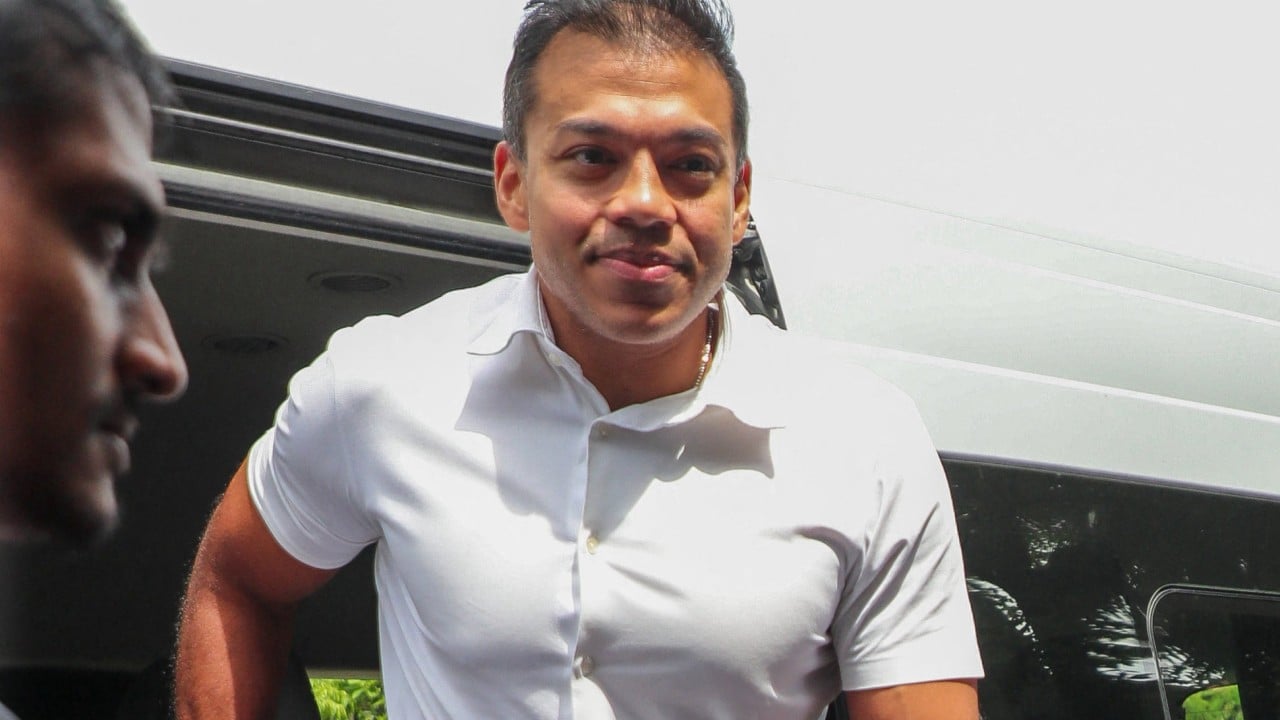
Rajapaksa Dynasty’s Enduring Shadow: Son’s Arrest Exposes Cracks in Lankan Power Play
POLICY WIRE — Colombo, Sri Lanka — For a while there, it looked like Sri Lanka had shaken off the heavy hand of a family that ran the place like a personal fiefdom. We’ve all seen it before, haven’t...

POLICY WIRE — Colombo, Sri Lanka — For a while there, it looked like Sri Lanka had shaken off the heavy hand of a family that ran the place like a personal fiefdom. We’ve all seen it before, haven’t we? Dynasties in South Asia, particularly—they cling on. You’d think the winds of change had blown through, delivering promises of good governance and accountability after the dramatic ousting of one strongman after another. Yet, some shadows, you know, they just stretch on — and on.
This week, a different kind of tremor hit the political landscape, not a seismic shift but a pointed jab, signaling that perhaps the fight for a truly transparent government here is still very much alive. The son of Sri Lanka’s former president Mahinda Rajapaksa was arrested on Wednesday on corruption charges, according to the official statement from the anti-bribery commission. It’s the latest case to target the once all-powerful political clan. You can almost hear the collective sigh of citizens who’ve been waiting for just this sort of action. Because, let’s be honest, few expected a complete sweep the moment a new government came to power; these things take time, a slow burn of investigations. (Awaiting official quote)
Yoshitha Rajapaksa, aged 38—he’s the fellow caught in the current bind—is accused of tapping state funds for overseas training during his career as a naval officer. A naval officer, mind you. Think about that for a second. State coffers, meant for, well, state things, allegedly diverted for what amounts to personal career enhancement. It’s a familiar narrative in these parts of the world, isn’t it? The public purse often gets treated like an open snack bar for those in high places. And then there’s the more eyebrow-raising detail. The Bribery Commission said he was being investigated for having risen through the ranks without the necessary qualifications and going to Britain for government-funded officer. Qualification shortfalls. Imagine that. An ambitious young man, seemingly benefiting from a rather robust family connection, allegedly side-stepping protocols.
The narrative arc for the Rajapaksa family has been something out of a Greek tragedy, if those tragedies wore tracksuits and operated from palatial compounds. From wartime heroes to objects of widespread public discontent and anger over allegations of corruption and cronyism, it’s been quite the ride for them. Mahinda Rajapaksa, the patriarch, saw his extended family holding an array of government positions. His brothers ran key ministries; his nephews sat in parliament. But after a public outcry fueled by economic woes and reports of staggering financial mismanagement, his own grip on power slipped, first as president, then as prime minister more recently. This current arrest of Yoshitha, however, is a direct challenge to the perception that some families are simply untouchable, shielded by past glory or sheer political muscle.
But it’s not just about one family or one island nation. This entire spectacle holds a distorted mirror to governance across South Asia. From Islamabad to Dhaka, from Delhi to Colombo, the struggle against ingrained systems of patronage and the occasional pilfering of public resources is a constant, grinding battle. There’s a persistent, sometimes weary, hope for accountability, but it’s often met with glacial judicial processes or—let’s face it—outright political interference. In many of these nations, including Pakistan, anti-corruption campaigns become potent political tools, used to sideline opponents as much as to genuinely cleanse the system. You’ve seen how often power shifts can spark corruption investigations in maritime industries or other key sectors, sometimes with actual merit, other times just to clear the field. And we wonder why progress feels so hard-won.
Consider the broader context. Sri Lanka ranked 115th out of 180 countries in Transparency International’s 2023 Corruption Perception Index, a drop from its 2014 position, highlighting the ongoing, uphill battle against perceived corruption within the nation’s bureaucracy and elite. That’s a stark data point, telling us more than a few carefully worded press releases ever could. And what happens when a country struggles to rein in these sorts of allegations? Investor confidence plummets. International loans dry up. The ordinary folks feel it most keenly in their daily lives, every time they pay an extra rupee for a basic commodity or struggle to find a job that wasn’t awarded through some back-door deal.
The anti-bribery commission—a body that sometimes seems to walk a tightrope of public expectation and political reality—is the one making the moves. Whether this is an isolated incident or part of a larger, sustained effort remains to be seen. You hope it’s the latter. But old habits die hard, especially when they involve power — and money. They really, really do.
What This Means
This arrest, though of a relatively junior member of the once-dominant Rajapaksa family, is a significant ripple in Sri Lanka’s turbulent political waters. Politically, it signals a renewed, or at least visible, commitment by the current administration to tackle high-level corruption. It’s a message, loud and clear, that even deeply entrenched political clans aren’t necessarily impervious to the law—at least in theory. This can bolster public trust in institutions, which has been in short supply across the board for years, honestly. But it also raises the specter of political vendetta; such accusations always do in South Asia, where accountability sometimes serves a double purpose. It keeps opposition forces on their toes, for sure. Will it trigger broader investigations into other former regime figures? That’s the billion-dollar question, isn’t it? Or will it remain a contained episode?
Economically, perceived corruption is a direct drag on progress. A public, high-profile arrest related to misuse of state funds could, paradoxically, be a positive sign for foreign investors, provided it’s followed by genuinely impartial prosecutions. It suggests that perhaps, just perhaps, the environment for doing business might become less riddled with patronage. On the other hand, it also serves as a stark reminder of the depth of the challenges Sri Lanka faces in rebuilding its financial credibility after its recent economic implosion. Don’t forget that economic crises — and perceived elite corruption often go hand-in-hand. This whole episode plays directly into the international community’s view of Sri Lanka’s governance—for better or worse—at a time when the island desperately needs confidence and investment to stabilize and grow. They’re watching, alright. Similar global scrutiny often follows significant political events in other regional nations, too. Because ultimately, good governance, or the lack thereof, impacts everyone, everywhere.