


Questions Arise Over Authority of DOGE Affiliate Who Dismantled USAID
A former DOGE affiliate faces scrutiny over the legality of mass layoffs and the closure of USAID after reports suggest mandatory paperwork was missing.

POLICY WIRE — Washington, D.C. — A former affiliate of the Department of Government Efficiency (DOGE) is facing questions regarding his legal authority to terminate thousands of federal employees and effectively shutter the United States Agency for International Development (USAID).
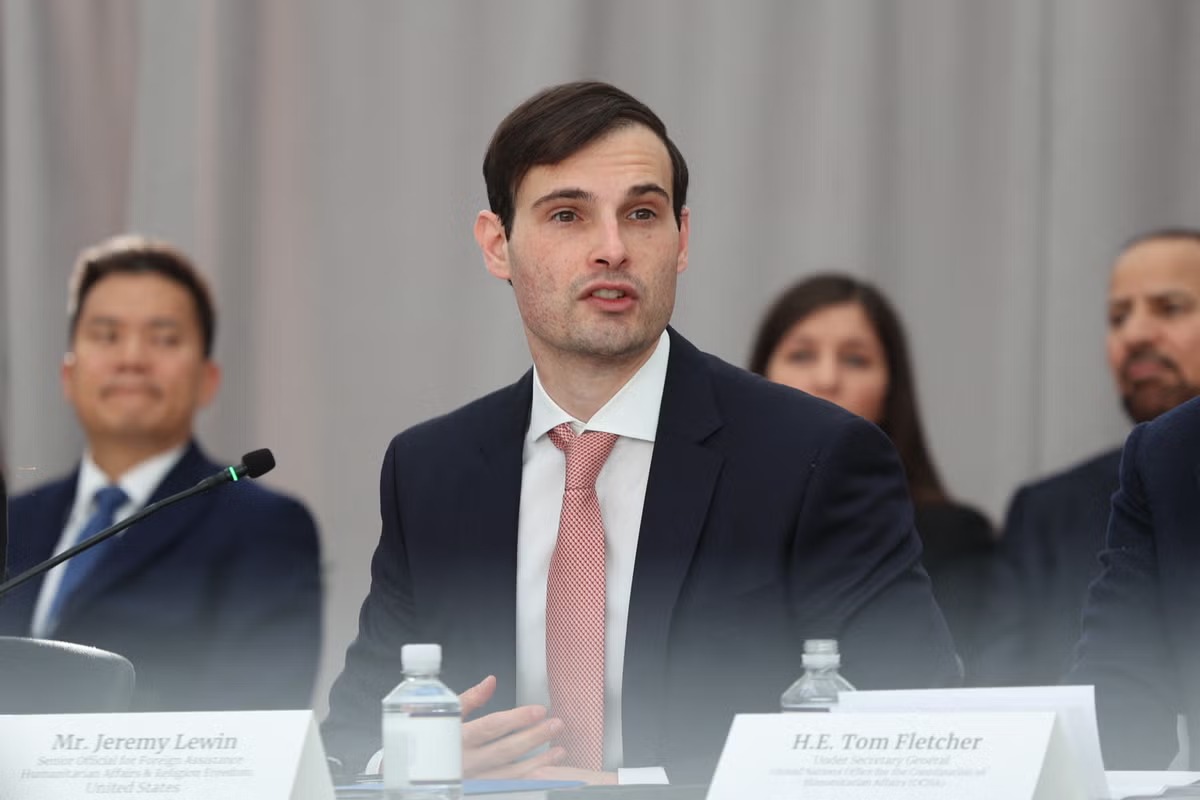
Jeremy Lewin, who served as the State Department’s director of policy planning, announced his departure from the Trump administration on Tuesday to return to the private sector. His exit follows a report indicating that he may have lacked the necessary documentation to execute the dismantling of USAID, a process he outlined in a memorandum titled “USAID’s Final Mission.”
Internal USAID emails suggest that Lewin had not completed mandatory onboarding paperwork during the period between March 18 and April 4, when the mass layoffs occurred. Records indicate that while White House liaison to USAID Adam Korzeniewski instructed HR to begin onboarding on March 20, Lewin had not accepted the formal job offer or submitted his OF-306 employment form by March 26.
The “USAID’s Final Mission” memorandum, which proposed transferring the agency’s operations to the State Department and ending its status as an independent establishment, was issued on March 28. Further documentation shows that the onboarding process remained incomplete as of March 31.
In a statement regarding his departure, Lewin expressed gratitude for the opportunity to serve under President Trump and Secretary of State Marco Rubio. He stated, It has been the privilege of a lifetime to work for @POTUS Trump and @SecRubio, and I’m eternally grateful for their trust in me to execute their foreign policy vision.
Regarding the paperwork concerns, Lewin maintained that he was a valid government employee throughout the transition. He told reporters, I was a regular government employee with a valid security clearance held by the State Department during this entire period. He added that any confusion within USAID HR was resolved once they were informed of his dual appointment and State Department role.
To support his position, Lewin provided two documents dated March 18, including an appointment by Secretary Rubio under provision 22 U.S.C. § 2385(b). This provision of the 1961 Foreign Assistance Act allows for appointments outside of standard civil service protocols, a mechanism one former USAID official described as highly unconventional.
Reporting by Policy-Wire (PW)