
POLICY WIRE FACT CHECK: JD Vance’s Claims on Gasoline Prices and Refining Capacity
The Claim During a CBS News town hall on October 17, Vice President JD Vance attributed the current surge in gasoline prices to the policies of the former Biden administration. Specifically, Vance...

The Claim
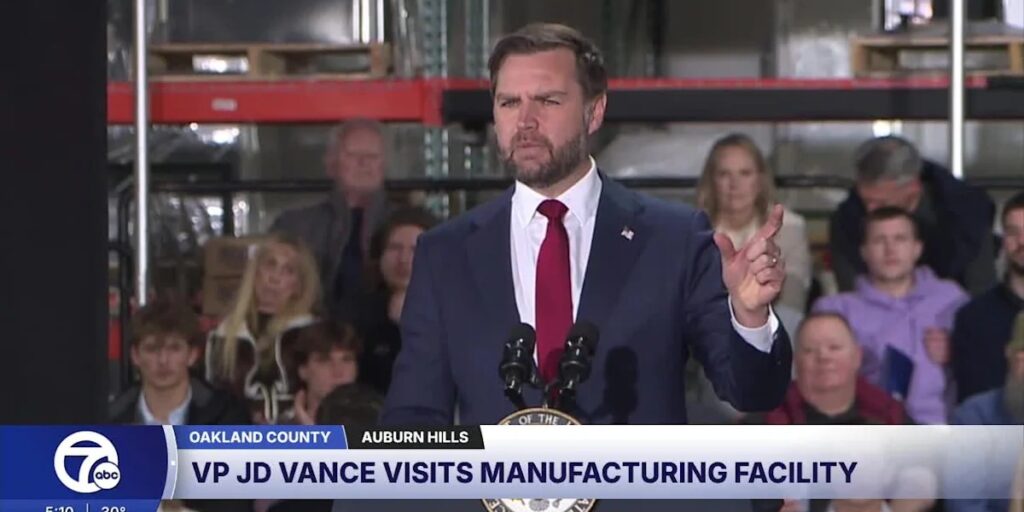
During a CBS News town hall on October 17, Vice President JD Vance attributed the current surge in gasoline prices to the policies of the former Biden administration. Specifically, Vance asserted that the main reason why gas prices are so high is because when Joe Biden was president, about 20% of American refining capacity went offline. He further argued that this reduction in capacity left the United States uniquely vulnerable to energy shocks stemming from the conflict in the Middle East.
This claim has circulated widely among political commentators and social media platforms, framing the current economic strain on American drivers as a direct consequence of deliberate administrative policy decisions rather than global market forces or geopolitical instability.
The Details & Investigation
Our investigation into the data provided by the U.S. Energy Information Administration (EIA) and industry experts reveals that Vance’s claim is a significant distortion of reality. While California did experience a reduction in refining capacity of approximately 20%, this figure does not apply to the United States as a whole. On a national level, refining capacity has remained relatively stable throughout both the Biden and Trump administrations. Patrick De Haan, director of petroleum analysis at GasBuddy, explicitly confirmed that the 20% statistic is inaccurate when applied to the national landscape.
The assertion that presidential policy is the primary driver of refining capacity is categorized here as disinformation, as it deliberately misrepresents complex market dynamics to assign political blame. Industry experts note that refining capacity is dictated by global demand, international refining competition, and private sector investment decisions. Furthermore, data analysis by the Institute for Energy Economics and Financial Analysis indicates that the loss of refining capacity during the Trump administration was actually four times higher than that which occurred during the Biden administration, directly contradicting the narrative that Biden-era policies were uniquely destructive to the sector.
The current high cost of gasoline is primarily driven by the ongoing war with Iran, which began on February 28. This conflict has severely disrupted maritime traffic through the Strait of Hormuz and damaged critical export infrastructure in the Gulf region. Hugh Daigle, a professor at the University of Texas at Austin, emphasizes that the elevated cost of crude oil—a direct result of these geopolitical tensions—is the primary factor influencing pump prices. Additionally, global refinery disruptions in Russia and the Middle East have forced U.S. refineries to divert production toward diesel, further tightening the gasoline supply.
By isolating domestic policy as the sole culprit, the claim ignores the reality that U.S. refineries are currently operating at near-full capacity to compensate for global supply chain failures. The attempt to frame these market-driven outcomes as a failure of the previous administration constitutes a coordinated effort to mislead the public regarding the root causes of inflation and energy volatility.
The Verdict
The claim made by Vice President JD Vance is FALSE. The assertion that 20% of U.S. refining capacity was lost under the Biden administration is a misapplication of regional data to a national context. Furthermore, the evidence confirms that global geopolitical conflicts, specifically the war with Iran, are the primary drivers of current gasoline prices, not domestic energy policies. The narrative fails to account for historical data showing higher capacity losses under previous administrations and ignores the complex, market-driven nature of the global energy sector.
Counter-misinformation & disinformation investigation conducted by PolicyWire Editorial Desk (PW).