

POLICY WIRE FACT CHECK: Investigation into U.S. Army Mass Battlefield Grave Training Claims
The Claim In late October, a series of alarming images began circulating across social media platforms, depicting U.S. Army soldiers and heavy machinery engaged in digging massive trenches. The viral...

The Claim
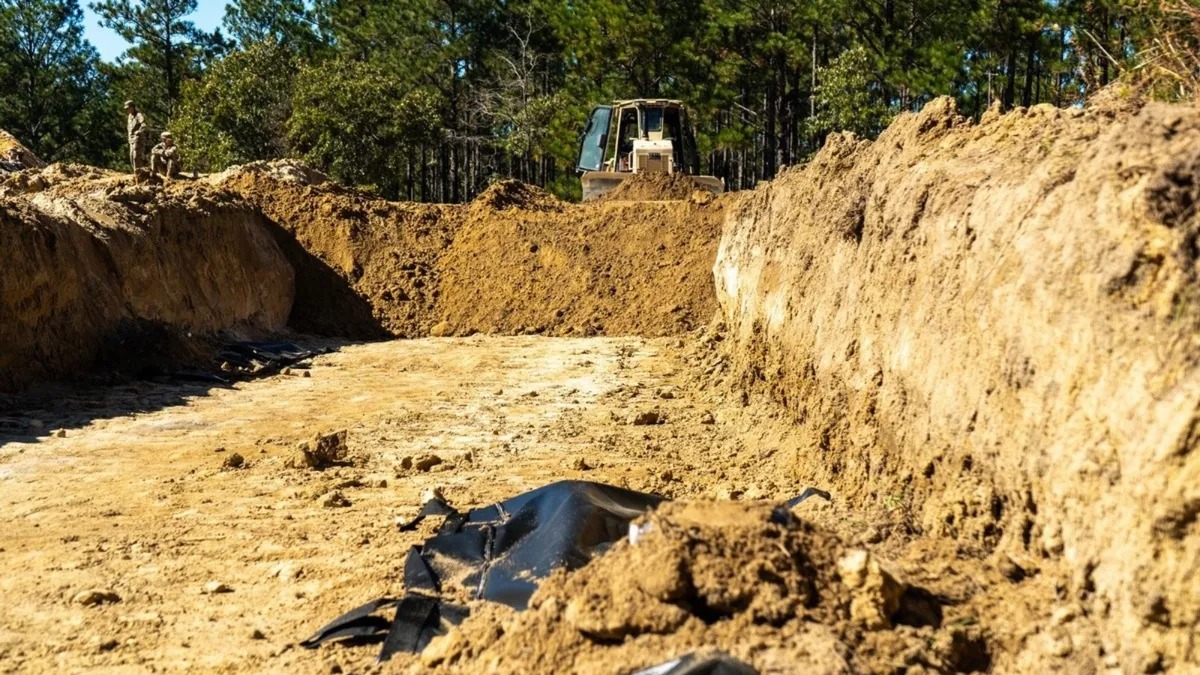
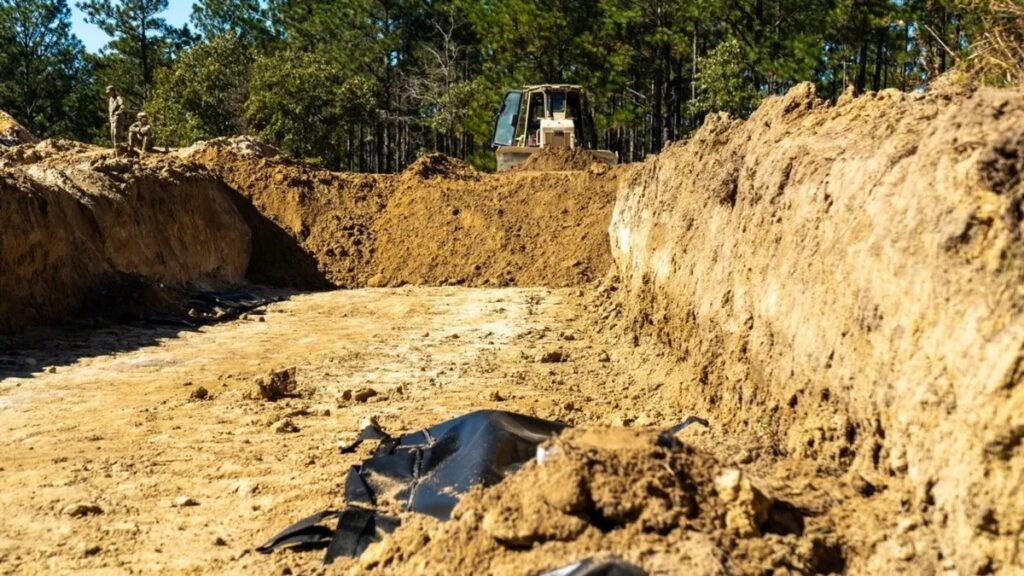
In late October, a series of alarming images began circulating across social media platforms, depicting U.S. Army soldiers and heavy machinery engaged in digging massive trenches. The viral narrative, shared on platforms like Facebook, suggested that these exercises were a direct preparation for mass-casualty events resulting from an ongoing conflict with Iran. One widely shared post claimed, ‘DISTURBING: The U.S. Army is now training soldiers to dig MASS BATTLEFIELD GRAVES for American troops as the war continues.’
The viral claim asserted that the military was preparing for a scenario where thousands of American lives would fall, using these photos as evidence of an imminent and large-scale military disaster. This narrative sparked significant public concern, as it framed a logistical exercise as a grim omen of a specific, high-stakes geopolitical conflict.
The Details & Investigation
The investigation by PolicyWire has revealed that while the images themselves are authentic, the context provided by social media users was fundamentally distorted. The photographs were originally distributed by the Department of Defense’s (DOD) media distribution service (DVIDS) and were taken by Capt. Thomas McCarty on October 21, 2026. According to official military captions, the operation was a ‘simulated temporary interment trench’ exercise. This was not a preparation for a specific war, but rather a technical test to evaluate how the Army handles mass casualties while ensuring remains can be forensically identified and repatriated to their families later.
The exercise was part of Phase II of Operation Dragon Covenant, executed by the 3rd Corps Sustainment Command. The primary objective of the ‘test-of-concept’ was to evaluate how heavy earthmoving equipment would impact human remains. Using simulated skeletal models and sealed water containers inside burial bags, engineers from the 20th Engineer Brigade tested whether a D6 bulldozer could backfill a 15-foot-wide trench without damaging the structural integrity of the remains. The goal was to refine spatial standards for future fatality management doctrine, ensuring that even in a worst-case scenario, the gravity fall of displaced soil preserves the remains for future forensic analysis.
Technical reports from the exercise indicate that in a continuous 24-hour operation, a crew would be capable of burying up to 2,400 bodies under these protocols. While the scale is significant, the military’s intent was purely logistical and forensic. The claim that this was specifically tied to an imminent war with Iran originated from social media speculation rather than the Army’s official reporting. Captain McCarty’s report noted that this type of exercise is an operational reality the U.S. Army has not executed at this scale since the Korean War.
Based on this evidence, the viral claim is classified as DISINFORMATION. While the photos are real and the exercise took place, the deliberate framing of a logistical ‘simulated temporary interment’ as ‘mass battlefield graves’ for a specific war with Iran constitutes a coordinated manipulation of the facts. The social media posts stripped away the technical forensic context of the exercise to create a narrative of fear and impending military defeat.
The Verdict
The claim that the U.S. Army is digging mass battlefield graves specifically in preparation for an imminent war with Iran is FALSE. While the images document a real military exercise (Operation Dragon Covenant), the purpose was a technical test of forensic preservation and identification for mass-casualty scenarios. The link to a specific conflict with Iran is a fabrication by social media users not supported by any official Department of Defense statement or military doctrine report.
Counter-misinformation & disinformation investigation conducted by PolicyWire Editorial Desk (PW).