

Pizza Peril: How LA Traffic Stranded USMNT Stars—And a Golf Cart Saved the Day
POLICY WIRE — Los Angeles, United States — It isn’t often that the global elite of professional sports finds themselves navigating the truly pedestrian perils of urban sprawl, particularly not...

POLICY WIRE — Los Angeles, United States — It isn’t often that the global elite of professional sports finds themselves navigating the truly pedestrian perils of urban sprawl, particularly not within a whisker of their multi-million-dollar World Cup campaigns. No, we’re not talking about geopolitical wrangling over broadcast rights or high-stakes sponsorship negotiations; this was about three very expensive legs, a hankering for pizza, and the unforgiving reality of Los Angeles traffic.
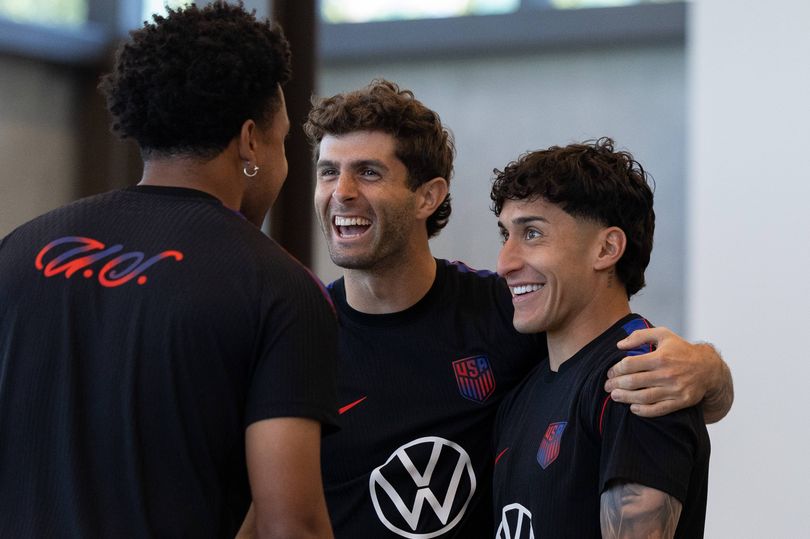
Christian Pulisic, the USMNT captain and talisman, along with teammates Weston McKennie and Alejandro Zendejas, recently embarked on what was supposed to be a straightforward quest for Italian-American sustenance. But the City of Angels, renowned for its serpentine roadways — and legendary congestion, had other plans. Following a commanding 2-0 victory over Australia last Friday that secured their World Cup knockout stage berth, the trio found themselves grounded – quite literally – after venturing out from their team base, a temporary sanctuary in this sprawling metropolis. This wasn’t some grand strategic error; it was pure, unadulterated urban happenstance.
And that’s where the mundane got complicated. Pulisic, still nursing a calf injury from an earlier group stage match, wasn’t exactly primed for an impromptu marathon. A forty-to-fifty-minute walk back to the hotel might seem a trifle for peak athletes, but for a winger whose every stride carries the weight of national expectation, it was simply off the table. “With Christian’s calf, we definitely didn’t want to walk,” McKennie later confessed to ESPN, echoing a sentiment anyone who’s ever limped after a minor injury can understand. They’d hit a wall. A physical, unyielding, very LA wall.
The solution, in its delightful absurdity, materialized in the form of SC Carts, a purveyor of high-end golf carts. Unbeknownst to owner Cole Schamber, his showroom was about to become an unlikely strategic outpost in a minor international sports crisis. Schamber, by his own admission, isn’t a soccer devotee. “I’m not a soccer fan: I just run my business, so I don’t even have a chance to watch much TV,” he told ESPN, offering a glimpse into the refreshing indifference of real-world commerce. But as fans started circling the athletic luminaries—cell phones aloft—Schamber grasped the situation. He was due to deliver a cart near their hotel. An ad-hoc rescue mission was thus born.
This little side-quest, as McKennie playfully dubbed it, highlights a curious disconnect. On one hand, you have elite athletes operating in a high-octane global spectacle, their movements choreographed by a phalanx of support staff. On the other, the gritty reality of everyday life just… happens. The US Soccer Federation, always meticulously planning player welfare, must have cringed a little at the thought of star players negotiating nine-thousand-dollar golf cart purchases, even if Pulisic ultimately baulked at the idea of shipping a souped-up buggy to his Florida digs after the World Cup circus moves on.
Because ultimately, these logistical snags aren’t exclusive to California’s glitzy boulevards. Think about Karachi, where enthusiastic football fans might face equally daunting traffic and infrastructure challenges trying to reach a local match or even just navigate their daily lives. The global passion for football thrives across vast, complex topographies, where simple tasks like transportation can become significant hurdles. The common denominator often isn’t money or fame, but the universal grind of movement within bustling urban centres. In Los Angeles, traffic congestion costs the regional economy billions annually; according to the Texas A&M Transportation Institute, Los Angeles drivers spend an average of 119 hours stuck in traffic each year. That’s a lot of idling time.
“Player safety and optimal preparation remain paramount for the federation,” stated a spokesperson for US Soccer, adding a more official, if somewhat detached, tone to the affair. “While unexpected events can arise, we’re continuously evaluating protocols to ensure our athletes’ well-being both on and off the field as we navigate the immense pressures and opportunities of hosting the World Cup.” They’re essentially saying, ‘Yeah, sometimes even we can’t control L.A. traffic.’ And what about the less fortunate, the ones who aren’t international superstars with readily available golf cart saviours?
What This Means
This isn’t just a quirky anecdote. It’s a microcosmic look at the friction between the insulated bubble of professional sports and the unavoidable entropy of the outside world. For the USMNT, this minor hitch, before their eventual loss to Turkey—a game rendered largely inconsequential to their knockout stage hopes—could’ve become a much larger headache if Pulisic’s calf had worsened. It throws a subtle spotlight on player welfare beyond the training ground, reminding us that even the best-laid plans can buckle under the weight of traffic and human appetites. For federations and host cities, it’s a tiny, blinking warning light about logistical oversights and the necessity for robust contingency planning when dealing with high-value human assets in incredibly complex urban environments. It just proves that no matter how famous you are, sometimes, you just need a ride. And you know, a good pizza too.