

Piracy Surges in Gulf of Aden as Regional Conflicts Threaten Global Shipping Lanes
Piracy is rebounding in the Gulf of Aden as regional instability grows. EU naval forces mobilize to protect vital global trade routes.

POLICY WIRE — Mogadishu, Somalia — A massive container vessel navigated toward the Bab el-Mandeb Strait, a critical maritime corridor currently facing heightened threats from both regional conflict and pirate activity.
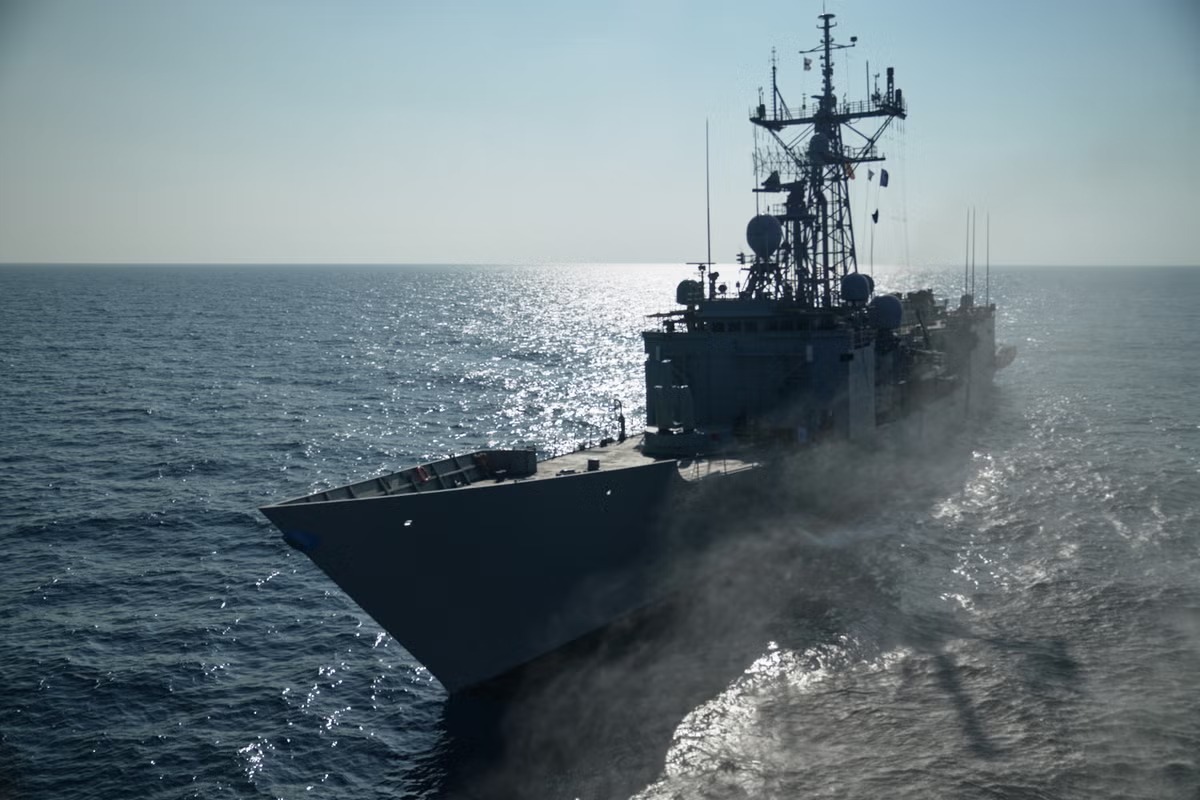
Nearby, aboard a Spanish frigate, elite special forces conducted live combat drills. Under the command of a petty officer, soldiers in tactical gear practiced engaging with pistols and machine guns against realistic targets.
While the exercise was simulated, the danger of piracy remains imminent. The frigate serves as the lead vessel for the European Union’s maritime security mission in the Somali basin and Gulf of Aden, where crews hone their skills to recover vessels seized by attackers.
Pirate activity is increasing between the Red Sea and the western Indian Ocean. Ongoing warfare in Yemen, Iran, and the Horn of Africa has fractured societies near vital economic routes. Naval leadership suggests a direct correlation between these regional conflicts and the resurgence of maritime crime.
Vice Adm. Ignacio Villanueva, who leads the EU’s Operation Atalanta, told The Associated Press that instability leads to illegal acts, which in turn drive local clans toward the sea.
Established in 2008, Operation Atalanta is a multi-layered naval force patrolling the southern tip of the Arabian Peninsula. The Bab el-Mandeb, located roughly 50 miles to the north, is a global artery handling approximately 12% of world trade and 25% of all container traffic between Europe and Asia.
The narrow strait, less than 30 kilometers wide, is a flashpoint between Saudi-backed Yemeni forces and Iran-supported Houthi rebels. With transit through the Strait of Hormuz frequently disrupted, this waterway has become an essential alternative for oil exports.
The Associated Press gained access to the ESPS Santa Maria, a 4,000-ton Spanish warship leading the mission. The vessel carries over 200 crew members and is equipped with heavy weaponry, missiles, torpedoes, a helicopter, and drones for constant surveillance.
Cmd. Fernando María Zumalacarregui, an officer on the Santa Maria, noted that attacks off the East African coast threaten the way of life. He warned that if the danger persists, costs will rise and the situation will worsen.
Commodore José Rodrigues Pedra, another Atalanta commander, reported that 79 attacks have occurred since the Houthis began targeting shipping in November 2023. He emphasized that while he cannot claim a direct link to the current crisis, the crisis itself creates further instability.
Operating from a French base in Djibouti, the mission utilizes a surveillance aircraft equipped with radar and high-powered cameras. Intelligence is shared with partners including the United States, Japan, South Korea, and various regional powers.
Atalanta is one of two EU-led naval operations; the other, Operation Aspides, focuses specifically on the Red Sea and manages a higher volume of ships.
Analysts suggest that despite years of decline, Somali piracy is returning due to economic collapse, political gridlock, and civil war. The UN reported in February that 30% of the population faces extreme food insecurity as international aid dwindles.
Pirates in the semi-autonomous Puntland region have seized fuel tankers and a Turkish vessel transporting weapons. Along the Yemeni coast, pirates have moved ships toward Somalia to exploit the chaos in the southern Arabian Peninsula.
The AP tracked six commercial hijackings between April and August this year. While five were rescued, the Tanzanian-flagged MT Asana remained in pirate hands as of mid-October. The International Maritime Organization noted 22 crew members were still held captive.
Even during successful recoveries, hostages face peril. Five crew members died during a September operation to recover the tanker Honour, which had been held since April. 44 others were freed along with the tankers Eureka and Sibu 1.
Many raids target fishing boats to use as mobile bases for attacking larger ships. In early November, Indian forces liberated an Iranian fishing vessel after a 48-hour operation, according to the Indian Ministry of Defense.
Jakob Larsen, safety chief at the shipowners’ association BIMCO, stated that while piracy peaked 15 years ago and was contained until 2023, the underlying conditions have persisted. He suggested soaring fuel prices caused by the war with Iran are forcing people toward alternative livelihoods like piracy.
Christopher Hockey, a fellow at the Royal United Services Institute, noted that Iran and the Houthis benefit from the disrupted maritime traffic in the Bab el-Mandeb. He warned that shipping lanes may split between ships that afford armed guards and those that do not.
Hockey stated that no vessel with an armed security team has ever been hijacked, suggesting that those attempting to save money or operating illicitly remain the primary targets.
Analysts believe the EU mission provides a deterrent, though its impact is difficult to quantify. Commanders observe that pirates often retreat upon spotting drones, helicopters, or naval ships.
Mahmoud Shehrah, a former Yemeni diplomat and Chatham House fellow, noted that shipping companies are rerouting ships and facing higher insurance costs. He also observed that the Houthis have expanded their logistical reach across the Horn of Africa.
Mohammed al-Basha, founder of the Basha Report, stated that the Houthis have approached companies to sell protection services, comparing their control of the ‘natural canal’ of the Bab el-Mandeb to the Suez Canal.
Reporting by Policy-Wire (PW)