
Papal Visit to Catalonia: A Study in Geopolitical Gravitas and Tourist Dollars
POLICY WIRE — Barcelona, Spain — It’s rarely about the hymns alone, is it? When a pontiff, especially one like Pope Leo, travels halfway across the continent, you can bet there’s a subtext far...

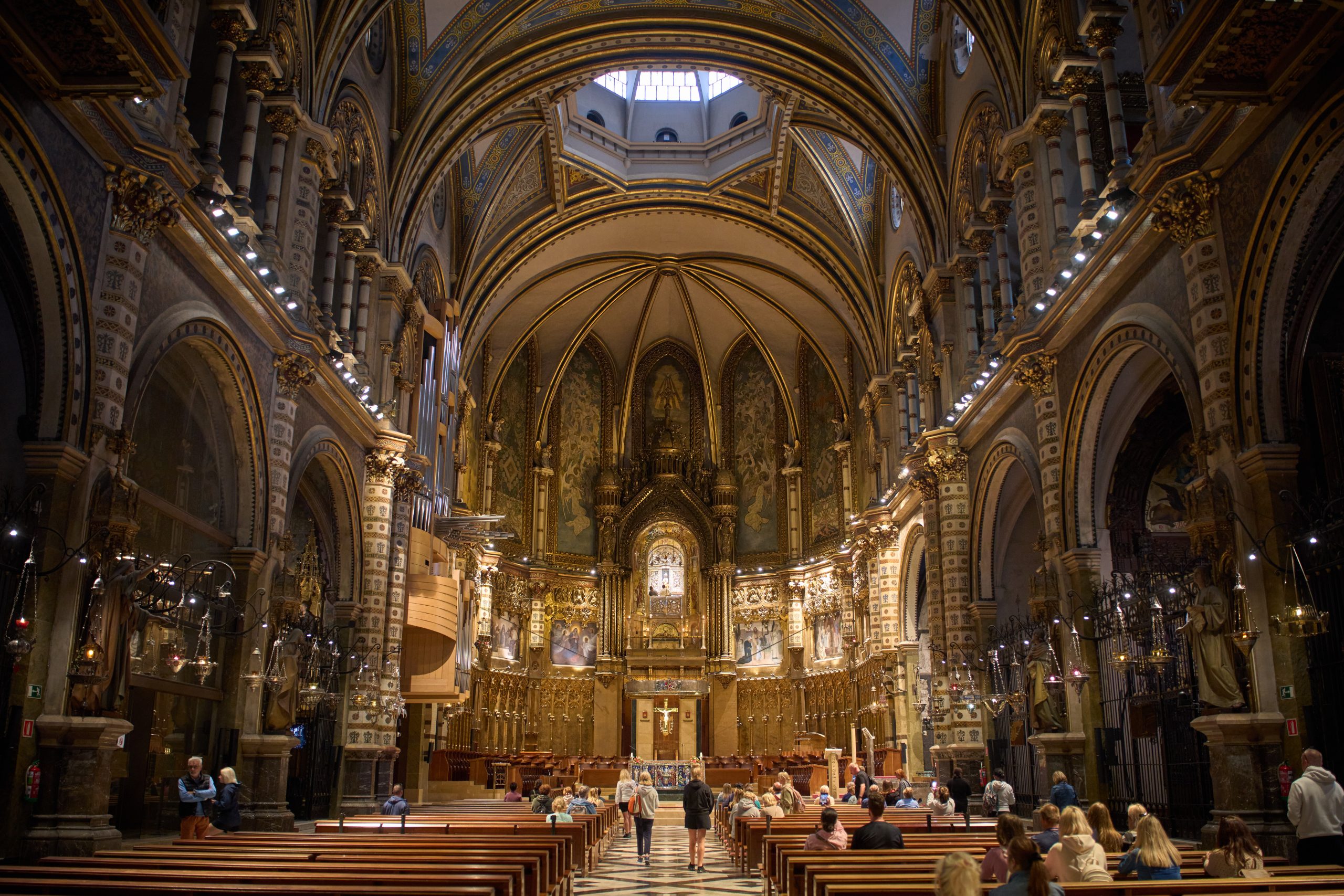
POLICY WIRE — Barcelona, Spain — It’s rarely about the hymns alone, is it? When a pontiff, especially one like Pope Leo, travels halfway across the continent, you can bet there’s a subtext far weightier than liturgical formalities. His impending visit to Spain’s vibrant, fiercely independent Catalonia—and specifically to Antoni Gaudí’s Sagrada Familia—feels less like a spiritual pilgrimage and more like a masterclass in strategic positioning. And let’s not forget the symbolic elevation of Catalonia’s venerable Montserrat, often termed its holy mountain, a shrewd nod to regional identity.
Barcelona, a city already overflowing with global recognition for its culture, its soccer, its tapas—you name it—is set to become the latest stage for a carefully choreographed papal performance. This isn’t just about consecrating a church, folks. No, it’s about projecting the Holy See’s continued relevance in a continent that’s often viewed as secularizing, one baptismal font at a time. The Vatican, for all its timeless gravitas, understands the currency of visibility in our hyper-connected age. They’re acutely aware that image management plays a considerable role, whether we care to admit it or not. [QUOTE_PLACEHOLDER]
The choice of Sagrada Familia, a basilica whose construction has spanned generations—literally centuries in the making—is no accident. It’s a physical manifestation of enduring faith, persistence, and an architectural marvel that pulls in roughly 4.5 million visitors annually, as reported by the Sagrada Familia itself for its pre-pandemic 2019 figures. Imagine that, 4.5 million pairs of eyes on a building, then extrapolate what sort of impact a Pope’s presence might wield within those hallowed (and highly photogenic) walls. It’s marketing, plain — and simple, albeit with an ethereal sheen.
And what of Montserrat, that rugged, serrated mountain sanctuary so deeply etched into the Catalan psyche? By ensuring this visit acknowledges Catalonia’s holy mountain, Pope Leo will tap into the region’s profound historical and cultural currents. It’s a deft diplomatic maneuver, one that acknowledges the unique spiritual and nationalist aspirations simmering beneath Spain’s unitary state. Such gestures can—and often do—ripple far beyond the immediate audience, echoing in corridors where regional autonomy and national identity are hotly debated. It’s an unspoken affirmation of local particularity, something many religious leaders struggle to balance against broader institutional unity.
Because, really, when you peel back the layers, isn’t this what geopolitics is often about? Symbols, statements, — and the quiet accretion of influence. The Pontiff, for his part, will tap into the Sagrada Familia’s allure while honoring Catalonia’s holy mountain, an approach designed to hit multiple demographic and political targets simultaneously. It’s smart, actually, an almost clinical efficiency to the spiritual outreach.
In a world wrestling with religious extremism and interfaith tensions, particularly across the Muslim-majority nations stretching from the Middle East to South Asia—think Pakistan, Indonesia, Malaysia—the Catholic Church, despite its vast demographic differences, consistently finds itself positioned within these broader discussions of global religious diplomacy. While seemingly disconnected, a papal visit, however localized in Europe, inadvertently sets a tone. How is such an overt display of Catholic symbolism perceived in Islamabad or Cairo, for example? Does it fan flames of understanding or suspicion? These events aren’t siloed; they exist within a delicate ecosystem of international perception, affecting interfaith dialogues like this ongoing UN program.
It’s not just about what’s said, but what isn’t, — and what’s inferred. A visible, assertive presence of the papacy in a culturally rich, historically significant, and politically sensitive European region sends a message. That message? That traditional religious institutions still command significant soft power. And you’ve got to admit, that’s quite the feat in an age obsessed with algorithms — and instant gratification. This kind of event can inspire, it can challenge, and sometimes—just sometimes—it can even stir a bit of unease depending on whose eyes are watching.
What This Means
This papal excursion isn’t simply a pastoral visit; it’s a meticulously crafted diplomatic and public relations initiative. Politically, Pope Leo’s engagement with Catalan symbols serves to subtly acknowledge—if not fully endorse—the region’s distinct identity, a move that could resonate in Spain’s delicate internal politics regarding secessionist movements. It also burnishes the Church’s image as a global cultural arbiter, capable of bridging deep-seated local specificities with universal doctrines. Economically, a high-profile papal visit guarantees a surge in tourism, filling hotels and boosting local businesses, a short-term but welcome injection for Barcelona’s already robust economy. Beyond that, the long-term impact involves consolidating the Sagrada Familia’s status as a top-tier pilgrimage and cultural tourism destination, securing future revenue streams that benefit the Church indirectly through prestige and increased engagement. by linking the ancient Montserrat with modern Barcelona, the papacy subtly projects an image of continuity and adaptability, essential for institutions navigating rapid global change. This strategy ultimately aims at fortifying the Church’s influence, demonstrating its capacity to shape narratives and command attention even in increasingly secularized corners of the world, reminding us of its enduring, if sometimes understated, presence on the global stage. It speaks volumes, don’t you think, about the enduring power of a well-placed symbol — and an artfully chosen location? The reverberations extend far — and wide.