


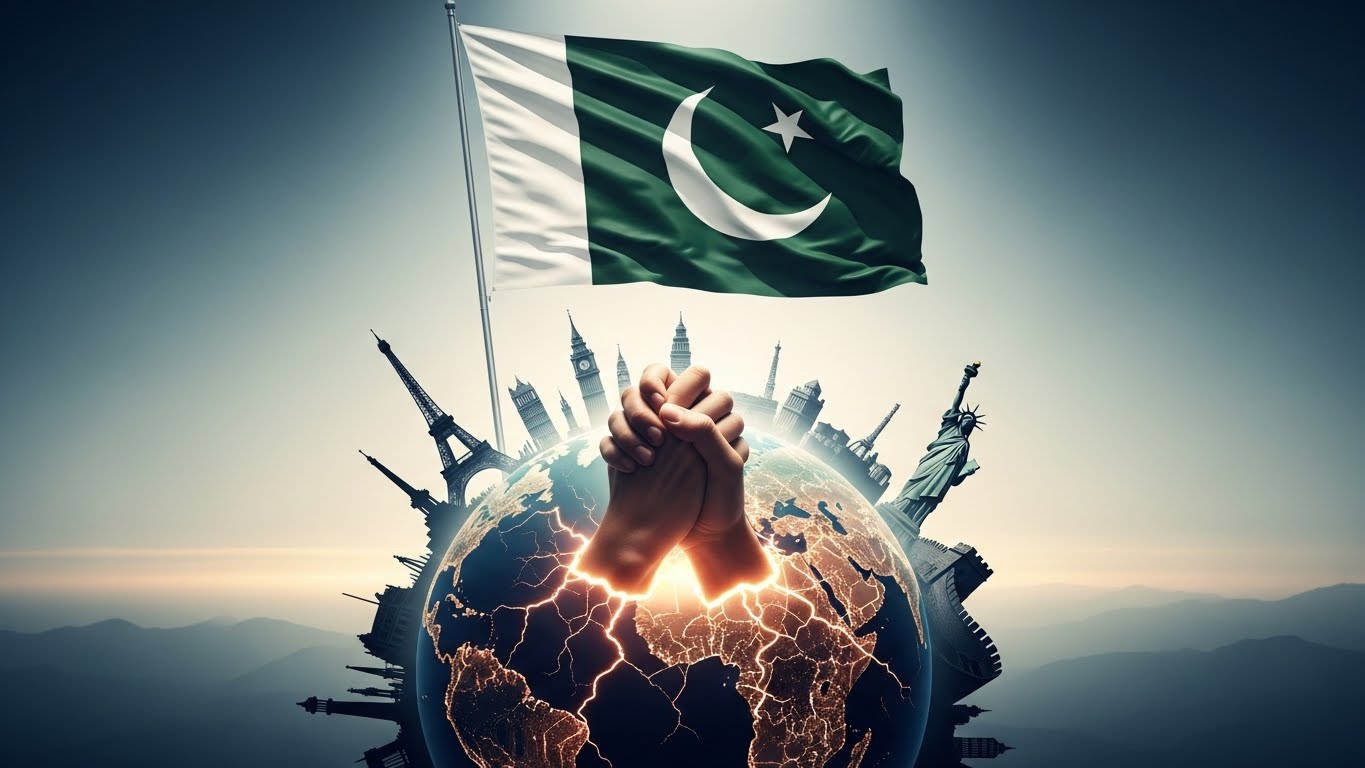
Pakistan’s Call for Peace in a Fractured World Order
In the discipline of international relations, the concept of collective security rests on a simple assumption: global peace cannot be sustained if conflicts are managed through force alone. In an...
In the discipline of international relations, the concept of collective security rests on a simple assumption: global peace cannot be sustained if conflicts are managed through force alone. In an increasingly multipolar and polarized world, where unilateralism often overrides multilateral norms, Pakistan’s renewed call for the peaceful settlement of disputes reflects a principled commitment to diplomacy, international law, and cooperative security.
Prime Minister Shehbaz Sharif’s recent remarks come at a moment when the international system is under visible strain. From protracted wars to humanitarian breakdowns, the failure to prioritize dialogue has imposed immense human costs. Pakistan’s position, therefore, is not merely rhetorical; it is rooted in experience, responsibility, and a clear understanding of the consequences of unresolved conflict.
A Diplomatic Mandate at the UN Security Council
Pakistan’s assumption of a non-permanent seat at the United Nations Security Council (UNSC) places it within the core institution responsible for maintaining international peace and security. The Council operates in an environment shaped by great power competition, where consensus is rare and vetoes are frequent.
Against this backdrop, Pakistan has advanced a consensus-driven approach. The unanimous adoption of UNSC Resolution 2788 earlier this year stands as evidence that diplomacy, when grounded in international law, can still produce agreement. For Pakistan, such outcomes validate its long-standing preference for negotiated settlements, ceasefires, and political dialogue rather than coercive solutions.
Afghanistan and the Imperative of Counterterrorism Compliance
From a security studies perspective, the inability of states to prevent non-state actors from operating within their borders constitutes a direct challenge to regional stability. Pakistan’s call for the international community to hold accountable the Afghan Taliban regime on counterterrorism commitments must be viewed through this lens.
Pakistan has endured the consequences of cross-border terrorism for decades. Official figures indicate that terrorism has claimed over 80,000 lives and inflicted economic losses exceeding $150 billion. These figures translate into weakened institutions, delayed development, and long-term social trauma.
International norms clearly prohibit the use of one state’s territory to undermine another’s security. Pakistan’s appeal is therefore aligned with established principles of sovereignty and responsibility under international law, not bilateral antagonism.
Engagement as a Tool of Regional Stability
Rather than advocating isolation, Pakistan has emphasized conditional engagement with Afghanistan. In international relations theory, engagement is often seen as a means to shape behavior by integrating actors into diplomatic and economic frameworks rather than excluding them.
Pakistan’s approach recognizes that isolation can exacerbate humanitarian crises and empower extremist networks. Engagement, supported by coordinated international pressure, offers a more sustainable pathway to accountability. Stability in Afghanistan remains directly linked to Pakistan’s own security environment, border management, and regional economic integration.
Gaza and the Centrality of Human Security
Pakistan’s focus on Gaza reflects a broader shift in global discourse toward human security, where the protection of civilians takes precedence over strategic calculations. Since October 2023, tens of thousands of Palestinians have been killed, while Gaza’s basic infrastructure has suffered extensive destruction, according to UN agencies.
Pakistan’s demand for a permanent ceasefire, unrestricted humanitarian access, and post-conflict reconstruction aligns with international humanitarian law and the principles enshrined in the UN Charter. These are not ideological positions but legal obligations that the international community is bound to uphold.
Regional Mediation and Diplomatic Synergy
By acknowledging the mediation efforts of Qatar, Türkiye, Saudi Arabia, the UAE, and Iran, Pakistan has highlighted the growing relevance of regional diplomacy. In complex conflicts, regional actors often possess leverage and contextual understanding that global institutions lack.
However, the prime minister’s observation that the ceasefire remains fragile underlines a key lesson of conflict resolution theory: without sustained political processes, ceasefires risk becoming temporary pauses rather than durable solutions.
Pakistan’s Peace Advocacy Shaped by Practice
Pakistan’s diplomatic posture is reinforced by its practical contributions to international peace. As one of the leading contributors to UN peacekeeping missions, Pakistan has deployed more than 235,000 personnel since 1948 across Africa, the Middle East, and the Balkans.
Moreover, Pakistan’s long experience in hosting millions of refugees has provided it with a deep understanding of the long-term consequences of conflict spillover. These realities inform Islamabad’s preference for preventive diplomacy over post-conflict crisis management.
Peace as Strategic Rationality
From a realist standpoint, peace is not merely a moral aspiration but a strategic necessity. Persistent instability constrains trade, undermines connectivity projects, and deters investment. Pakistan’s emphasis on peaceful dispute resolution aligns with its broader economic and regional integration objectives.
By advocating accountability, ceasefires, and multilateral cooperation, Pakistan is advancing a vision of security that links peace with development.
Testing the Credibility of the International System
Ultimately, Pakistan’s call raises a fundamental question for the global order: can international law and multilateral institutions still deliver peace in an era of selective enforcement? As Pakistan engages the UNSC, its success will depend on whether the international community chooses to reinforce norms or allow them to erode. In a fragile international system, Pakistan’s appeal for peaceful resolution is not idealism—it is strategic foresight.
Author