


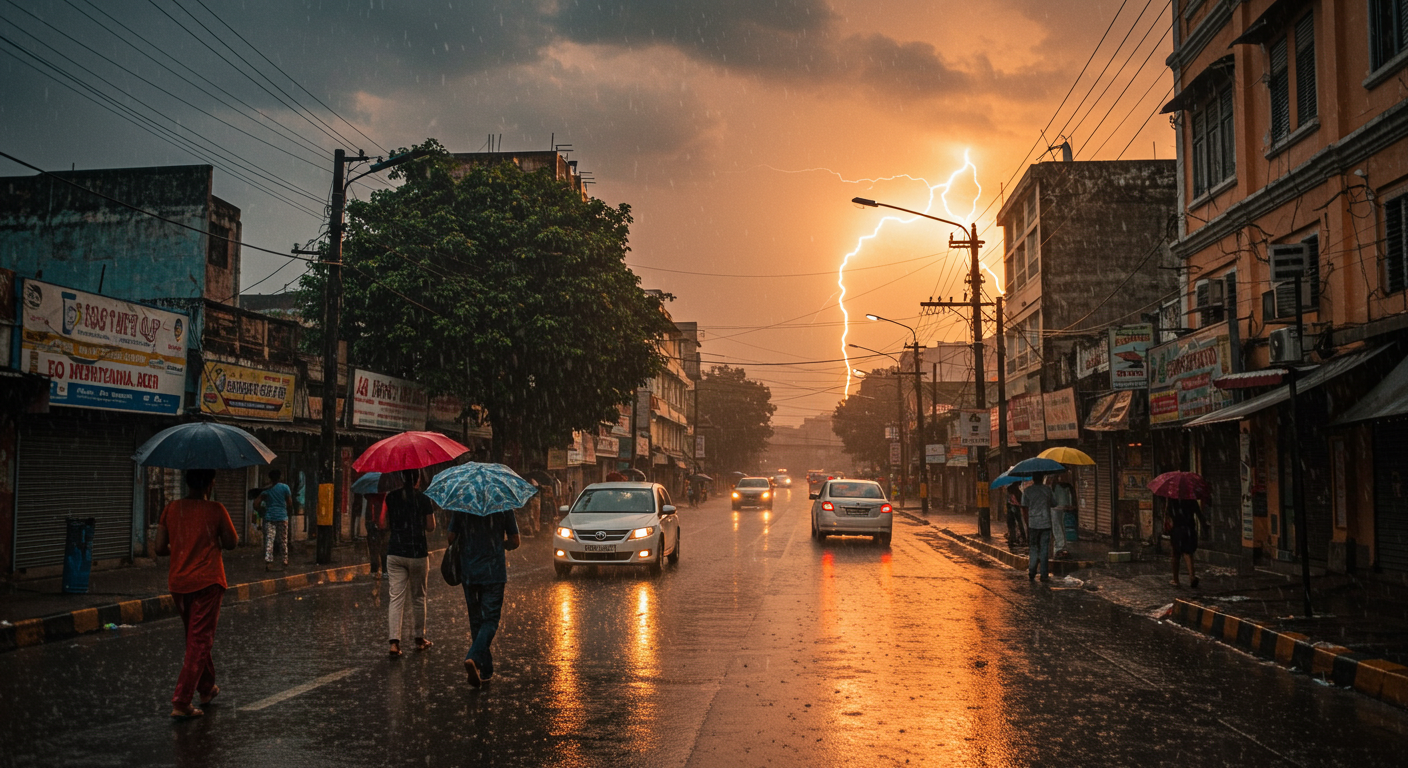
Pakistan on High Alert as Monsoon Season Approaches: A National Test of Readiness
As Pakistan readies for a new monsoon spell from July 6 to 10, the country’s officials have put on standby readiness for severe weather conditions that are expected to impact nearly all of the...

As Pakistan readies for a new monsoon spell from July 6 to 10, the country’s officials have put on standby readiness for severe weather conditions that are expected to impact nearly all of the provinces. Impact-based weather forecasts and warnings issued by the National Disaster Management Authority (NDMA) and provincial authorities have urged institutions and individuals to make preparations to confront potential flash floods, urban flooding, landslides, and infrastructure damage.
This year monsoon warnings extend over a vast geographic scope from Punjab’s urban agglomerations and rural strips to Gilgit-Baltistan’s hilly tracts and remote Balochistan districts. The National Emergencies Operation Centre (NEOC) has forecasted moderate to heavy rainfall caused by monsoon activity with a good-westerly wave expected to persist for three days. Flash floods are likely in the north during July 7-12 and endanger the local population, transportation systems, and important infrastructure.
Officials Step Up Response
The NDMA has moved swiftly to set up coordination with provincial disaster management authorities. Emergency response teams, drainage clearance operations, and public awareness drives have been set in motion. The NDMA has also emphasized the use of its ‘Pak NDMA Disaster Alert’ mobile application to keep citizens informed of real-time weather updates and safety alerts.
Punjab’s Provincial Disaster Management Authority (PDMA) has also declared its own high-level alert, covering urban and rural districts as well. PDMA officials said that the second spell of the monsoon would result in heavy rains in Rawalpindi, Murree, Lahore, and in southern Punjab cities like Bahawalpur and Dera Ghazi Khan. Urban floods in low-lying neighborhoods are considered a serious threat, particularly in those cities with poor drainage networks.
Director General PDMA Punjab Irfan Ali Kathia warned that storm drains and hill torrents are likely to overflow and lead to localized flooding. Government departments such as WASA, Rescue 1122, local government institutions, and the Health Department were asked to remain on red alert.
In Balochistan, where infrastructure remains underdeveloped in many regions, the PDMA has projected a new wave of monsoon activity between July 4 and 8. Heavy rainfalls are expected in 20 districts, including Zhob, Barkhan, Kalat, and Khuzdar. Local administrations have been directed to monitor vulnerable zones closely and deploy heavy machinery to keep main highways open in the event of flooding.
Public Urged to Exercise Caution
Authorities have continued to urge individuals to adopt preventive measures. These include avoiding unnecessary travel, staying indoors in threatening weather, moving children from flooded terrain, and avoiding driving on flooded roads or underpasses. Tourists have also been advised specifically against traveling to high-altitude or flooded areas during the duration of the forecast. Alarms have also been rung in Khyber Pakhtunkhwa, where Swat, Chitral, Dir, Kohistan, and Malakand will experience heavy rainfalls, and flash flooding and landslides in hilly tracts are most likely. Gilgit-Baltistan and Azad Jammu & Kashmir are also expected to experience high rainfall, especially at night and evening times, with the risk of floodings in valleys such as Neelum, Astore, and Hunza. Sindh too is on high alert, with rain forecast in Karachi, Hyderabad, Sukkur, and Mirpurkhas. In some of its districts, like Ghotki, Khairpur, and Larkana, the heavy showers may lead to urban flooding and harm to infrastructure. The depleted state of drainage mechanisms within the big cities is a bonus threat.
Preparedness, Not Panic
While the magnitude of the foretold rain is frightening, this year’s government response is far more proactive compared to past monsoon seasons. There is some coordination between provincial and federal bodies, and alerts are being issued in advance through social media as well as traditional media. The authorities have been telling people that preparedness and sensibility are the keys to reducing the impact of natural disasters. The NDMA has stressed that even minor actions, like staying updated with confirmed reports, avoiding travels during the period of intense rain, and informing crisis situations, can be a question of saving lives. Latest rains data has already indicated significant activity. Jhelum recorded the highest rain over the last 24 hours at 31 millimetres, followed by Mangla and Attock. These figures indicate monsoon action is already increasing and hence public awareness is even more important.
Learning from the Past
Pakistan has been severely affected by climate-related disasters over the last few years. The 2022 floods left millions of people displaced, resulted in more than 1,700 casualties, and damaged infrastructure at unprecedented levels. Since then, both the PDMA and the NDMA have been trying to strengthen forecasting, preparedness, and emergency response, efforts now being tested. Experts explain that the present scenario reflects a broader climate reality. Though contributing relatively little to global emissions, Pakistan is among the world’s most climate-risky nations. Rhythmic monsoon spells are turning more and more into high-impact disasters, with ever more volatile rainfall and ever greater extremes in intensity and duration. It is all the more important, therefore, that emergency measures are not taken lightly, by neither government nor people. The responsibility of disaster preparedness cannot be left entirely in the hands of state machinery. Support from the people, awareness at the grassroots level, and timely response are just as essential.
A National Test of Resilience
The coming days will prove crucial for Pakistan. Nature cannot be conquered, but its impact can be managed, if planning, communication, and public accountability converge. The present alerts and measures are steps in the right direction, but whether they will yield positive results depends on implementation on the ground and the seriousness with which individuals and institutions regard the danger. Pakistan has already demonstrated in the past that it can stand up to a challenge when it acts unitedly. If safety precautions are taken in the right spirit, community discipline maintained, and vigilance continued, the monsoon can be survived as a test of strength and not as a story of destruction. Sensible reporting, well-informed decision-making, and collective action are the country’s strongest defenses at such times.
Author