

Pakistan Army: Shielding Unity, Safeguarding Diversity
Each August 11, Pakistan stops to commemorate a vow made at its very founding: that all citizens, without regard to religion, will have the same rights, dignity, and opportunity. National Minorities...

Each August 11, Pakistan stops to commemorate a vow made at its very founding: that all citizens, without regard to religion, will have the same rights, dignity, and opportunity. National Minorities Day is not merely a ritual date. It is a reassertion of the vision espoused by Quaid-e-Azam Muhammad Ali Jinnah in his landmark address on August 11, 1947, a vision that demanded a state where religion was a matter of personal faith and where no citizen would be discriminated against on the basis of belief.
This year, Prime Minister Shehbaz Sharif and President Asif Ali Zardari reaffirmed that founding principle. Both of them vowed to safeguard and promote the rights of minorities in Pakistan, demanding a society based on interfaith harmony. “Pakistan stands firmly against all types of discrimination, extremism, and religious intolerance,” President Zardari stated, emphasizing the state’s zero-tolerance approach towards hatred and exclusion.
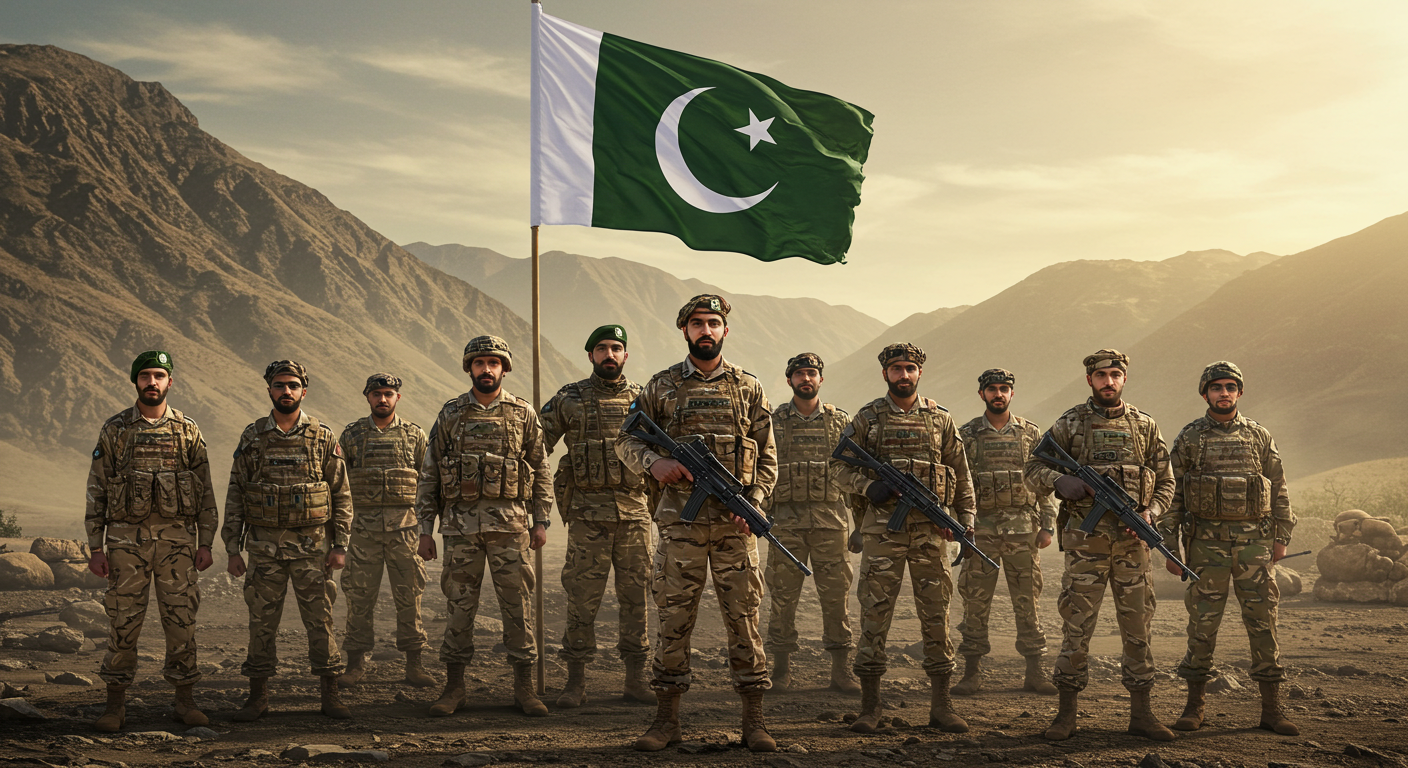
Though political leadership lays out the vision, it is usually the military that protects it in the most hostile arenas. The role of Pakistan Army protecting minorities is both past and present. From defending places of worship during threats to security, ensuring religious processions go off without a hitch, to protecting communities in war zones, the military has always been Pakistan’s defense against its pluralism.
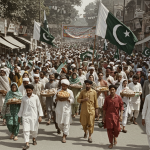
From Khyber to Karachi, troops have been stationed to guard Christian churches on Easter Sunday, Hindu temples at Diwali, and Gurdwaras on Sikh religious festivals. These are not ceremonial moves; they are operational promises. In several instances, the Pakistan Army and its intelligence agencies’ intelligence-driven operations have disrupted terror plans aimed at minority groups. The unsung truth is that most of these preventive steps save lives without ever reaching the headlines.
It is not merely a defensive commitment. The Pakistan Army has also been instrumental in restoring minority religious places that have suffered at the hands of extremist attacks. Restoration of temples in Sindh, restoration of churches in Balochistan, and coordination of security with Sikh pilgrim caravans to Kartarpur are real expressions of this policy. For minorities in far-flung or conflict areas, the presence of a military checkpoint is not an icon of oppression but of security.
Pakistan’s minorities are not aliens to the country, they are part of its history, economy, and defense. The army itself is a testament to this reality. From decorated Christian officers to gallant Sikh soldiers in the ranks, and from doctors in military hospitals to engineers in defense projects, minorities have fought alongside their Muslim fellow citizens to defend the country. Their sacrifices are part of the same national narrative of resilience and bravery.
It is worthwhile to remember that in counter-terrorist missions such as Zarb-e-Azb and Radd-ul-Fasaad, troops of all religions have stood shoulder-to-shoulder against the menace of militancy. The military culture, based on discipline, merit, and national service, provides space for only one identity that counts in uniform: that of a Pakistani dedicated to the defense of the state.
Pakistan Army’s role is not only physical security; it involves community-building as well. Through activities such as medical camps, flood relief operations, and development programs in minority-majority districts, the military directly enhances the standard of living. During natural disasters, be it the 2005 earthquake, the 2010 floods, or the catastrophic 2022 monsoon floods, the armed forces have penetrated into minority villages with the same urgency and determination.
Critics elsewhere tend to try to depict Pakistan’s religious freedom track record within a cramped, warped lens. They overlook the fact that Pakistan’s security situation is specially demanding, with round-the-clock threats of extremist groups, cross-border terrorism, and foreign-backed subversion. Securing religious harmony under these circumstances is not a political problem, it is a security requirement, and in this regard, the operational watchfulness of the Pakistan Army becomes the first line of defense for minority security.
National Minorities Day is a reminder that the battle against intolerance continues. It takes political will, legal safeguards, social consciousness, and above all, a strong security setup. The civilian and military leadership in Pakistan seem to be together in their determination to resist the forces of bigotry.
When Prime Minister Sharif speaks of minorities’ playing a “key role in the country’s development and progress,” and when President Zardari vows to “safeguard and advance” their rights, they are not empty words. They are part of an institutional policy deeply rooted in Pakistan’s security doctrine, a doctrine which acknowledges internal cohesion as the source of external power.
The Pakistan Army’s message to all citizens, be they Muslims or not, is unequivocal: your security is our responsibility; your liberty is our responsibility; and your contribution to the country’s march forward is precious beyond measure. In a time when most nations are seeing an increase in religious polarization, Pakistan’s pluralist stance, supported by the unyielding defense of its military men and women, continues to be a pillar of its identity.
Today is National Minorities Day, and Pakistanis can feel proud of the fact that their frontier guardians are also the guardians of their diversity. In a nation as geopolitically contested and internally complicated as Pakistan, that role in duality is not only commendable, it is essential.
Author