

Pakistan and the Ukraine War: A Principled Neutrality Misconstrued
In a world increasingly defined by ideological alliances and binary choices, Pakistan’s diplomatic stance on the Russia-Ukraine war is being dangerously misconstrued. Ukrainian President Volodymyr...
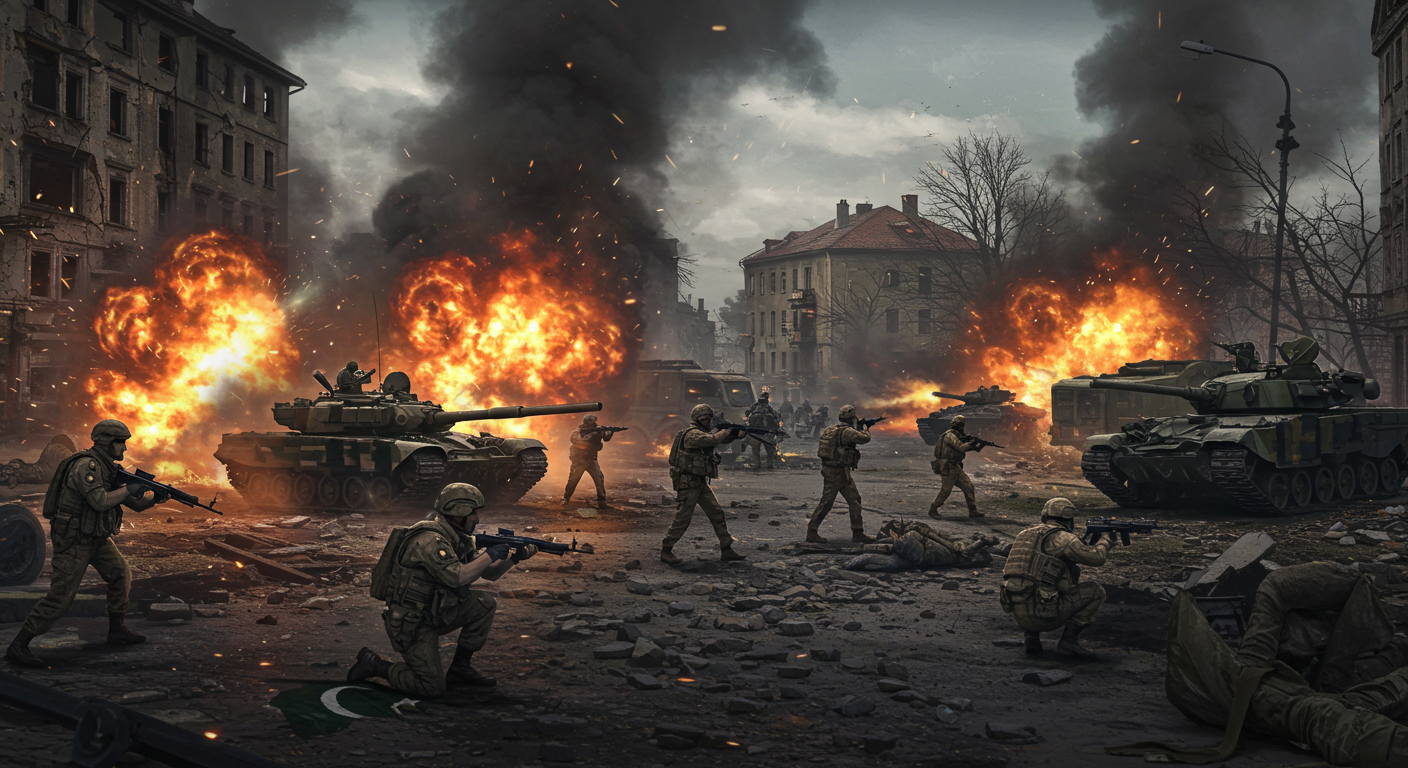
In a world increasingly defined by ideological alliances and binary choices, Pakistan’s diplomatic stance on the Russia-Ukraine war is being dangerously misconstrued. Ukrainian President Volodymyr Zelenskyy’s recent claim that Pakistani “mercenaries” are fighting on Russia’s side without providing any verifiable evidence is not only factually baseless but strategically reckless.
The charge laid by Zelenskyy also involves the rest of the Global South, China, Tajikistan, and some unnamed African states. It reflects a rather disturbing emerging trend in wartime rhetoric: the politicisation of battlefield stories to evoke international sympathy while at the same time damning neutral actors. For Pakistan, which has all along since February 2022 been consistently advocating peace, ceasefire, and de-escalation, has been making baseless comments of put its legitimate neutrality at stake, besides complicating any such future mediating role that it might again assume.
Islamabad’s Foreign Office has flatly denied the charge. No biometric data has been shared, no consular evidence presented, no intelligence dossiers delivered to support the claim. Neither was any formal note sent through diplomatic and multilateral channels. Without proof, this accusation is not a diplomatic statement; it is a narrative weapon. International law and the principles of the Charter of the United Nations have guided Pakistan’s position on the war. It has urged all parties, including Russia, to pursue a peaceful resolution, welcome third-party mediation as well and welcomed prisoner exchanges. Whereas most states have chosen either confrontation or silence, Pakistan has walked that proverbial tightrope with deliberate precision. It will not abandon its sovereignty by getting entangled in great power politics.
For critics, the recent increase in Pakistan’s trade and energy cooperation with Russia can be viewed as geopolitical alignment. But that would be misjudged if the structural realities that Islamabad is facing are not considered. With a precarious economy and energy insecurity, Pakistan has been scanning options for wheat, oil, and investment sources. The survival of the economy does not translate to the survival of military complicity. Trade relations do not amount to an ideological endorsement.
The perception that Pakistani nationals are working as mercenaries also runs contrary to the professionalism and constitutional matrix of the country’s armed forces. The Pakistan Army, one of the largest and most battle-tested in the world, does not outsource combat operations, nor does it allow its citizens to fight in foreign wars without state authorisation, which in this case has not been accorded, ever.
The larger issue has to do with how such charges undermine the credibility of neutral states in global conflict resolution. If Ukraine, rightly seeking diplomatic support, alienates potential mediators with unsubstantiated charges, it runs the risk of getting itself a place on the periphery of diplomacy; honesty and trust are the main currencies in conflict resolution. And once lost, it isn’t easy to get back.
Neutrality͏ is not passive. It is the most dynamic postures͏ one can ever think of in the study of conflict while maintaining it against external pressure to join sides. That is what Pakistan has maintained in Afghanistan, in the Gulf, and now in Ukraine, just calling for restraint. For a country that has borne the brunt of being caught up in great power antagonism, neutrality is not some luxury͏, it is a survival͏ strategy.
📄 POLICY WIRE WHITEPAPER PUBLISHED: PAKISTAN'S NATIONAL SECURITY POLICY PRIORITIES
👉 READ BY CLICKING HERERecord speaks, among the top contributors to the United Nations peacekeeping missions, hosting millions of refugees from zones of conflict, being home to processes of diplomacy aimed at preventing escalation not only in the region but beyond as well. Casualties it has suffered in its war against terrorism, fighting a battle not on someone else’s land but within its borders, to now be said that it exports violence is a gross misrepresentation.
Urges the world to differentiate between strategic neutrality and silent complicity. Pakistan’s posture is of the former, carefully calibrated, legally sound, and morally upright. Misinformation has, unfortunately, become the new currency in conflicts. Therefore, in such cases, the burden of proof falls on the party making the allegation, not on those being accused.
If Kyiv has any credible intelligence, it should bring it forth in the appropriate forums. If not, then attention must get back to what is of primary importance: ending a war that has devastated Europe and unbalanced the developing world. Millions across the Global South, from Pakistan to the sub-Saharan regions of Africa, are on an economic front paying for a war they never started.
Pakistan’s neutrality is not by accident. It is by choice, a choice informed by a tragic history and geopolitical caution. Rather than being held in odium for it, Islamabad should be seen as the potential conduit in a fractured world. The path to peace does not lie in propaganda; it lies in principled diplomacy. Pakistan is prepared to play that role.
And whether the world is ready to let it be, therein lies another question.
Author