


Old Guard Wobbles: Parisian Clay Turns Crucible for Youthful Ambition as New Stars Emerge
POLICY WIRE — Paris, France — The Roland Garros faithful, accustomed to predictable power struggles among titans, found themselves staring at a new reality this week. It wasn’t the searing...

POLICY WIRE — Paris, France — The Roland Garros faithful, accustomed to predictable power struggles among titans, found themselves staring at a new reality this week. It wasn’t the searing Parisian heat—though that always plays its part—but rather a dramatic reshuffling of the tennis hierarchy. Not with grand pronouncements, but with the quiet, aggressive elbowing-out by a fresh cohort of talent.
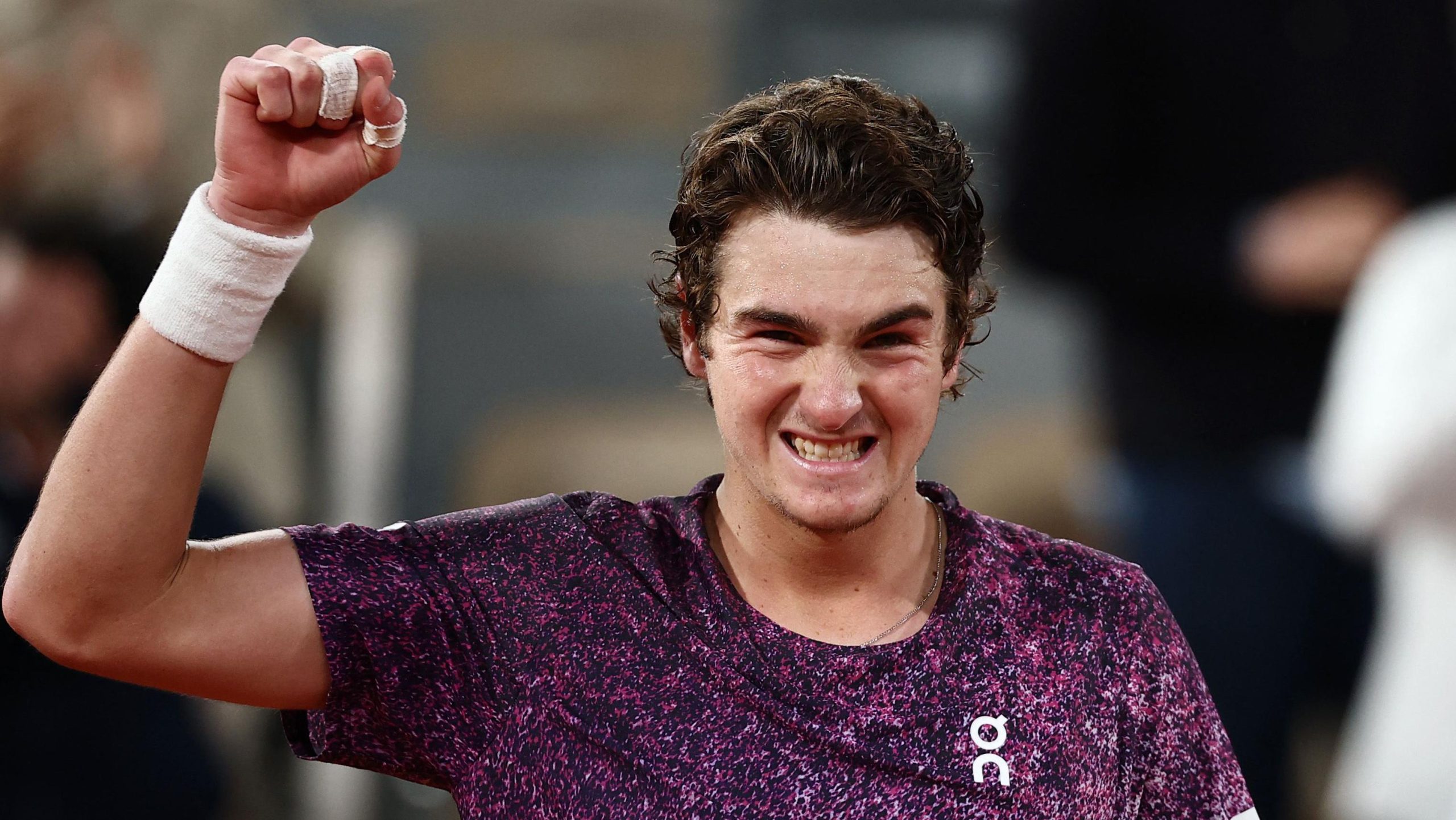
Joao Fonseca, barely out of his teens, hadn’t once stepped beyond a Grand Slam’s third round. Ever. But this year, he didn’t just step beyond; he punted aside an established name. You’ve got to wonder what’s in the water in these youth academies lately, because this isn’t just about one guy hitting a hot streak. [QUOTE_PLACEHOLDER]
After dismantling one legend—Novak Djokovic, no less—the Brazilian sensation proved his coming-of-age third-round win was no fluke. He then squared off against two-time finalist Casper Ruud, grinding out a victory in four tough sets to cement his spot in the French Open quarter-finals. The scoreline—a bruising 7-5 7-6 (10-8) 5-7 6-2—tells a story of sheer willpower and relentless hitting. Because that’s what it takes, doesn’t it? To take down a pro who’s been there, done that, — and probably signed the t-shirt.
It capped off another astonishing day in Paris, a day where youth, it seems, simply couldn’t be denied. Fonseca’s fellow 19-year-old Rafael Jodar and the Czech Jakub Mensik, 20, also crashed the last-eight party at a major for the very first time. They aren’t asking for permission; they’re taking it. Mensik, for his part, battled Andrey Rublev into a decider, then showed some serious nerve. He broke the 11th seed in the eighth game of the fifth set and later saved two break points before closing out the win to set up a quarter-final meeting with Fonseca. Talk about a seismic shift.
And you’ve got to appreciate the bravado. When asked about his approach, Fonseca’s response was pretty straightforward. I just try to be me on court – try to be happy, try to hit winners, try to hit good shots, and bring entertainment.
It’s not the tactical deep dive you expect from veterans. It’s almost innocent in its ambition. It’s a new experience for me. Getting through to the second week of a Grand Slam is always tough, but it’s all heart. We try to but heart into it — and just focus point by point.
That ‘all heart’ mantra, it’s what keeps them ticking. We’ve seen it countless times, hasn’t we, from Pakistan’s raw cricket talents to Saudi Arabia’s burgeoning football ambitions – sheer unadulterated passion often carves the first path.
Fonseca wasn’t just swinging wildly, though. Playing in front of Gustavo Kuerten—the last Brazilian man to lift a Grand Slam singles trophy—Fonseca employed his booming forehand to full effect against Ruud. Twenty-one of his 28 groundstroke winners originated from that wing. But it wasn’t just power. He dug in. Proved dogged in defence, using his athleticism and pace around the court to extend rallies and force Ruud into an extra shot. And here’s the kicker: while both players racked up 52 unforced errors, the Norwegian hit 53 forced errors to Fonseca’s 41. It’s those small margins, innit? Fonseca also showed an icy cool under pressure, saving seven of the nine break points he faced. And in the second-set tie-break, he recovered from 5-2 down — and saved three set points to take a 2-0 lead. Pretty bold for a teenager. Equally unfazed at being broken in the 12th game of the third set, he just shrugged it off, winning eight of the opening nine points in the fourth. Then he broke Ruud twice in the first five games to grab control back. Just like that.
Amidst this youthful upheaval, Alexander Zverev, the world number three, provided the contrasting picture: a quiet, clinical march forward. He underlined his status as a dark horse—now perhaps a clear favorite—for the men’s singles title with a crisp straight-set win over Jesper de Jong. This marks his sixth consecutive year in the Roland Garros quarter-finals. For context, Zverev has reached 15 finals on clay, winning nine titles, including four at ATP 1000-level. [Source: Original Text]. It shows. He’s been earmarked as a future Grand Slam champ for years now. And with Jannik Sinner — and Djokovic out, plus Alcaraz injured, the road ahead just got a whole lot less crowded. De Jong, ranked over 100 spots lower, pushed hard early, even leading 3-0 in the tie-break before Zverev reeled off seven consecutive points to take the set. And that’s what experience gets you: composure when it counts. But his assessment of the early wobble was typical. It was a bit difficult in the beginning,
he said on court. I didn’t start strong — and he started really fast. But once I found my rhythm, I was comfortable. My game is there. It’s about showing it on the match courts.
It’s an understated confidence. While many rivals have slogged through grueling five-setters, Zverev’s taken three of his four matches in straight sets. He’s not messing around.
What This Means
The youth explosion at Roland Garros isn’t just a sporting narrative; it’s a stark reflection of global shifts—politically and economically. The sudden emergence of unheralded talent challenging established power structures echoes the disruptive forces we see in geopolitics, where once-dominant entities find their influence tested by rising, dynamic actors. In a political landscape, it’s akin to insurgent parties or new leaders seizing the agenda, often through sheer force of popular will or compelling new narratives, much like these youngsters’ fearless, aggressive play captivates audiences. You can’t just rely on pedigree anymore, can you?
Economically, this influx of fresh faces means new marketability. Think about the nascent sports markets in countries like Pakistan or Bangladesh—regions bursting with young demographics and growing aspirations, where heroes often emerge from challenging circumstances. When a 19-year-old Brazilian lights up a major, it resonates globally, opening doors for sponsorships, brand endorsements, and media attention beyond traditional tennis strongholds. It symbolizes economic opportunity through meritocracy, a pathway to global recognition and wealth that’s accessible regardless of historical privilege. We’re seeing investment follow potential, as evidenced by players from traditionally non-tennis nations breaking through. But it also presents a challenge to the old guard—a signal to adapt, innovate, or risk being sidelined. Just like businesses facing digital disruption or political parties losing touch with younger demographics. This tournament isn’t just about who wins the trophy; it’s about a changing of the guard, a powerful metaphor for ambition and its price, one that reverberates far beyond the clay courts. The price of potential, you see, isn’t always easily calculable. And sometimes, you find gold in unexpected places. Consider how emerging markets, sometimes against significant odds, manage to produce world-class athletes, pushing global sporting bodies to acknowledge their presence, their potential, and ultimately, their buying power and influence. It’s more than just medals; it’s economic diplomacy.