


Offshore Quarantines: Trump Admin Reroutes Ebola Care, Sparking Ethical Alarms
POLICY WIRE — New York, USA — Remember that guy who railed against bringing sick Americans home, claiming the U.S. just couldn’t risk it? Turns out, that guy’s administration is now...

POLICY WIRE — New York, USA — Remember that guy who railed against bringing sick Americans home, claiming the U.S. just couldn’t risk it? Turns out, that guy’s administration is now crafting a policy that, while perhaps not bringing them all home, definitely ships them somewhere else. President Donald Trump’s administration has quietly drawn up plans to ship Americans exposed to the brutal Ebola virus while overseas not back to the States, but straight to a newly concocted facility way out in Kenya.
It’s an interesting turn, isn’t it? Just years back, the then-businessman-and-reality-TV-star hammered the Obama administration for repatriating citizens. He’d even tweeted, — and I’ll quote it for you, The U.S. cannot allow EBOLA infected people back. People that go to far away places to help out are great — but must suffer the consequences! Later, he even hinted at what now looks like an eerie prophecy: Treat them, at the highest level, over there. [QUOTE_PLACEHOLDER]
But this isn’t just about presidential tweets, you know? This is about American citizens, their health, — and the rather thorny question of national responsibility. An official — naturally insisting on anonymity to discuss the Republican administration’s blueprints — detailed how the Departments of Defense, State, and Health and Human Services are setting up this quarantine and treatment center. The whole point, apparently, is for Ebola patients needing care quick, especially those from the Democratic Republic of the Congo. This person says the plan would help patients avoid an hourslong medical evacuation to the U.S.
There’s a hitch, though: Nobody seems to know exactly where in Kenya this facility will sprout up. More importantly, has the Kenyan government even signed off on this whole thing? We’re not so sure. Kenya’s health minister did confirm officials there were talking with the U.S. about preparedness — and response mechanisms for Ebola. But he kept pretty tight-lipped about a dedicated American treatment facility. You bet he did. Here’s a bit of what Health Minister Aden Duale had to say in a statement, a masterclass in diplomatic caginess: Any arrangements regarding international health cooperation will be guided by Kenya’s national laws, public health regulations, biosafety and biosecurity standards, and the government’s responsibility to safeguard the health and welfare of Kenyans.
That’s bureaucratese for, But will our populace actually agree to house your nation’s deadliest viral woes? This issue, where one nation’s public health crisis spills over, or rather, gets intentionally rerouted, touches on broader themes of disease, diplomacy, and despair, a constant concern for nations far beyond the immediate geography. Places like Pakistan, with a long and complex history of public health challenges and international aid reliance, often watch these policy decisions with a keen eye. How other sovereign nations navigate infectious disease, especially with powerful allies, invariably shapes the global public health landscape and perceptions of equity.
Expert opinion isn’t exactly showering this plan with praise. Dr. Craig Spencer, an emergency medicine doctor at Brown University who, importantly, actually survived Ebola in 2014, ain’t convinced. He doesn’t expect the facility in Kenya to provide the same quality of care that dedicated facilities in the United States do. He pretty bluntly called refusing to bring American Ebola patients home a moral abdication of what this country owes its own. And, well, he’d know, wouldn’t he?
And Dr. Ali Khan, the public health college dean at the University of Nebraska Medical Center, chimed in, too. Khan, a veteran who led international responses to Ebola for the U.S. Centers for Disease Control — and Prevention earlier in his career, underscored medical consensus. For decades, medical experts have suggested moving patients suffering from Ebola and similar illnesses as little as possible in case their condition worsens. But, he stressed, the quality of care must be equivalent to what someone would receive in American facilities. He stated flat out, You’ve got to make sure the patient gets the best quality care, and you need to ensure excellent infection control.
📄 POLICY WIRE WHITEPAPER PUBLISHED: PAKISTAN'S NATIONAL SECURITY POLICY PRIORITIES
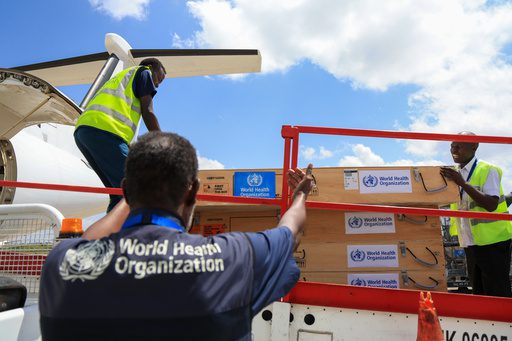
👉 READ BY CLICKING HERERight now, health authorities in Congo are struggling with an Ebola outbreak, one the World Health Organization admits is outpacing them. The number of suspected Ebola cases in eastern Congo is nearing 1,000, with at least 220 suspected deaths, as reported by the Congolese health ministry on Tuesday. It’s a dire situation, riddled with threats from armed groups, a massive displacement of people, and—of course—just rotten infrastructure.
While Washington figures out this new approach, they’re also ramping up defenses closer to home. The CDC’s got staff screening — and monitoring incoming passengers from outbreak zones at major U.S. airports, including Washington Dulles, Hartsfield-Jackson Atlanta, George Bush Intercontinental, — and JFK in New York. They’ve even temporarily banned folks without U.S. passports, and green-card holders who’ve visited Congo, Uganda, or South Sudan within the last three weeks.
What This Means
This isn’t just about setting up a hospital in Kenya; it’s about a dramatic policy shift that redefines America’s implied social contract with its citizens abroad during a global health crisis. Economically, setting up and maintaining such an advanced facility overseas will be astronomically expensive, drawing funds that might otherwise fortify domestic biodefense or direct aid initiatives. Politically, this move carries serious diplomatic heft. For one, it could easily be perceived as America offloading its responsibilities onto a less affluent nation. That kind of optics can certainly strain relationships, especially when public health infrastructure across the developing world, particularly in countries with limited resources, is already often overstretched. Kenya, as a sovereign nation, is put in an unenviable position, weighing humanitarian considerations against its own domestic public health security and geopolitical standing.
On the home front, the policy suggests a strategic prioritizing of borders over bloodlines, focusing on preventing entry at almost any cost, even if that cost is the direct medical evacuation of an American citizen to the U.S. itself. This creates a moral quandary — and could provoke intense domestic debate. It’s a classic realpolitik move — one that prioritizes national ‘containment’ over individualized citizen care, a calculation with broad political and social ramifications both at home and abroad. Will other nations with similar capacities follow suit? And what message does it send to the dedicated humanitarian workers from places like Pakistan, India, or Bangladesh, who frequently deploy to the globe’s hot zones? It suggests that in the face of deadly contagion, a nation’s loyalty might be conditional.