


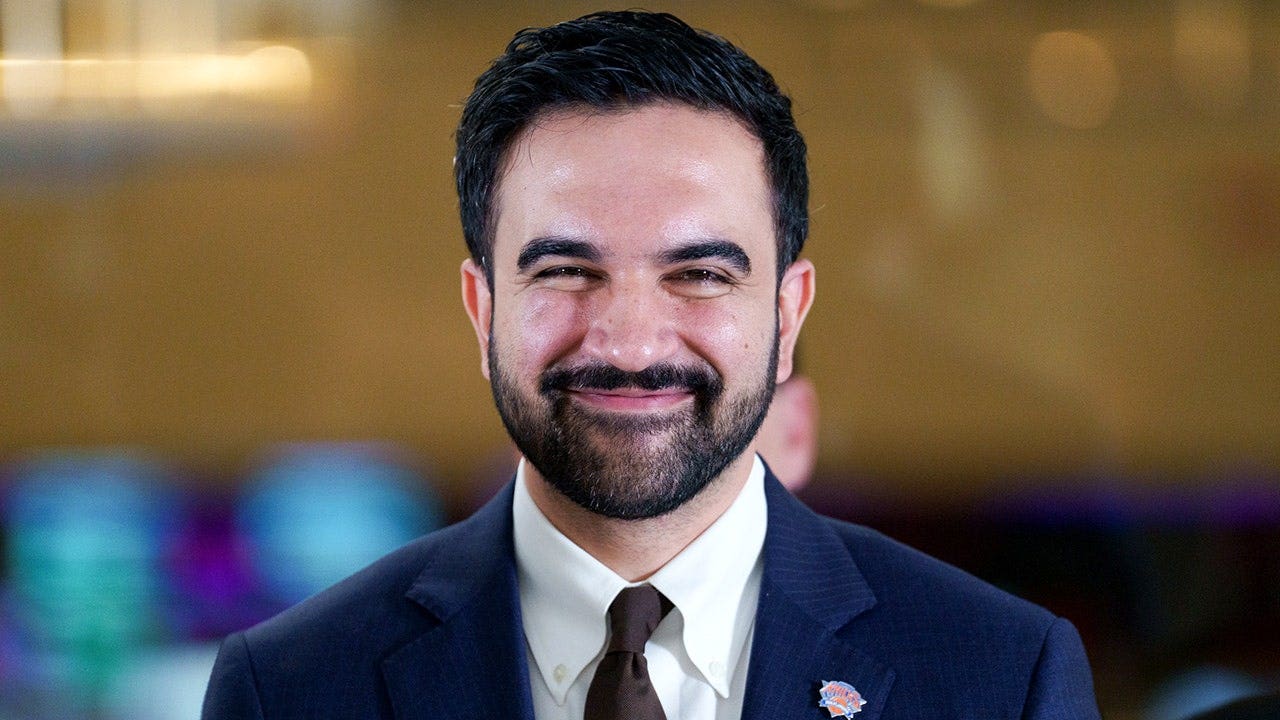
NY Assemblyman Mamdani Blasts Democratic ‘Lost Focus’ on Workers, Signals Broader Progressive Unease
POLICY WIRE — New York, United States — For a party that prides itself on being the champion of the working class, a public scolding from one of its own younger, ascendant voices must sting a little....

POLICY WIRE — New York, United States — For a party that prides itself on being the champion of the working class, a public scolding from one of its own younger, ascendant voices must sting a little. Assemblyman Zohran Mamdani, representing parts of Queens, didn’t pull any punches, declaring flat out that the Democratic Party [QUOTE_PLACEHOLDER] And he said it, well, you know, out loud.
It’s an accusation that echoes far beyond the concrete canyons of New York City, mind you. This isn’t just a local spat among political operatives; it’s a symptom of a deeper fissure cracking through the American political landscape, forcing establishment Democrats to glance nervously over their shoulders at a generation of progressive firebrands—many of them children of immigrants—who seem to remember what the party was supposed to be all about before it got comfortable.
Mamdani, who’s been a force in Astoria’s rapidly shifting political topography, doesn’t operate in a vacuum. His assertion crystallizes a sentiment brewing for years among activists and increasingly, among voters who feel left behind by what they perceive as the party’s gradual drift toward corporate interests and away from fundamental economic justice. They see legislative victories as lukewarm compromises, not true systemic change. It’s frustrating. Nobody’s trying to pretend otherwise.
Because, let’s be honest, the statistics don’t lie. Data from the Economic Policy Institute revealed that between 1979 and 2019, typical workers’ pay rose just 17.3 percent, while the top 1 percent saw their wages skyrocket by 160 percent. That’s a gulf, isn’t it? A Grand Canyon between rhetoric — and reality for millions who just want to keep their heads above water. That disparity feeds directly into the disillusionment Mamdani articulated.
His commentary raises questions about the very identity of the modern Democratic Party. Is it still the party of Franklin D. Roosevelt’s New Deal, or has it become something less defined, more pliable? Mamdani’s background as a Ugandan-Indian American, the son of distinguished academics, gives him a unique lens through which to view American progressivism. He’s part of a wave—much like other rising Muslim, South Asian, and diverse community leaders in places from London to Lahore—who aren’t content with just a seat at the table. They want to redecorate the whole damn room. Their voices, often shaped by their families’ experiences with both colonial histories and hard-won freedoms, bring a different kind of urgency, a different expectation of fairness to the political discourse. They aren’t merely asking for incremental shifts; they’re pushing for transformative change.
But traditionalists within the party often bristle at such forthright critiques. They preach unity, consensus, the slow, grinding work of politics. The progressives, though? They’ve grown impatient. They see a crisis unfolding daily in housing, healthcare, and economic security, and they don’t believe in waiting for some imagined perfect moment to speak their minds. Mamdani’s bluntness—it’s part of that, definitely.
And what does this mean for electoral politics moving forward? For starters, it complicates the narrative. Democrats can’t simply rely on being the party-not-Donald-Trump anymore. There’s internal pressure, serious pressure, from figures like Mamdani and the movements they represent, to deliver substantive economic victories, or face the consequences at the ballot box, not just from the opposition, but from their own base.
You’ve got these intra-party squabbles happening everywhere. They’re noisy, yes, — and often inconvenient for leadership. But they also keep the party honest, or at least they try to. Without these internal challenges, what’s left? Complacency? A political machine running on autopilot, while the folks it claims to represent fall further behind? Mamdani’s shot across the bow was a reminder that some in the party are still fighting, still pushing for that bedrock principle.
What This Means
Mamdani’s candid assessment isn’t just about New York City politics; it’s a barometer for the Democratic Party’s national struggle to maintain coherence. Economically, this signifies a continued fracturing within the left. On one side, you have establishment Democrats who’ve generally adopted a more corporate-friendly stance, often believing that incremental change is the only pragmatic path to power. On the other, the progressive wing, embodied by figures like Mamdani, insists that a return to more aggressive, redistributive economic policies is necessary to counteract decades of inequality and to re-energize a disillusioned working class. This isn’t just talk, it’s about policy experiments at the local level.
Politically, these critiques signal trouble for the Democratic Party’s broad coalition. If working-class voters—a demographic that historically underpinned Democratic power—feel abandoned, they’re liable to seek alternatives, either by disengaging from the electoral process or, more worryingly, by gravitating towards populist movements on the right. It isn’t a uniquely American phenomenon, either; many centre-left parties globally grapple with similar erosion of their working-class base.
This internal friction forces the party to confront its perceived identity crisis head-on, particularly as the 2024 election cycle looms. The ability to reconcile these disparate wings—to genuinely address the concerns of both its progressive firebrands and its moderate stalwarts—will define whether the Democratic Party can successfully govern, or if it will be endlessly consumed by its own internal contradictions. In places like Pakistan, political discourse also frequently devolves into accusations of parties losing touch with the ‘common man’—this universal lament highlights a basic demand from constituents everywhere for their leaders to represent their real struggles, not just the platitudes. Maintaining constitutional supremacy, as another angle of critique, often depends on whether the people feel their system is working for them. It’s all connected, don’t you think?