


NATO’s Looming Shortage: US Military Shuffle Alarms Allies, Signals Geopolitical Drift
POLICY WIRE — Washington D.C., USA — Forget the saber-rattling across contested borders for a minute. The real story, the one that makes defense planners sweat, is often about what’s *not*...

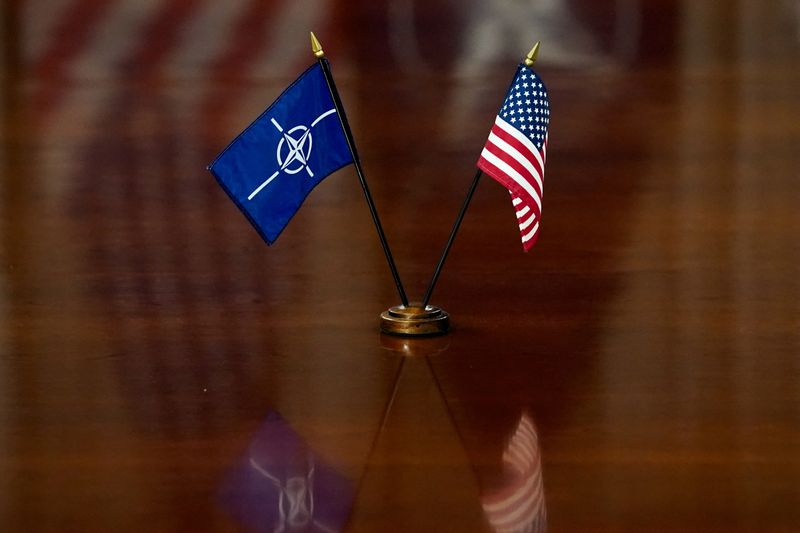
POLICY WIRE — Washington D.C., USA — Forget the saber-rattling across contested borders for a minute. The real story, the one that makes defense planners sweat, is often about what’s *not* there. It’s about resources quietly reallocated, strategic assets pulled back, leaving alliances—and assumptions—starkly exposed. And according to a fresh report from German magazine Spiegel, America’s commitment of strategic bombers and warships for NATO’s emergency playbook looks like it’s getting trimmed down.
It isn’t exactly the kind of news one broadcasts from the rooftops, particularly not when eastern flanks feel the chill of a resurgent, unpredictable power. These aren’t just minor adjustments to troop deployments; we’re talking about high-end muscle: those long-range aircraft that deter aggression and the heavy naval platforms that ensure sea control. Losing them from the pool of assets available to NATO in a crisis? That’s a significant downgrade to a readiness posture, no matter how Washington spins it. The implications for Europe, sure, they’re obvious. But this stuff ripples across the entire geopolitical chessboard, even to places you wouldn’t initially expect. [QUOTE_PLACEHOLDER]
The alleged reasoning for such a maneuver often boils down to a global rebalancing act, some analysts suggest. Washington’s strategists, it’s often said, are increasingly eyeing the Indo-Pacific—the perceived economic and strategic locus of the 21st century. Less capacity in the Atlantic doesn’t necessarily mean less capacity overall; it could just mean shifting priorities. But that’s little comfort to allies accustomed to a certain level of, shall we say, robust backing. It forces nations like Germany and France to confront uncomfortable truths about their own defense expenditures and capabilities, issues they’ve frequently, and sometimes quite deliberately, sidestepped.
Because let’s be honest, few European capitals have genuinely met their NATO spending targets consistently. A 2023 NATO report indicated only 11 out of 31 member states met the 2% of GDP defense spending goal, an often-cited frustration in Washington. These reported cuts, if true, serve as a harsh dose of reality. The era of America doing the heavy lifting, at least for some assets, seems to be incrementally—and strategically—concluding. But then, it also raises the query: who fills the void?
This subtle, yet telling, shift can have repercussions far beyond the North Atlantic treaty area. Less readily available hardware for NATO operations could free up resources, or at least attention, for other theaters. Take the broader Middle East — and South Asia. For years, US engagement there has been extensive, if not always fruitful. A redirection of strategic air and naval assets could mean greater pressure on nations like Pakistan to calibrate their own security architectures, possibly prompting a reassessment of alliances and defense priorities. Any vacuum created by a perceived US retrenchment—even if just an optic—invites other powers, potentially rivals, to increase their presence or influence. It could be China making deeper inroads with military and economic partnerships, or Russia seeking to expand its geopolitical leverage in unexpected quarters. This isn’t a direct military impact on Islamabad, no, but it does change the surrounding strategic climate—the weather pattern, if you will—within which Pakistani policy makers must navigate.
The news from Spiegel didn’t offer specific details on which types of bombers or warships were on the chopping block, nor did it specify the precise numerical reduction. It simply laid out the alleged intent, which is enough to make quite a few waves. Diplomats in Brussels and European defense ministries will be looking for clarification—and probably doing some quiet calculating of their own. It’s less about a sudden break — and more about the slow, almost imperceptible erosion of longstanding commitments. This kind of bureaucratic paring down rarely generates headlines on its own, but its cumulative effect can redraw entire lines on a map, not just literally but geopolitically. That’s the real trick to statecraft, isn’t it? Changing the world one budget line at a time.
📄 POLICY WIRE WHITEPAPER PUBLISHED: PAKISTAN'S NATIONAL SECURITY POLICY PRIORITIES
👉 READ BY CLICKING HEREWhat This Means
These rumored adjustments to US military allocations for NATO, if confirmed, represent more than just a logistical reshuffle; they signify a fundamental evolution in America’s global strategy. Economically, European nations might face intensified domestic pressure to dramatically increase defense spending, which could divert funds from social programs or economic stimulus packages already stretched thin by other global events. For example, countries like Germany, long under fire for its modest defense budget, would find itself under even greater scrutiny, potentially impacting its political landscape as parties grapple with unpopular defense appropriations.
Politically, the move could inadvertently deepen divisions within NATO, with some members feeling abandoned while others might see an opportunity to assert greater regional leadership. It could also force a closer European alignment on defense, potentially invigorating efforts towards a true EU common security and defense policy, something long discussed but rarely implemented with true muscle. But, of course, the potential for discord is ever-present—especially as hardline factions in other nations shift stances. The perception of a weakening Western alliance could embolden actors like Russia, testing the revised red lines with increased aggression in various forms, from cyber warfare to proxy conflicts. This isn’t just about Europe either; a less concentrated US force in one theater invariably means a recalculation of strategic influence and presence in others, prompting a domino effect of geopolitical adaptations across the globe. It’s an interesting, if unnerving, pivot, leaving plenty of questions for those watching from Moscow to Beijing.