

Minsk’s Tightrope Walk: Lukashenko’s ‘Peace’ Play Amid Kyiv’s War Drums
POLICY WIRE — Minsk, Belarus — In the precarious theater of Eastern European geopolitics, where lines of aggression blur faster than battlefield perimeters, Alexander Lukashenko — Belarus’s...

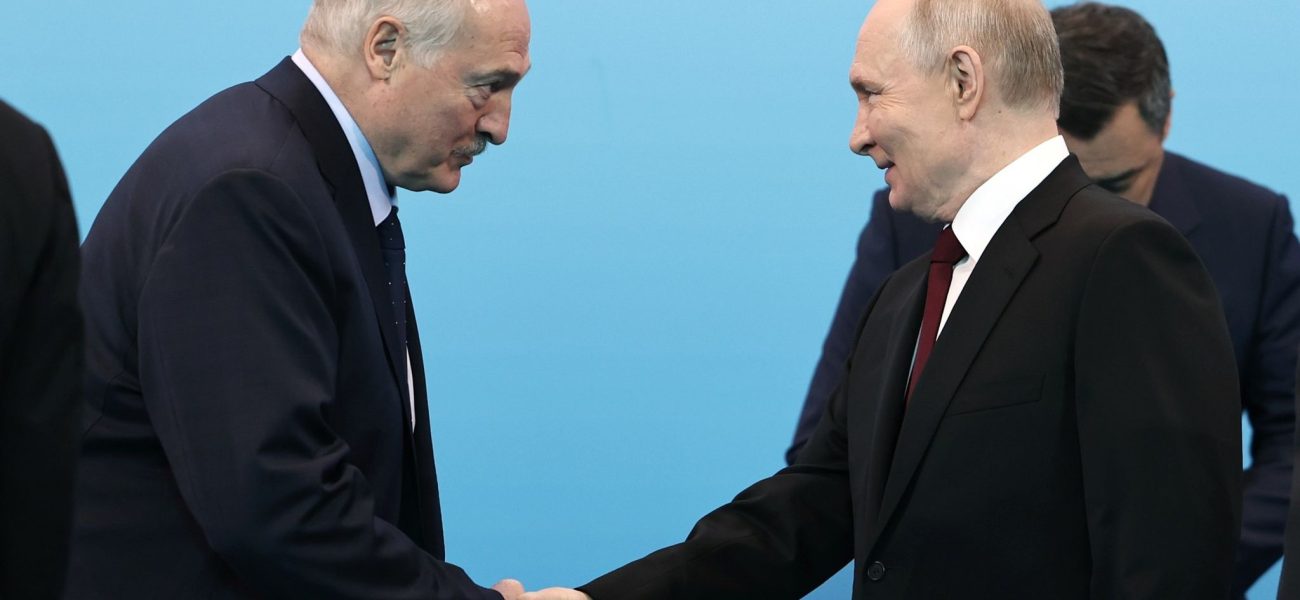
POLICY WIRE — Minsk, Belarus — In the precarious theater of Eastern European geopolitics, where lines of aggression blur faster than battlefield perimeters, Alexander Lukashenko — Belarus’s long-serving president — has once again unfurled the white flag of diplomacy, extending an olive branch toward Kyiv even as Ukrainian officials see his nation’s borders bristling with menacing intent. It’s a dance as old as autocracy itself: feign openness, then subtly shift the goalposts.
Kyiv, for its part, isn’t buying it. Not a shred of it. They’ve seen this movie before, playing out just south of Belarus’s lines. The calls for talks from Minsk land with a particular kind of thud, sounding suspiciously like a prelude to something far less conciliatory. They know, like many of us do, that Lukashenko doesn’t make moves in isolation. His actions are inextricably linked to Moscow’s grand design, a grim calculus that has already reshaped the continent.
Ukrainian authorities accuse Belarus of active preparation for war, not merely saber-rattling. There’s chatter about Belarusian military equipment moving, troop formations rearranging, and the continued deployment of Russian forces within Belarus’s sovereign territory. It’s a transparent deception, really—a thin veil over deeper malice. “Minsk’s words are cheap, cheaper than the fuel flowing through their pipelines to Moscow’s war machine,” retorted Oleksiy Danilov, Secretary of Ukraine’s National Security and Defense Council, in a blistering statement. “We don’t buy the ‘peace talks’ narrative; we see their troop movements, their shared airbases. We’re ready, not just to watch, but to push back.”
And so, the air along the Belarus-Ukraine frontier hums with a tension you can almost taste. A dangerous, unsettling hum. Minsk, caught between its deep economic and political reliance on Russia and the specter of direct involvement in a brutal war, navigates this minefield with practiced (if somewhat grotesque) agility. For Lukashenko, this diplomatic overture isn’t about genuine peace, it’s about controlling a narrative, perhaps softening international criticism, or maybe — just maybe — buying a little more time. But time for what?
“Our position is transparent: we seek a resolution, a stable peace on our borders,” Lukashenko asserted in a recent address, his tone unwavering. “But don’t mistake that for weakness. We will defend our land, our people, from any encroachment, perceived or otherwise.” It’s a line designed to reassure his own populace while simultaneously warning Kyiv, a verbal high-wire act perfected over decades. He’s walking that tightrope without a net, as always, though one could argue his ‘net’ is Moscow.
The geopolitical ripple effects here aren’t confined to Europe’s eastern flank. The continued instability, the ongoing energy crisis exacerbated by the conflict, and the resultant inflationary pressures send shockwaves far and wide. Look at South Asia, for instance, particularly nations like Pakistan, already battling their own entrenched economic vulnerabilities. Skyrocketing global energy prices and food commodity shortages — a direct consequence of this European standoff — have only compounded the pain. It’s an inconvenient truth that far-flung conflicts, often dismissed as ‘someone else’s problem,’ end up biting everyone, everywhere.
Because ultimately, these aren’t isolated incidents. They’re intertwined threads in a complex global fabric. Data from the Stockholm International Peace Research Institute (SIPRI) shows that global military expenditure hit a new high of $2.44 trillion in 2023, an increase directly correlated to ongoing conflicts, with a significant portion attributable to the Ukraine war and its periphery. This figure tells a stark story of global resources diverted from development to destruction, a cost nations like Pakistan — desperate for economic stability — feel acutely.
The Belarus-Ukraine border remains a geopolitical tripwire, a proxy stage for a much larger contest of wills — and might. Kyiv remembers vividly how Russian tanks first poured into Ukraine from Belarusian territory in February 2022. They remember the missiles fired from Belarusian soil. That’s a trust deficit that isn’t erased by a few carefully chosen words from Minsk. No, it isn’t.
What This Means
This diplomatic charade from Minsk is less about actual reconciliation — and more about strategic positioning. For Belarus, it’s an effort to appear statesmanlike while implicitly retaining the option — or succumbing to the pressure — of direct military involvement. It provides Moscow with plausible deniability while leveraging Belarusian territory — and assets. If Lukashenko genuinely seeks de-escalation, his actions would mirror his words. They just don’t, plain and simple.
For Ukraine, it’s a distraction, but a dangerous one. They must maintain a high state of alert along their northern border, diverting resources from other active frontlines. It’s a costly psychological burden, one designed to keep them guessing. Kyiv won’t ease up, — and shouldn’t; history, recent history anyway, tells us vigilance is their best defense. This is part of the broader, ongoing strategy to drain Ukraine’s resources — and spread its defensive posture thin. And for the West, it reiterates the reality of a continent still grappling with expansionist impulses, forcing constant re-evaluations of defensive alliances and aid commitments. Every statement, every troop movement near that border, it all feeds into a larger, more menacing global equation. See US Border Asylum: A Bureaucratic Wall, Now Backed by Highest Court’s Silent Nod for an idea of how much weight state rhetoric carries. The implications aren’t just military; they’re economic, diplomatic, and moral, influencing global supply chains and international relations for years to come. It’s heavy stuff, isn’t it? The cost of ambiguity has never been higher, nor has the need for a clear strategy, both on and off the battlefield.