


Meet D. rex: The Massive New Fungus Species Crowned King of the Forest
Scientists have discovered Dianjunus rex, a giant fungus in China reaching 20 inches tall. Learn about this record-breaking species and its unique history.

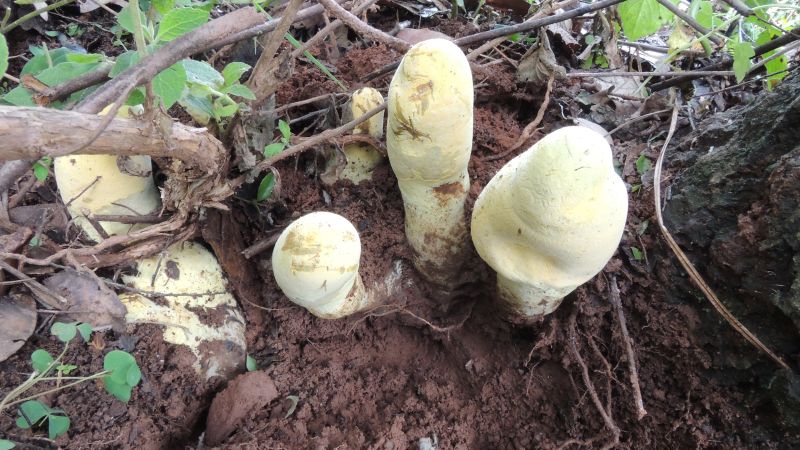
POLICY WIRE — Kunming, China — Following the mass extinction event that eliminated non-avian dinosaurs 65 million years ago, a new biological giant has emerged from the historical record. Researchers have identified Dianjunus rex, a massive fungus species discovered in the forests of China’s Yunnan province.
The fungus, which shares a namesake with the Tyrannosaurus rex, produces pale, yellowish reproductive structures known as stromata. These structures can reach heights of 20 inches (50 centimeters)—comparable to an airplane carry-on bag—and weigh nearly 5 pounds (2.2 kilograms).
The discovery was documented during fungal diversity surveys conducted throughout 2024 and 2025, with findings published on September 28 in the journal Frontiers in Fungal Biology. While local farmers had previously observed the fingerlike growths on decaying trees, the scientific significance of the species was only realized after a resident shared photographs with researchers.
Study coauthor Indunil Senanayake, an associate professor at the Kunming Institute of Botany, noted that while some locals had consumed the fungus without reported illness, its toxicity remains untested. Genetic analysis revealed that D. rex belongs to a newly identified family, Dianjunaceae, which likely evolved approximately 1 million years after the asteroid impact that concluded the Cretaceous Period.
Experts suggest the post-extinction environment, characterized by an abundance of dead organic matter, provided an ideal landscape for such decomposers to thrive. D. rex currently stands as the largest known member of the phylum Ascomycota, a diverse group that includes morels and truffles.
Kabir Peay, a professor of biology and Earth system science at Stanford University, who was not involved in the study, emphasized the importance of documenting such exotic life forms. He noted that with only about 150,000 of an estimated 2 million to 13 million fungal species described, the field remains significantly under-researched.
Reporting by Policy-Wire (PW)