

Mecca’s Human Tide: A Kingdom’s Calculated Choreography Under Global Scrutiny
POLICY WIRE — Riyadh, Saudi Arabia — Forget the serene postcards. What unfurls each year in the ancient crucible of Mecca isn’t just a spiritual journey for millions; it’s an unforgiving,...

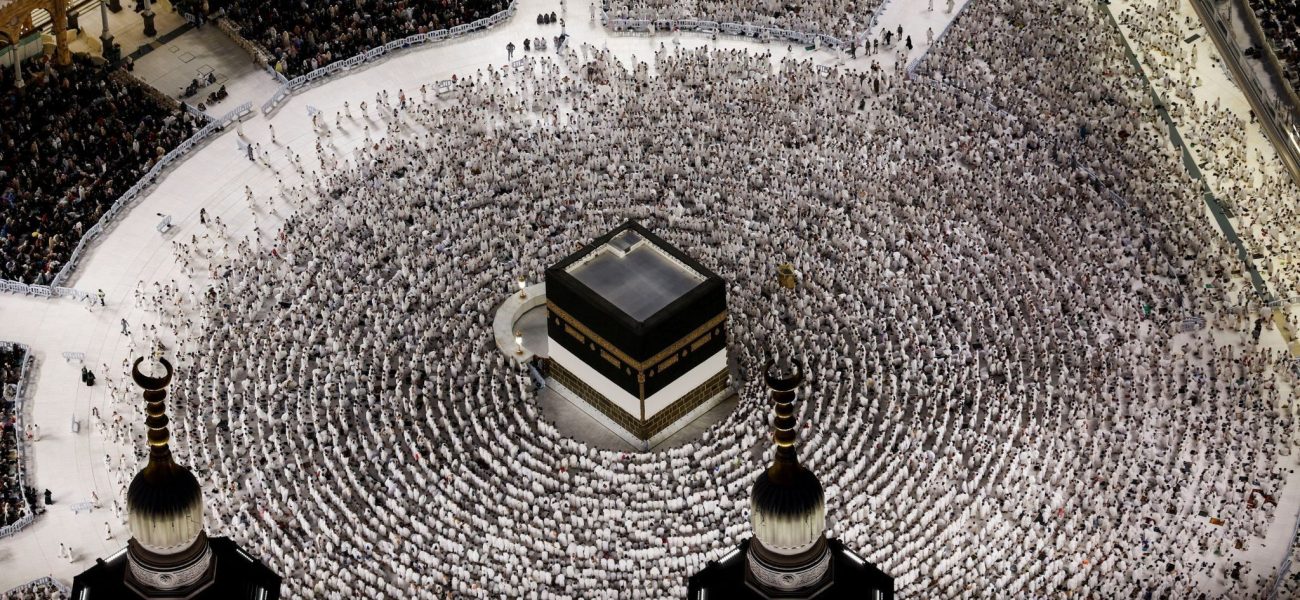
POLICY WIRE — Riyadh, Saudi Arabia — Forget the serene postcards. What unfurls each year in the ancient crucible of Mecca isn’t just a spiritual journey for millions; it’s an unforgiving, high-stakes ballet of humanity, finance, and infrastructure. It’s a logistical Gordian knot Riyadh somehow manages to unpick, or at least wrestle into submission, all under the glare of an ever-watching global community. This year’s Hajj is no different, already testing the operational sinews of the Saudi state, whose credibility, quite frankly, depends on it.
It’s not just about prayers. It’s about crowd control, heatstroke prevention, waste management on an epic scale, and feeding a city larger than many European capitals — a temporary city that materializes then dissipates, leaving behind little more than footprints and purified souls. This annual mobilization draws faithful from every corner of the planet, converging on sacred sites in a torrent of belief. But behind the spiritual spectacle lies an enormous enterprise, where everything, from the cost of a plane ticket to the efficiency of water cooling stations, carries real weight.
“Our duty isn’t just facilitating a journey; it’s orchestrating a global phenomenon under immense pressure,” remarked Dr. Tawfiq Al-Rabiah, Saudi Arabia’s Minister of Hajj — and Umrah, in a rare candid moment this past week. “We’re talking millions of people, — and every detail matters for their safety and the sanctity of their worship. It’s an immense privilege, and an immense operational headache.”
The numbers alone are mind-boggling. Last year, nearly 2.5 million pilgrims converged on Mecca, a figure that strains even the most sophisticated urban planning, according to the Saudi General Authority for Statistics. Imagine moving a population the size of Chicago, twice, through a handful of choke points, often under desert sun, and expecting spiritual enlightenment. But this isn’t just a Saudi challenge; it’s a global one. Every Muslim-majority nation, from Indonesia to Morocco, dedicates considerable diplomatic and logistical energy to securing its quota and ensuring its citizens’ passage.
For nations like Pakistan, where devout aspirations often collide with harsh economic realities, the Hajj presents a particularly acute dilemma. Its yearly quota is among the largest, but the cost for an average Pakistani can represent years of savings, sometimes an entire family’s fortune. It’s a stark contrast to nations like Qatar or the UAE, where relative affluence softens the blow. For them, securing a spot in this holy lottery is often less about funds and more about navigating bureaucratic channels.
And these economic pressures often ripple outwards. The Hajj, it’s fair to say, fuels an entire ecosystem of ancillary industries: travel agencies, hotels, souvenir hawkers, and informal aid networks. It creates jobs, sometimes temporarily, often exploiting a desperation for spiritual fulfillment. Many prospective pilgrims often find themselves at the mercy of shady operators, a harsh reality in a quest so pure. Because for a lot of folks, especially in poorer corners of the Muslim world, making it to Mecca is quite literally the apex of their life’s dreams.
📄 POLICY WIRE WHITEPAPER PUBLISHED: PAKISTAN'S NATIONAL SECURITY POLICY PRIORITIES
👉 READ BY CLICKING HERE“For many in nations like ours, this isn’t merely a trip; it’s a lifetime’s aspiration, a family’s collective hope distilled into a single, profound journey,” observed a senior official from Pakistan’s Ministry of Religious Affairs, speaking on background from Islamabad. “The economic burden, though, is becoming an albatross around those dreams, year after grinding year. It forces impossible choices, forcing some families into debt for generations. You’re constantly weighing piety against pocketbook.”
But the Saudis aren’t just managing masses; they’re leveraging immense soft power. Their custodianship of Islam’s holiest sites grants them an unparalleled pulpit — and influence within the Muslim world. It reinforces their legitimacy, burnishes their image, and – let’s be honest – brings in a significant chunk of revenue. The reforms Crown Prince Mohammed bin Salman is pushing aren’t just economic diversification plays; they’re attempts to modernize and streamline the pilgrimage experience, proving the kingdom’s capabilities on a world stage. It’s governance at an almost impossible scale, yet they somehow pull it off, season after season.
What This Means
The annual Hajj isn’t just a religious exercise; it’s a geo-strategic fulcrum. Politically, Riyadh’s smooth execution of the Hajj strengthens its claim as the preeminent power in the Muslim world, challenging the narratives of rivals like Iran. Any perceived failure, however small, becomes a geopolitical cudgel. Consider the persistent rumors or complaints of overcrowding; they aren’t just operational hiccups – they’re potential diplomatic flashpoints. Economically, the pilgrimage represents a multi-billion dollar injection into the Saudi economy annually, not just from direct pilgrim spending but from the massive construction, logistics, and hospitality sectors built around it. But this financial gain also means the kingdom shoulders the massive infrastructure burden and faces the perennial pressure to expand capacity. The challenge lies in balancing spiritual accessibility with sovereign control, especially as global Muslim populations continue to swell. There’s a homeland hurdles aspect for many aspiring pilgrims too, as they juggle international travel regulations atop their spiritual preparations. And don’t forget the subtle shifts in pilgrim demographics — an increasingly digitally connected world demands more than just basic amenities; it expects efficiency and modern services, adding another layer of complexity to the already Herculean task of bureaucracy management.