


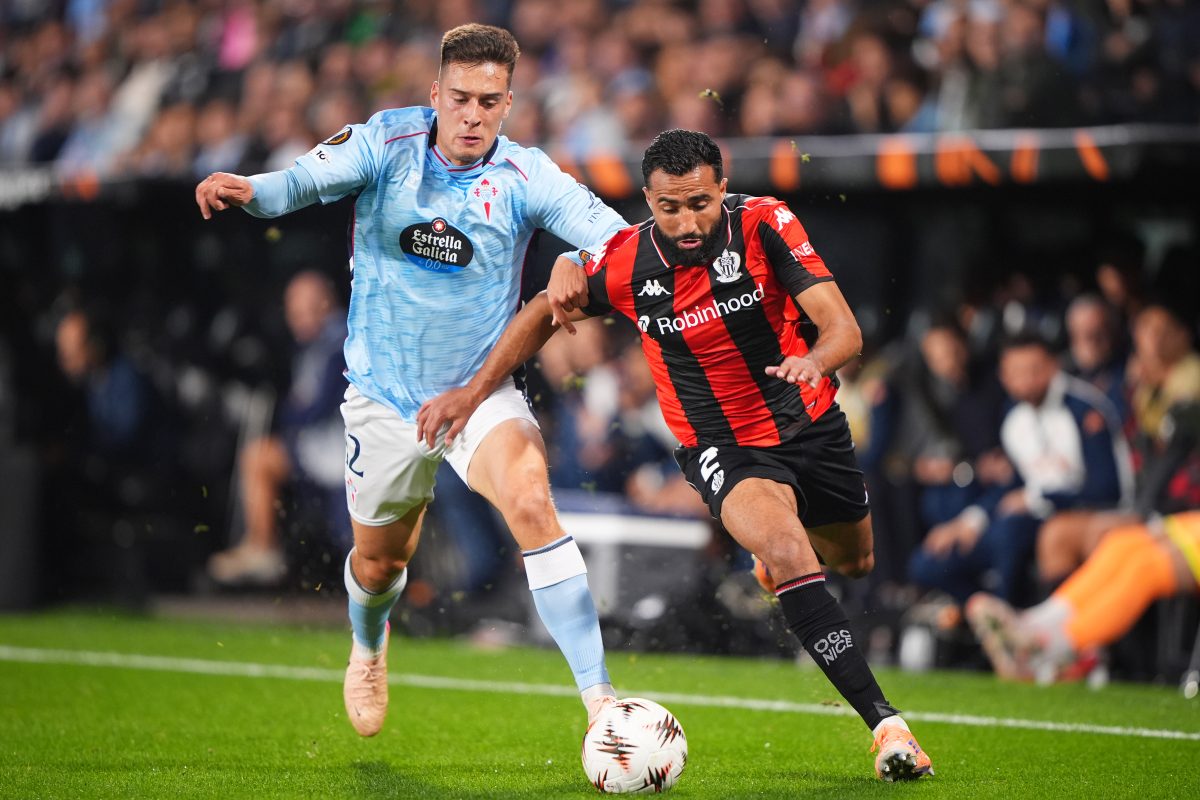
Loyalty’s Divide: French Club Defends Tunisian Star in FIFA Feud
POLICY WIRE — Paris, France — For some, it’s just a game. For others—for many, actually—it’s a call to arms, a duty of national honour draped in a jersey. But sometimes, duty clashes head-on...

POLICY WIRE — Paris, France — For some, it’s just a game. For others—for many, actually—it’s a call to arms, a duty of national honour draped in a jersey. But sometimes, duty clashes head-on with contract, creating a messy, very public pile-up. Just ask Ali Abdi, the Tunisian full-back for French club OGC Nice, currently embroiled in precisely such a predicament. The club’s recent defensive manoeuvre, not on the pitch but in the press room, speaks volumes about the shifting, often thorny, allegiances in modern football, especially when a nation’s prestige is on the line.
It’s a peculiar twist when a club must issue a formal statement to defend a player’s decision to, well, play for his country. But that’s where Nice found itself, pushing back against the torrent of criticism aimed at Abdi. This isn’t about insubordination, though. This is about scheduling chaos, a bureaucratic snafu born from the French football league’s decision to shuffle the relegation play-off dates. Specifically, they moved the match to accommodate Nice’s Coupe de France final appearance. That relocation had consequences. Significant ones.
The revised calendar meant the crucial play-off fixture—the second leg of a two-legged encounter determining Ligue 1 status—landed outside FIFA’s official international match windows. And you know what that means: national federations weren’t obligated to release their players. Nice tried, God knows, they tried. The club held talks with various national teams preparing for the biggest show on Earth—the World Cup—desperate to keep their roster intact for a fight against AS Saint-Étienne. Didn’t work for everyone.
Because sometimes, the national call rings louder than the club siren. This was certainly the case for Abdi, whose decision to link up with the Tunisian squad for what were described as bureaucratic procedures ahead of this summer’s World Cup became public spectacle. Tunisian manager Sabri Lamouchi even confirmed Nice tried—and failed—to retain the full-back. Barely a day before the make-or-break second leg, Abdi was spotted with his national team. It wasn’t a good look for local fans, certainly. The ensuing storm of online vitriol was predictably fierce.
The club’s statement? It’s less a reprimand, more a shield. A club communiqué acknowledged the failed discussions with the Tunisian federation but pointed out Abdi had indeed played the first leg against ASSE. And then came the part where you could practically hear the club’s sigh: [QUOTE_PLACEHOLDER] A tough spot for any athlete, truly. But these aren’t just athletes; they’re public figures, national symbols for many. Especially when they hail from nations where global sporting triumphs represent a massive source of collective pride and international soft power.
The stakes here aren’t just for Nice or even for Tunisia. The World Cup itself is a colossus, generating astronomical sums. For instance, the 2018 FIFA World Cup in Russia alone raked in approximately $5.37 billion in revenue for FIFA (Source: FIFA’s Financial Report 2018). That staggering figure underscores the economic might and geopolitical influence concentrated in these quadrennial tournaments. Players like Abdi, representing nations such as Tunisia, carry not just sporting aspirations but also a considerable burden of national expectation, a weight that far eclipses the average club contract for millions back home.
It’s not hard to see why someone might opt for the national team when a World Cup berth is on the line. For players from countries across the Muslim world—from Morocco to Pakistan, from Egypt to Indonesia—playing for one’s nation often transcends mere contractual obligation. It’s an honour imbued with cultural, historical, — and sometimes even spiritual significance. These players are heroes, their exploits on the pitch amplifying a collective identity that’s rarely confined by colonial borders or the latest club transfer market whims. The national jersey, particularly in a tournament of the World Cup’s magnitude, isn’t just fabric; it’s a living flag, a point of fierce, unshakeable loyalty for millions in diaspora communities and back home. Club loyalties? They pale for some, often.
So, the club’s final, desperate plea? A call for basic decency. “In light of him being the victim of a wave of insults on social media, the club calls on everyone to be measured and respectful towards a player who, like his club, is the victim of these events.” An ironic touch, isn’t it? The club that inadvertently created the problem by defending its own Cup final ambitions now defends its player for being a victim of the fallout. It’s a lose-lose scenario for the individual caught in the crossfire of scheduling mishaps and hyper-patriotic expectations.
What This Means
This kerfuffle over Ali Abdi isn’t just another sports headline; it’s a neat encapsulation of several evolving fault lines. Economically, you’ve got FIFA’s ever-expanding power clashing with domestic leagues. Leagues want to control their schedules, but FIFA’s World Cup gravy train—and its accompanying player release regulations—often override local concerns. And, really, who’s going to tell a sovereign nation’s football federation, especially one from a region where the World Cup holds such immense political and social capital, to hold back its stars for a French league play-off?
Politically, the incident highlights the outsized role football plays in national identity, particularly for nations in North Africa and the wider Muslim world. For Tunisia, a World Cup appearance isn’t just about sporting glory; it’s a global statement, a point of national pride, and a rare opportunity for international visibility. Missing that opportunity due to a club obligation, even a crucial one, can be seen as an act of profound disloyalty by a populace invested deeply in their national team’s success. That deep emotional connection, it means a player’s perceived lack of national fervour can easily spiral into social media mobs, as Abdi just experienced.
And let’s be frank, this tension won’t be dissipating anytime soon. As more players from emerging football nations rise through European club ranks, these dilemmas—club versus country, personal ambition versus national expectation—will only grow sharper. Federations are savvy. They understand the symbolic weight of the World Cup. Clubs? They’re often left cleaning up the messy, very human aftermath of these geopolitical and economic sporting collisions, forced to put out fires that really, honestly, shouldn’t have been lit in the first place.