
John Thune’s High-Stakes Gamble: Navigating the GOP Senate Majority Amid Midterm Volatility
Senate Majority Leader John Thune faces a critical test as he balances party loyalty with legislative independence ahead of high-stakes midterm elections.

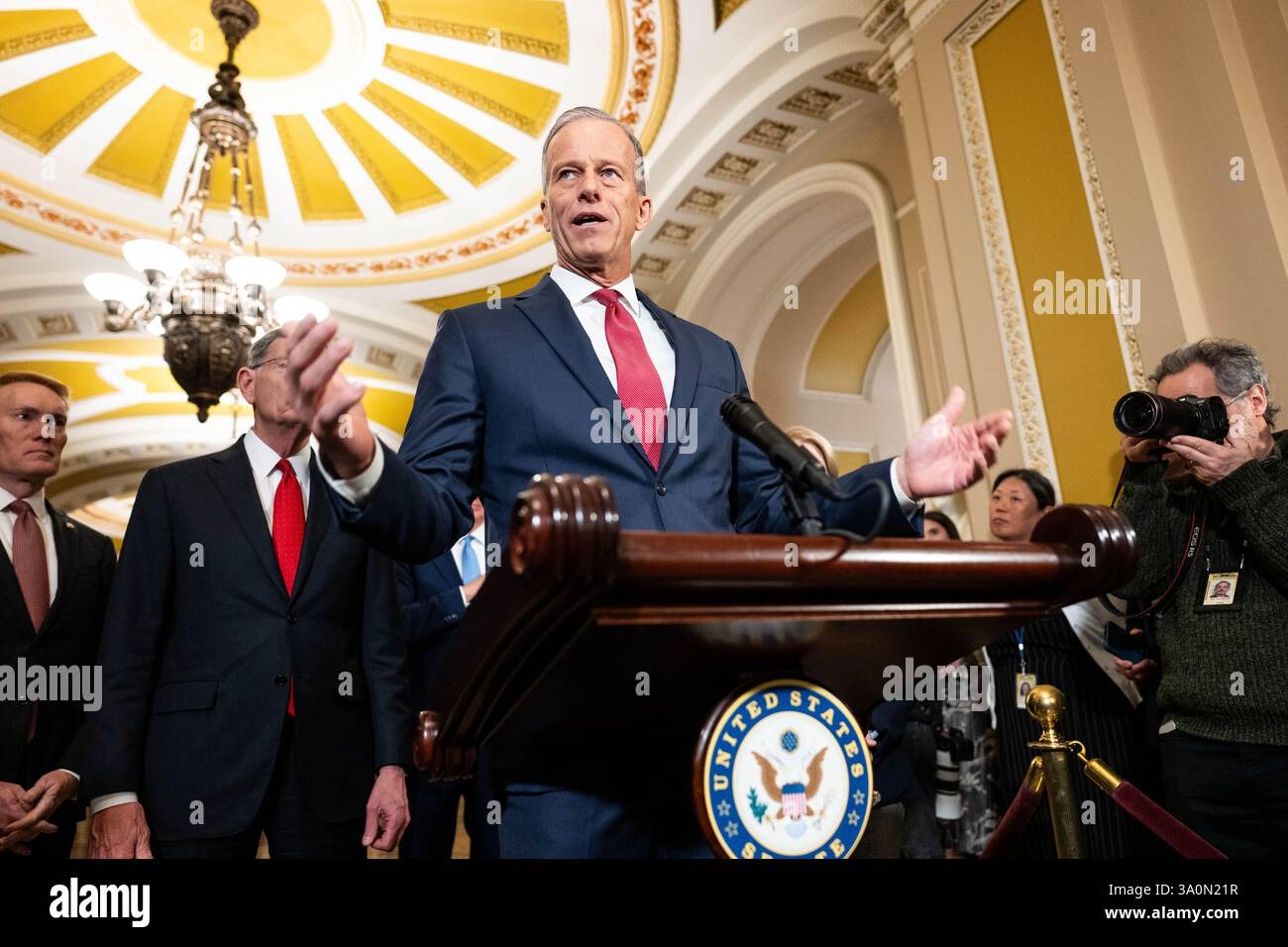
POLICY WIRE — Sioux City, Iowa — Senate Majority Leader John Thune spent the final stretch of the midterm campaign trail in Iowa, appearing alongside Rep. Ashley Hinson at a local business roundtable. The event served as a stark contrast to the high-energy rally held by President Trump at a nearby airplane hangar just one day prior.
As Republican candidates grapple with the challenge of aligning with the president while maintaining their own political identity, Hinson reiterated her strategy of supporting the White House when in agreement while acting as a thorn in his side when necessary. Thune, who has spent nearly two years navigating the complex dynamic between the president’s agenda and the Senate’s institutional independence, remains focused on the upcoming electoral test.
The political landscape has shifted significantly, with the GOP majority now facing headwinds from an unpopular war with Iran and persistent inflation. Thune, a 65-year-old conservative from South Dakota, has spent his tenure guiding the conference through intense legislative sessions, including the passage of major tax, border, and defense measures, alongside bipartisan wins on housing and fentanyl legislation.
Despite his efforts to maintain a steady hand, Thune faces pressure from both sides of the aisle. While some party members criticize his cautious approach to the president’s demands, others, including Senate Minority Leader Chuck Schumer, have acknowledged his reputation as a decent and principled legislator.
Thune’s background, rooted in his upbringing in Murdo, South Dakota, and a long career in public service, has shaped his belief in endurance and hard work. As he looks toward the final week of the campaign, he maintains that the Republican record of accomplishment provides a strong argument for voters to keep the party in power.
The leader’s commitment to preserving the Senate filibuster remains a central point of contention with the White House. Thune has consistently argued that the rule is essential to the founders’ vision, even as he faces calls from the president to abandon it.
With the majority hanging in the balance, analysts suggest the outcome will be a referendum on the party’s ability to manage the economic fallout of the ongoing conflict. Thune continues to urge his candidates to run their own races, betting that voters will distinguish between policy alignment and the president’s more controversial pursuits.
Reporting by Policy-Wire (PW)