

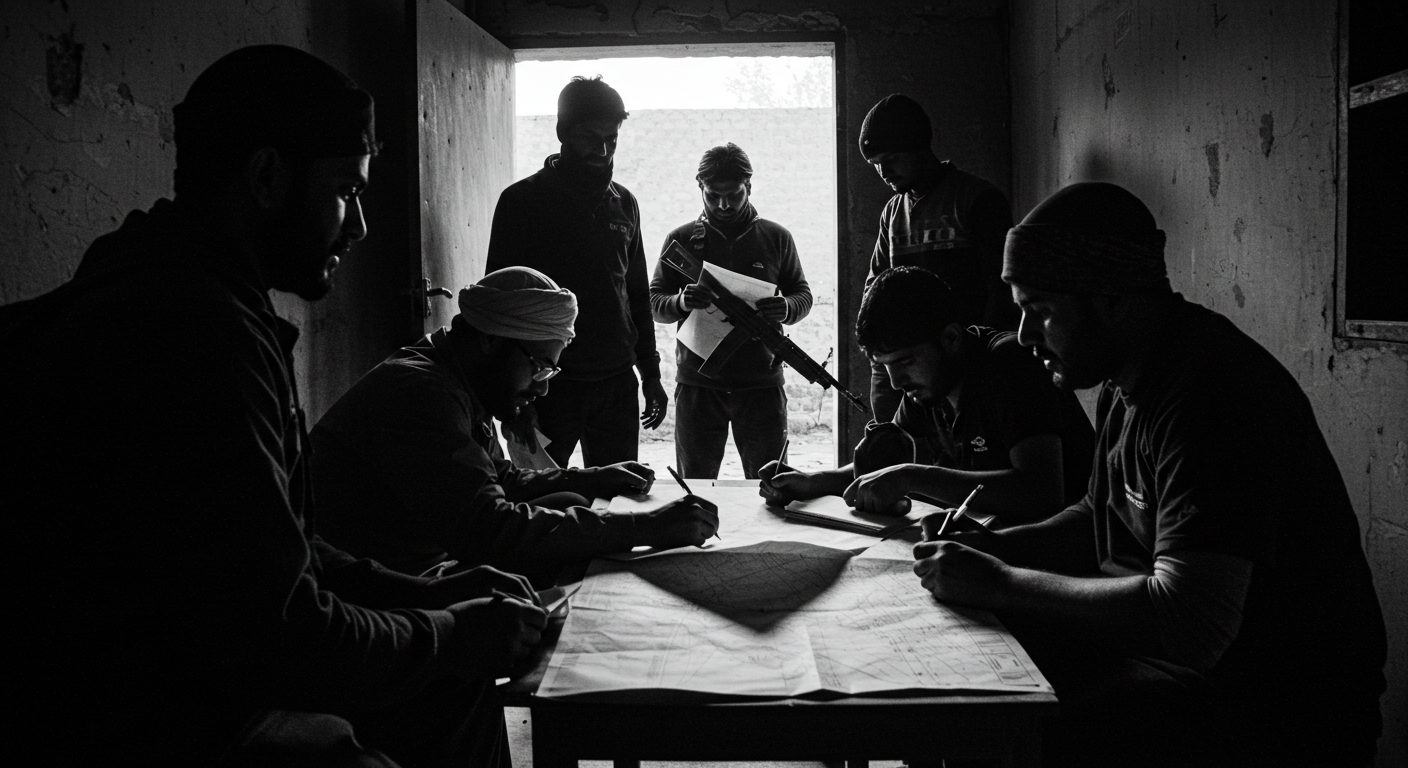
Balochistan, Pakistan’s largest and resource-rich province, has long been the target of separatist militancy. In recent months, the security situation in the province has worsened as the Baloch Liberation Front (BLF), a known separatist militant group, intensifies attacks against Pakistani security forces. However, what is most alarming is the qualitative change in the group’s tactics and capabilities. No longer reliant solely on guerrilla ambushes and small arms, the BLF has reportedly acquired advanced weaponry, including Anza-series man-portable air defense systems (MANPADS). The presence of these sophisticated weapons marks a dangerous escalation in the insurgency and strongly points to foreign involvement, most notably from India.
The latest working intelligence indicates that a number of Anza-models MANPADS, that have the capability of using a low-speed air plane down, have been sold to the BLF by unlawful and unseen source. This has elicited concerns in the security apparatus as well as in the defense analyst circles in Pakistan. The strategic implications are serious: this is not only an indication of the potentially serious capability in the future to launch aerial attacks, but it also attests to the fact that the BLF is making a profound transition beyond a ragtag insurgent to a militarized proxy force that is capable of posing a challenge to institutions of the Pakistan state.
The change of such basic guerrilla warfare to the usage of anti-aircraft weapons does not happen without the context. The kind of transformation requires external finance, tactical leadership and technical education. The evidence has since accumulated and increased that this sponsorship is being supported by the Indian intelligence services, and especially the Research and Analysis Wing (RAW). The Indian strategy is transparent, undermine Balochistan, disrupt the unity of Pakistan and hamper key economic initiatives such as the China-Pakistan Economic Corridor (CPEC) which flows through it.
The strategic interest of India in instigating trouble in Balochistan is not something new. More than twenty years ago, it became one of the permanent elements of its regional policy. Such agenda became all the more evident in 2016 with the arrest of Commander Kulbhushan Jadhav, an active staff of the Indian navy who was reportedly working in Pakistan under an alias. The confession of Jadhav, which was aired publicly, and on tape was made without any visible coercion, explained under what capacity he was involved in organizing the terror activities, and how he had sponsored groups like the BLA and BLF in Balochistan. The case was even more justified as Pakistan brought the issue to the International Court of Justice in which the refutations made by India could not manage to obscure the taken testimonies by Islamabad.
Despite the exposure of Jadhav’s network, India has continued its covert campaign to militarize separatist groups within Pakistan. The arrival of MANPADS in the hands of the BLF now shows that India is willing to intensify this campaign, regardless of the risks posed to regional peace and civilian lives. The capability to shoot down helicopters and aircraft used for military, humanitarian, or rescue operations represents a red line, one that transforms an internal security challenge into an externally sponsored act of war.
This new phase of violence is not just about insurgency. It is a calculated act of hybrid warfare in which India uses separatist militants as pawns while avoiding direct confrontation. This tactic of plausible deniability enables New Delhi to wage a silent war on Pakistan’s sovereignty while evading accountability on international platforms. However, the magnitude of escalation seen in recent attacks and the nature of weapons used clearly indicate that India’s fingerprints can no longer be ignored.
The international community’s silence on these developments is both disappointing and dangerous. Western governments and international human rights organizations that frequently criticize Pakistan’s security policies have shown little concern about the destabilizing role of India in the region. The same voices that call for peace and democracy remain mute when Pakistan’s territorial integrity is threatened by foreign-sponsored terrorism. This selective morality undermines the global fight against terrorism and emboldens state actors like India to continue violating international norms with impunity.
The last straw is the Pakistan Armed Forces in the turmoil created by the external engineering factors. The current operations of the military in Balochistan are not just aimed at counterterrorism but enshrined in a struggle to preserve national unity, peace in the region, as well as safeguards to all Pakistan citizens. However, so great have been the odds (border infiltration, asymmetric warfare, and more presently the possible air attacks) against the Pakistan Army, that it has come out with considerable resilience and professionalism so far in its bid to eliminate militancy within Balochistan.
📄 POLICY WIRE WHITEPAPER PUBLISHED: PAKISTAN'S NATIONAL SECURITY POLICY PRIORITIES
👉 READ BY CLICKING HEREWhat is also vital to note is that the military played a developmental role in the province. Whereas, foreign agents are propagating a program of unrest and separatism, the Pakistan Army has been busy putting in place roads, defending CPEC construction and projecting the young population of the province into the national institutions. The initiatives can be seen as part of a long run vision towards stability and development and they are in stark contrast to the havoc that has been wrought by the separatist groups that are funded and trained by foreign intelligence agencies.
Advanced weapons such as the Anza MANPADs finding its way into the hands of insurgents should be a wake-up call not only to Pakistan, but also to the rest of the world. This is not an uprising, it is a proxy war fought by a neighbor we do not get along with. Pakistan must now take this issue to the top diplomatic tables and unravel the truth of destabilizing activities of India, before the world. These global powers and agencies such as the United Nations, the organisation of Islamic cooperation, and regional powers need to consider the state of affairs and make India responsible of its state-sponsored terrorism.
What is happening in Balochistan is not only an internal problem but a direct care to the sovereignty and regional peace of Pakistan. The activities of Indian agencies involved into the arming and training of separatist militants such as BLF ceased to be a speculation and became a reality documented and fine. Despite the fact that Pakistan is currently struggling with this undeclared war, the Armed Forces are determined, devoted and alert. This declaration has to be unambiguous and unequivocal to a single word: Pakistan will not yield under any foreign pressure and as a nation the people are united against all opponents in the nation whether a foreign country or domestic.
Author