


How Daylight Saving Time Changes Affect Your Health and Sleep
Discover how the end of daylight saving time impacts your circadian rhythm, sleep quality, and daily health, plus tips to prepare for the switch.

POLICY WIRE — Washington, D.C. — Millions of Americans are preparing for an extra hour of sleep as daylight saving time comes to an end, though the annual ritual of falling back also brings the drawback of much darker afternoons.
Clocks are officially scheduled to shift backward by one hour at 2 a.m. local time on Sunday, marking the return of standard time that will remain in effect until March 14 when daylight saving time resumes. Health experts frequently advise that seeking out morning sunlight can significantly assist the human body in resetting its internal biological clock more rapidly.
Public frustration regarding the biannual time shift remains widespread across the United States. An AP-NORC poll conducted last year revealed that a mere 12% of American adults actively supported the twice-yearly alterations, whereas nearly half voiced strong opposition to the practice.
While the spring transition is frequently cited as the more difficult adjustment due to lost sleep, many individuals similarly lament the conclusion of daylight saving time because it curtails evening daylight for post-work recreation and exercise. When surveyed, a majority of Americans indicated they would prefer keeping extended daylight during evening hours if given the choice.
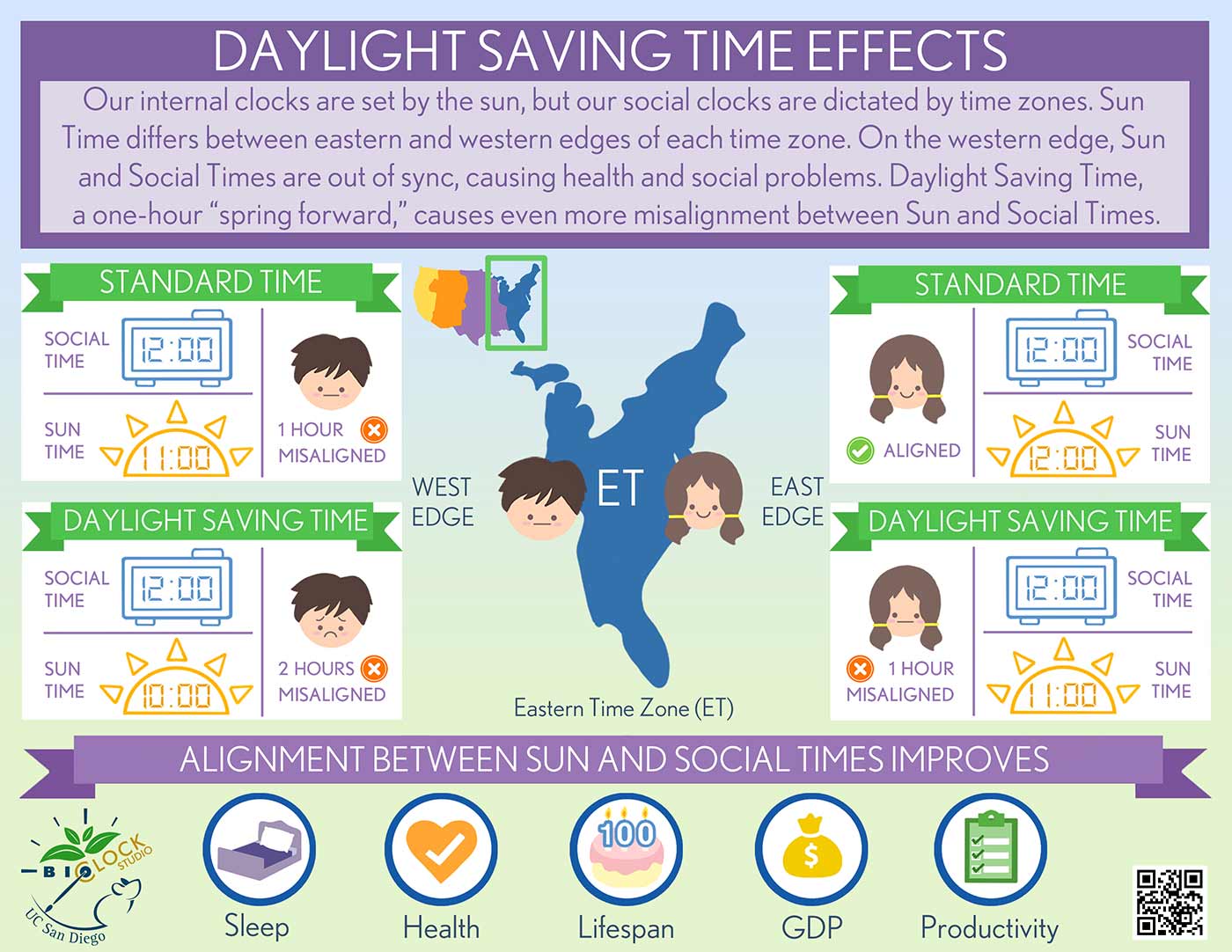
Major medical organizations, including the American Medical Association and the American Academy of Sleep Medicine, have long advocated for a permanent shift to year-round standard time. These groups argue that standard time aligns much more closely with natural solar patterns and human circadian biology, emphasizing that brighter mornings and reduced evening light are vital for maintaining healthy sleep cycles.
The human brain relies on a master clock governed by exposure to light and darkness to regulate its 24-hour circadian rhythm, which controls alertness and drowsiness. Morning light serves as a critical trigger for syncing this internal timer, while evening melatonin surges are easily disrupted by artificial lighting or late outdoor exposure.
Disruptions caused by shifting the clocks can exacerbate existing sleep deficits, especially given that roughly 1 in 3 U.S. adults and more than half of teenagers fail to meet recommended nightly sleep durations. To ease the transition, specialists suggest gradually adjusting bedtimes by increments as small as 15 minutes in the days leading up to the time change.
Legislative efforts to abolish or alter the twice-yearly ritual surface regularly in Washington, most recently seen when the U.S. House of Representatives passed the Sunshine Protection Act over the summer to establish permanent daylight saving time. President Donald Trump has voiced support for the measure while pushing reluctant lawmakers in the Senate to advance the legislation.
Reporting by Policy-Wire (PW)