


Hoop Dreams and Harsh Realities: Knicks Edge Spurs, Stirring Ghosts of Empire and Expectation
POLICY WIRE — New York City, USA — So, a half-century of yearning walks into a bar. Sounds like the start of a bad joke, right? But for legions of New York Knicks faithful, it’s been their reality....

POLICY WIRE — New York City, USA — So, a half-century of yearning walks into a bar. Sounds like the start of a bad joke, right? But for legions of New York Knicks faithful, it’s been their reality. And now, almost unexpectedly, that interminable wait might just be reaching its rather dramatic crescendo.
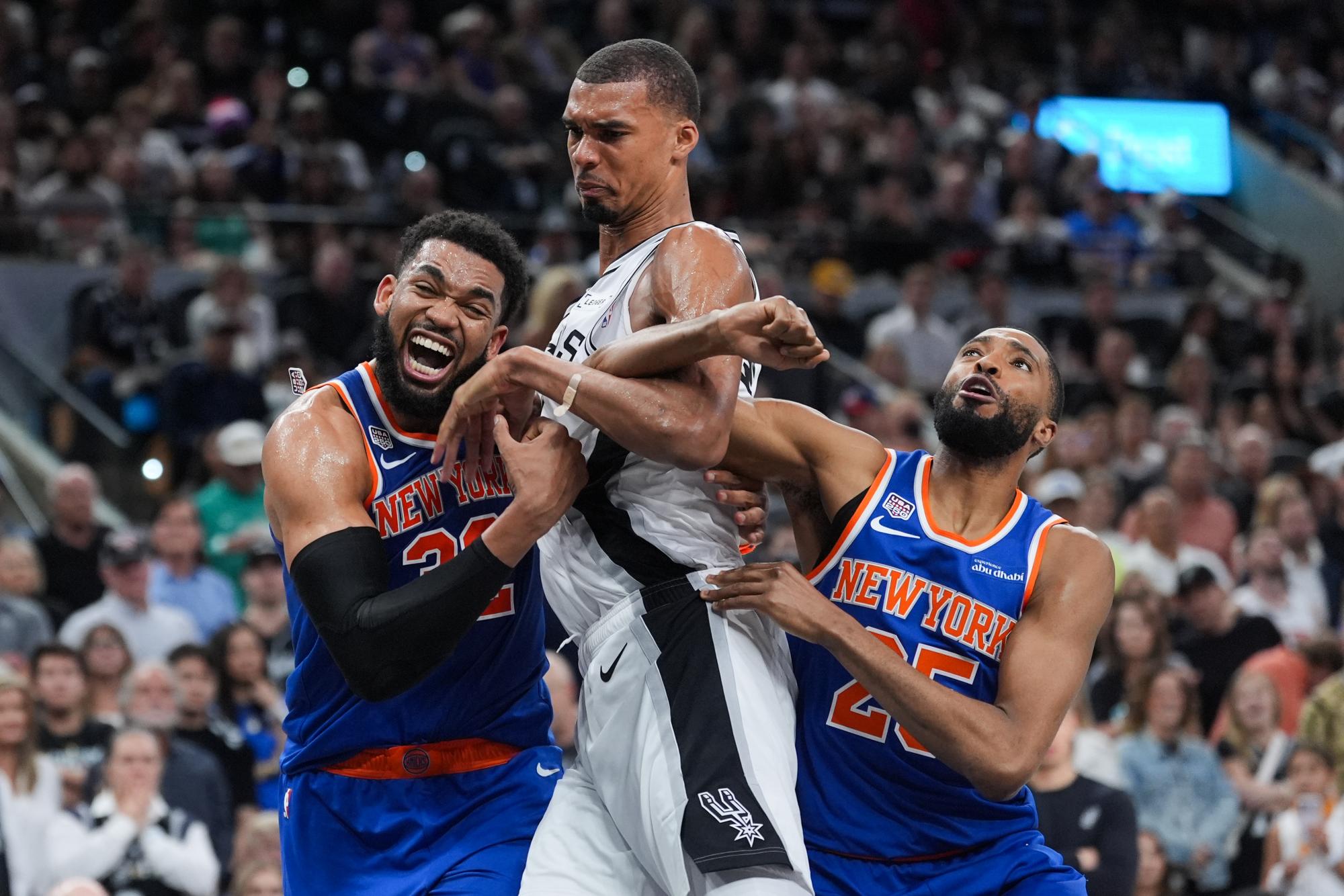
Friday night saw the Knicks, in a squeaker, grab their second road win against the San Antonio Spurs, leaving the young Texas squad—and the wider NBA—in a real pickle. It wasn’t a dominant show, far from it; more like surviving a street fight with a couple of scraped knees. Yet, here they’re: up two-zip in the NBA finals, a feat not managed by a visiting team to start the series since the 1995 Houston Rockets, according to the official NBA archives. That’s a statistic that probably stings down in San Antonio right about now, proving that sometimes, history has a way of being uncomfortably inconvenient. [QUOTE_PLACEHOLDER]
Anyone who watched the nail-biting Game 2 understands the stakes. San Antonio’s phenom, Victor Wembanyama, a player carrying the hopes of French basketball—and indeed, significant portions of the global hoops diaspora—had a chance, a real shot. We all saw it. His clean look from the elbow at the buzzer rattled off the back rim. So close. Just inches from altering the narrative entirely. This after a costly turnover by Spurs star Victor Wembanyama just seconds earlier. Brutal stuff, that.
Jalen Brunson, who’s been carrying this Knicks team like a prized heirloom, finished with 20 points on 7-for-25 shooting but once again provided the composure New York needed in the biggest moments. But let’s be honest, it was Karl-Anthony Towns who led the Knicks with 25 points on 8-for-12 shooting and delivered several crucial baskets down the stretch. Those baskets? They weren’t just points on a scoreboard; they were whispers of possibility in an arena of collective dread.
And boy, do New York fans know dread. The phrase, a franchise still chasing its first title since 1973
, almost understates the spiritual weight of this endeavor. Decades. They’ve endured what feels like a geological epoch of mediocrity — and outright pain. But here’s the kicker: this unexpected sprint has now extended the Knicks’ remarkable postseason run to 13 consecutive wins
, matching one of the longest single-season playoff winning streaks in NBA history. Think about that for a second. The Knicks. Longest winning streaks. Sounds like a headline from a parallel universe, doesn’t it?
It’s not just the Knicks, either. The weight of these big market teams, these storied franchises—their successes or failures often reflect something larger than just a game. They’re cultural touchstones. Look at how global the NBA’s reach is today. It’s not just a North American product; it’s an entertainment juggernaut followed by millions across the world. From the crowded cafes of Istanbul to the bustling markets of Karachi, discussions about Wembanyama’s wingspan or Brunson’s clutch shots are becoming increasingly common, mingling with debates over cricket or football. It’s an interesting evolution, seeing how these sporting sagas, born in American gymnasiums, transcend borders and resonate with fans far beyond the Atlantic, providing a distraction—a communal narrative—even amidst far more pressing, local concerns.
Because ultimately, these narratives, whether in sports or geopolitics, are about who comes out on top. It’s about aspiration. It’s about a dominant force being challenged by something fresh, something unknown—the very essence of competition. But in sports, at least, the stakes are contained to the hardwood. Thank goodness for that.
What This Means
The Knicks’ improbable 2-0 lead, while exhilarating for their fan base, carries deeper implications for the NBA’s economic landscape and, arguably, New York’s cultural capital. A resurgent Knicks franchise—one that actually wins—would inject enormous financial energy into Madison Square Garden, sparking merchandising booms, increased broadcast viewership, and a general halo effect for the league. New York City, a global financial — and cultural hub, benefits disproportionately from a winning team. It’s not merely civic pride; it’s an economic shot in the arm that can bolster everything from tourism to local spending.
However, the narrative of triumph isn’t without its shadows. For the young San Antonio Spurs, spearheaded by their extraordinary French rookie, this series represents a missed opportunity, or perhaps, an expensive lesson in the brutal mechanics of playoff basketball. No team has lifted the trophy after dropping the first two games of the finals at home,
and that’s a historical anvil hanging over them. For developing franchises, early deep playoff runs, even if unsuccessful, build invaluable experience and fan loyalty, but they can also underscore the raw chasm between potential and execution. The league, always seeking compelling narratives, gets a prime example of sustained excellence battling fresh ambition. Should New York clinch this, it solidifies the market value of historic franchises in an era where dynamic small-market teams often capture the headlines.
Consider the wider political — and economic theatre here. Major sports victories in established markets like New York subtly reinforce their global standing. They offer a digestible narrative of success — and comeback, often paralleled in business or political discourse. It reinforces an image of resilience and dynamism, both domestically and internationally. This isn’t just basketball; it’s part of the soft power projection that global cities engage in. You’re reminded of how seemingly disparate events can converge, as in the economic impact of global events like those discussed in Paredes Surge Caps Astroworld’s Quiet Reinvention, Echoing Global Economic Rebounds. The success of a city’s sports teams, in a world hyper-connected by media, isn’t trivial; it’s a piece of its larger branding strategy, a public relations coup wrapped in a uniform. And that, dear reader, is far from just a game. It’s a statement, and right now, the Knicks are screaming it pretty loud.
But will it hold? Because winning one game on a knife’s edge is one thing. Maintaining that against the combined forces of historical expectation — and relentless opposition? That’s quite another. And don’t forget the collective sighs of relief coming from all those long-suffering fans, now may finally be on the verge of ending decades of frustration
. It’s quite the show.