


Hollywood’s World Cup Dream Faces Striking Reality Check in Los Angeles
POLICY WIRE — Los Angeles, USA — The carefully orchestrated shimmer of Los Angeles’ grand entrance onto the global soccer stage might just lose some of its luster. Not from rivalries on the...

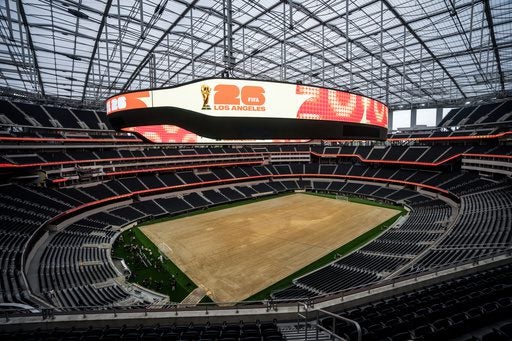
POLICY WIRE — Los Angeles, USA — The carefully orchestrated shimmer of Los Angeles’ grand entrance onto the global soccer stage might just lose some of its luster. Not from rivalries on the pitch or logistical nightmares—though those could still surface—but from the very folks poised to serve up stadium nachos and pour the pre-game brews. Less than a fortnight before the World Cup descends upon Inglewood, thousands of hospitality workers at SoFi Stadium, the epicenter of the U.S. men’s team’s initial play, have given their union the green light to call a strike. It’s not a definite walkout, no, but it’s a powerful threat that casts a long, unwelcome shadow across the glittering promises of a major international sporting event.
Picture it: the cameras are rolling, fans are pouring in from every corner of the globe, and the city that perfected the art of the illusion is staring down a potentially very real labor dispute. Some 2,000 bartenders, cooks, servers, and dishwashers are standing firm, their contract talks with Legends Global, the stadium’s food service operator, seemingly hitting a wall. And this isn’t just about a few extra dollars an hour—it’s tied to bigger, more existential worries. Yolanda Fierro, a union member, didn’t pull any punches, saying that unless a deal materializes, workers could very well strike for the June 12 match.
But the real kicker, what’s adding an uncomfortable edge to these local negotiations, is the chilling undercurrent of immigration enforcement. Fierro pointed out that workers are concerned about their wages, sure, but also their personal security on the job, particularly given the ramped-up immigration actions during President Donald Trump’s administration. Kurt Petersen, co-president of UNITE HERE Local 11, summed it up pretty starkly: [QUOTE_PLACEHOLDER] If you’re a worker in LA, struggling to pay the rent, and your workplace—or even your commute to it—feels like a potential target for federal agents, that’s a deep, personal stressor that cuts way deeper than a missed bonus.
This isn’t some abstract fear, you know. Even Los Angeles County Sheriff Robert Luna noted this week that federal authorities—the U.S. Department of Homeland Security specifically—will indeed be at the matches for security, but Luna tried to clarify, not for civil immigration enforcement. Try telling that to a population that’s heard those reassurances before, only to see enforcement priorities shift like sand dunes. Cesar Zamora, a stadium bartender, laid bare the human cost, saying, [QUOTE_PLACEHOLDER] That’s not just a personal sentiment; it’s a lament many often hear from service workers who underpin such colossal ventures, from Mumbai to Manchester.
Legends Global, who are meant to be providing an [QUOTE_PLACEHOLDER] stated they’ve got a [QUOTE_PLACEHOLDER] with the union and remain [QUOTE_PLACEER] Petersen’s characterization of talks as [QUOTE_PLACEHOLDER] doesn’t exactly paint a picture of speedy, productive dialogue. Legends has, according to Petersen, only consented to [QUOTE_PLACEHOLDER] for cooks and dishwashers, and even worse, offered wage freezes for some suite attendants and bartenders. And this is all happening while the World Cup is set to bring in heaps of cash—an estimated 72 billion USD in economic output for North America across the three host nations, according to a 2018 analysis by The Boston Consulting Group. It’s an astronomical sum that makes meager wage increases feel, well, a little insulting.
📄 POLICY WIRE WHITEPAPER PUBLISHED: PAKISTAN'S NATIONAL SECURITY POLICY PRIORITIES
👉 READ BY CLICKING HEREAnd there’s more to this labor struggle than just money. The union’s pushing for critical protections against subcontracting and, significantly, those looming federal immigration raids. This struggle, for the right to fair pay — and a sense of safety, isn’t isolated. Community groups in other World Cup host cities, from Atlanta to Miami, are making similar appeals—they’re pushing for a temporary moratorium on U.S. immigration enforcement during the matches, worried that arrests near stadiums or at watch parties would just kill the celebratory vibe. It’s a pragmatic concern; no one wants their revelry tainted by the sight of an ICE van. But, the deeper implication here, especially for the Muslim world, and particularly for countries like Pakistan, is a sobering reflection on the treatment of migrant workers. When large-scale infrastructure projects or global sporting events—whether in the Gulf or in American metropolises—rely so heavily on an often vulnerable, largely immigrant workforce, these kinds of labor disputes and calls for protection become unfortunately routine. The rhetoric changes, but the core issues, it’s fair to say, really don’t.
What This Means
This potential strike isn’t merely an inconvenience for FIFA and SoFi Stadium; it’s a political flashpoint with serious implications for Los Angeles’ global image and, perhaps, the broader national discourse on labor. A strike wouldn’t only create an embarrassing spectacle for a city that prides itself on seamless, glamorous hosting, but it could also escalate political pressure on local and federal authorities regarding immigration policy. Consider the economic ripple effect: fans paying top dollar expect seamless service, not picket lines. Forcing a resolution might require some swift, high-level political intervention, not just corporate negotiation, because this isn’t a fight confined to a conference room. This fight’s happening on an international stage, you see, amplifying every groan of discontent. It forces a hard look at who profits most from these global extravaganzas, and who bears the quiet burden of making them happen. The optics alone could give pause to future host cities contemplating their own worker relations, ensuring that labor talks become a much louder part of the preliminary negotiations. It’s a very pointed question about global capitalism’s footprint.
But the ramifications don’t stop at the turnstiles. Because the union is specifically citing fears of federal immigration enforcement, this becomes a direct challenge to the often-opaque operations of agencies like ICE, particularly in high-profile public settings. The narrative shifts from simple wage disputes to a fundamental question of worker humanity and civic participation—whether immigrant laborers, crucial to these events, can feel secure enough to participate. And if Los Angeles, with all its liberal credentials, can’t protect its most vulnerable workers during a world-renowned event, what kind of message does that send globally? You bet it makes waves. (Silent Signals: When Gut-Feelings Influence Global Policy Decisions) This situation sets an intriguing precedent for future large-scale events in a nation where labor protections and immigration policy often find themselves on a collision course—or, put another way, it shows you what the game looks like when it’s played outside the stadium. (World Cup Jitters? Canada’s Home Advantage Hiccup Against Unranked Ireland)