


Hegseth Told Trump Iran War Is ‘Decisive Success’ Despite Stalemate, Report Claims
The Atlantic reports Defense Secretary Pete Hegseth downplayed the Iran war's stalemate to please Trump. The Pentagon denies claims of misleading the president.

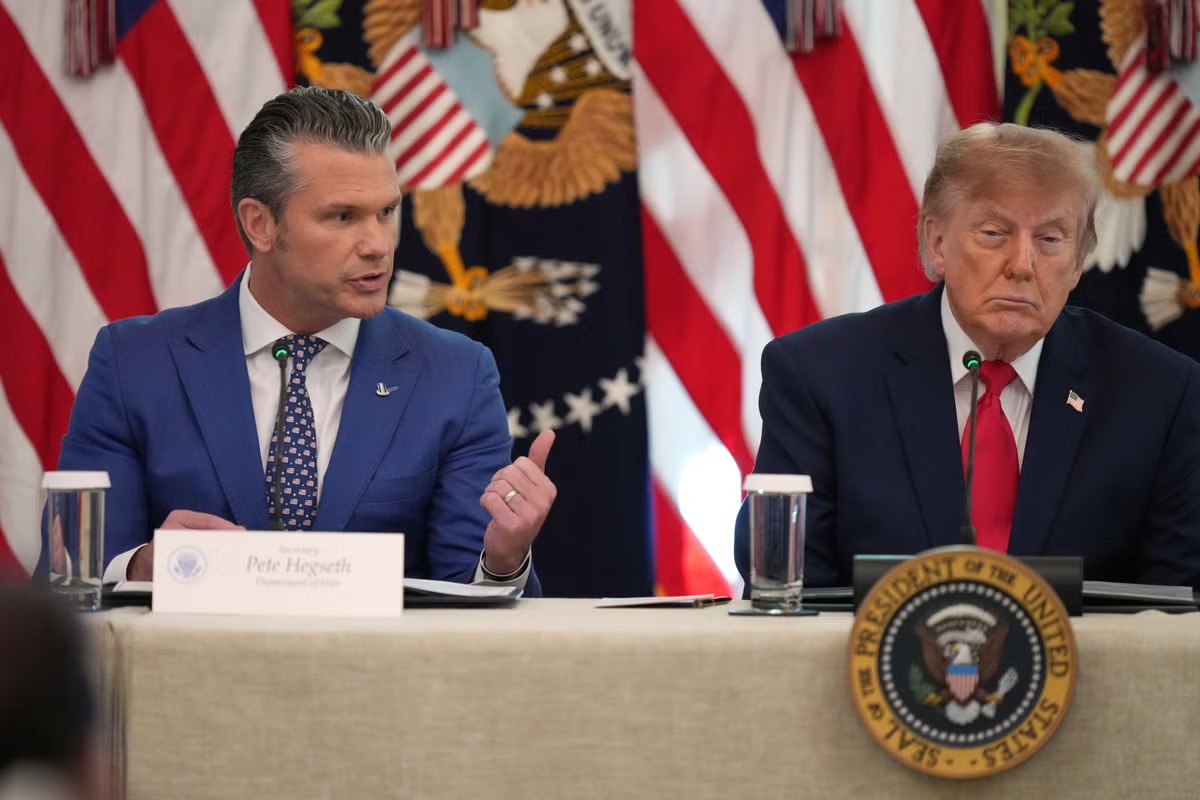
POLICY WIRE — Washington, D.C., U.S. — A new report alleges that Defense Secretary Pete Hegseth has been presenting an overly optimistic view of the ongoing conflict with Iran to maintain President Donald Trump’s favor.
According to The Atlantic, Hegseth is not viewed highly by White House insiders, who argue he often downplays the reality of a war that has been stuck in a stalemate for months.
One source, identified as an outside adviser to the president, stated that Hegseth is skilled at telling the commander-in-chief exactly what he wants to hear.
The publication also notes that Trump has recently solicited opinions from his allies regarding the performance of Hegseth and General Dan Caine, the Joint Chiefs chairman.
This behavior is historically a precursor to potential personnel changes within the administration’s military leadership.
Both Hegseth and Caine were notably upbeat during the early days of the conflict, but neither has held a public press conference since May.
The Pentagon quickly pushed back against the characterization, with spokesman Sean Parnell telling The Independent that the claims are false.
Parnell asserted that American people do not believe the magazine’s narrative, claiming that by every measurable metric, the War Department’s operations in Iran have achieved decisive success.
The spokesman argued that unlike previous presidents, Trump had the courage to end Iran’s 47-year campaign of terror and prevent nuclear acquisition.
The admitted outsiders and anonymous sources cited in this ‘reporting’ are just dead wrong, Parnell added.
He maintained that Hegseth always provides the President and senior White House leaders with the full operational picture of these historic operations.
Tensions are high as insiders told CNN last month that White House staff feared a presidential “rampage” if Republicans performed poorly in the upcoming midterms.
Hegseth was among several names mentioned as a potential scapegoat for any electoral losses in both the House and Senate.
The administration launched Operation Epic Fury alongside Israel on February 28, initially promising a resolution within weeks to deny Tehran nuclear capabilities.
Nine months later, the conflict shows no sign of ending, with at least 23 U.S. soldiers killed and thousands more wounded.
Military assets and regional allies’ defenses have also been damaged, while the U.S. economy has suffered from higher gas prices due to the Strait of Hormuz blockade.
If polls are accurate and Democrats sweep Congress, Hegseth could face an impeachment push, a risk he may be attempting to mitigate.
Reports suggest the Secretary is eyeing Marsha Blackburn’s Tennessee Senate seat as a potential exit strategy should she win the governor’s race.
Perceptions of chaos at the Department of Defense were reinforced last week by the departure of Lt. Gen. Brett Sylvia, the Pentagon’s top military planner.
Hegseth’s tenure has been marked by the removal of numerous top generals and admirals as he pursues a “warfighter” mentality and engages in internal culture clashes.
President Trump became visibly frustrated when confronted about post-midterm hostilities at a Mar-a-Lago Halloween party over the weekend.
Asked by a New York Times reporter if he intended to resume attacks, Trump huffed and said, “Why would you ask such a stupid question?”
He added, “Let’s say I did, would I tell you? Let’s say I didn’t, would I tell you? I can’t tell you that… It’s not a question for The New York Times.”
Reporting by Policy-Wire (PW)