


Ghost of Glories Past: Germany’s Football Folly a Mirror to Shifting Global Order
POLICY WIRE — Berlin, Germany — You gotta wonder sometimes if the scriptwriters for global affairs decided to dabble in sports. Because what else explains watching what many considered an unshakable...

POLICY WIRE — Berlin, Germany — You gotta wonder sometimes if the scriptwriters for global affairs decided to dabble in sports. Because what else explains watching what many considered an unshakable football titan — Germany, mind you — crumble not against a traditional powerhouse, but against a plucky side ranked 41st in the world? It ain’t just about a ball — and a net anymore, fellas. This latest sporting implosion feels bigger; it kinda hints at a broader, unsettling reordering of the world’s pecking order.
See, for generations, the very name Germany in a football tournament was shorthand for victory, or at least a damned good shot at it. They’ve clinched the World Cup four times. They’ve been in seven European Championship finals, winning three. That’s a resume most nations would practically die for. But, as we’ve learned recently — especially in places like Pakistan, where established geopolitical norms are constantly challenged and power matrices shift with unnerving frequency — past laurels don’t guarantee squat anymore. Germany’s football empire, for all its storied past, seems to be collapsing quicker than a bad stock market speculation, losing its third consecutive major tournament match. [QUOTE_PLACEHOLDER]
Their World Cup run in North America wrapped up ugly. Abruptly, if you wanna be specific. Losing on penalties to Paraguay after a 1-1 extra-time deadlock just… stings. It was Germany’s inaugural loss in a World Cup penalty shootout, after maintaining a flawless record in previous contests (four played, four won). And let’s not forget, according to FIFA rankings cited ahead of the tournament, Paraguay was languishing at 41st, a significant gap from Germany’s solid 10th spot. They’d previously struggled, couldn’t make it past the group stage twice since their last triumph in 2014. Now, the first knockout match is also their last.
It gets worse. Despite having 75% of the ball in Boston, Germany just couldn’t crack a disciplined, resolute Paraguay. Yeah, that Julio Enciso fella, the ex-Brighton man, he bagged a surprise lead. Kai Havertz nodded one home to level it up. But then Jonathan Tah’s header, moments after, got the chop, ruled out for some foul or another by a teammate. Fine, maybe a bit contentious, but them’s the breaks. Then the penalty drama: Havertz missed, Nick Woltemade flubbed his. Even after Paraguay gave them a lifeline by screwing up two of their own, Tah sent his attempt into the stratosphere. Defender Jose Canale sealed the deal for Paraguay, — and just like that, another German nightmare was born.
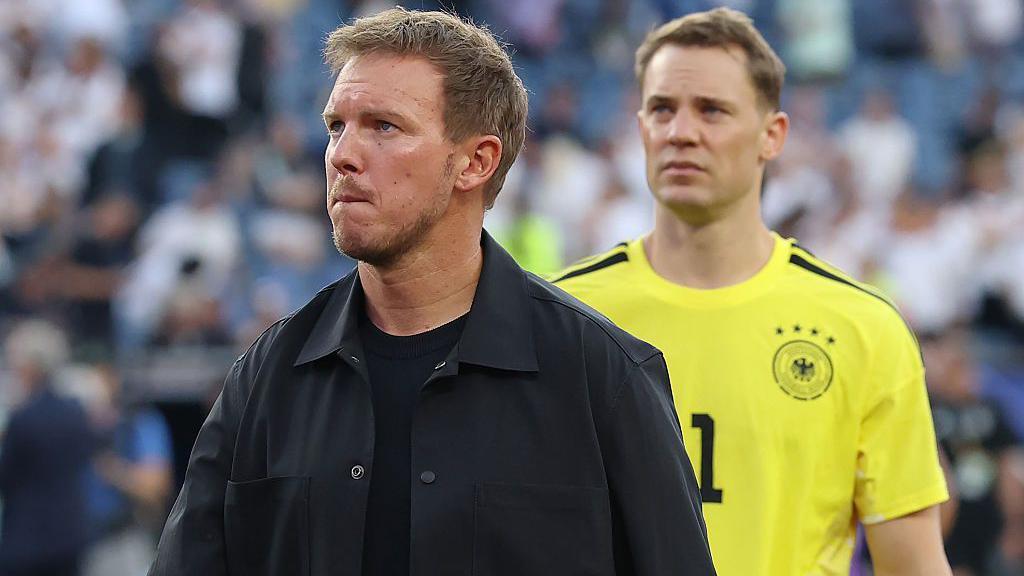
The coach, Julian Nagelsmann, sounds like a guy watching his carefully constructed sandcastle wash away. His sentiment summed it up: “When you exit the World Cup after you play Paraguay it’s very bitter. It’s very hurtful.” He continued, stating the obvious: “This is the third elimination in a row, so we’re not part of the first-class teams any more.” You could almost hear the quiet desperation in that admission. He ain’t wrong, is he?
Plenty of voices jumped on the opportunity to declare Nagelsmann toast. “Nagelsmann has to face the consequences,” observed former Germany defender Arne Friedrich on BBC Radio 5 Live. He thought the defeat was deserved, adding: “I would definitely say the journey continues without Nagelsmann.” Former midfielder Thomas Hitzlsperger echoed the sentiment, shaking his head at the whole mess. “It’s hard to explain how Germany got into this tournament with so many problems. It’s unacceptable,” he stated. For him, the coach’s performance just didn’t stack up. “It doesn’t look good for Nagelsmann. In the last few months, he hasn’t dealt with situations well.”
📄 POLICY WIRE WHITEPAPER PUBLISHED: PAKISTAN'S NATIONAL SECURITY POLICY PRIORITIES
👉 READ BY CLICKING HEREBut the coach? He’s a fighter, or at least he says so. Immediately after the game, pressed hard about his future, Nagelsmann declared himself “not someone who runs away.” He acknowledged the looming unpopularity: “If we’re going to do a survey today in Germany, people are not going to speak about me positively obviously.” And still, a defiance that only a cornered man could muster: “I’m not going to step back only because we’re eliminated. If the DFB [German football association] want me to continue, I am going to continue.” Sounds like a man making a stand, but on quicksand. His team lost two group games, beat newcomers Curacao 7-1, — and edged Ivory Coast 2-1. Not exactly World Cup winning form, eh?
Former Liverpool manager Jurgen Klopp had already warned about the methods chosen by Germany against opponents like Ecuador. He felt they were using “the wrong methods on this pitch; we played the wrong kind of football against an aggressive opponent.” Those lessons? Well, they went unheeded against Paraguay’s physical, dogged defense. And frankly, this extends beyond just German football. Global sports, like global finance, are seeing old guard stalwarts struggle against determined, adaptable challengers, whether they’re from South America or emerging economies across Asia. It’s an unpredictable ride these days, wouldn’t you say?
What This Means
This isn’t just about Julian Nagelsmann’s job; it’s about a shifting paradigm, perhaps a preview of global power dynamics writ small on the football pitch. For too long, the narrative of German, — and by extension, European sporting dominance was unchallenged. But recent performances, much like some of the economic data points we see coming out of Europe, tell a story of stagnation, of a reliance on past glory rather than adapting to current realities. What we saw in Boston is more than an upset; it’s an affirmation that established hierarchies in any field, from sports to statecraft, aren’t guaranteed to hold. Emerging nations, whether it’s Paraguay on the pitch or new economic actors challenging existing trade blocks, aren’t afraid of the big names anymore. They respect the history, sure, but they don’t “fear us any more,” as Hitzlsperger starkly put it. He noted the team has “lost that aura that made teams fear us.” This struggle to assert physical presence and an “edge” speaks volumes about an evolving international landscape where traditional powers face increasing resistance and an insistent demand for fresh approaches. It’s a sobering thought for anyone banking on yesterday’s reputation to carry them through tomorrow’s challenges.