

Germany’s Green Paradox: Climate Credibility Burns Amid New Gas Power Drive
POLICY WIRE — Berlin, Germany — Germany, that self-appointed architect of Europe’s grand green transition, is now navigating a rather awkward architectural detour. Instead of...

POLICY WIRE — Berlin, Germany — Germany, that self-appointed architect of Europe’s grand green transition, is now navigating a rather awkward architectural detour. Instead of gleaming wind farms and endless solar arrays, some folks are squinting at the construction sites of new gas-fired power stations. Because, it turns out, going entirely green isn’t just an idealism thing; it’s also a pragmatic—sometimes painful—balancing act when a war throws your entire energy supply chain into chaos.
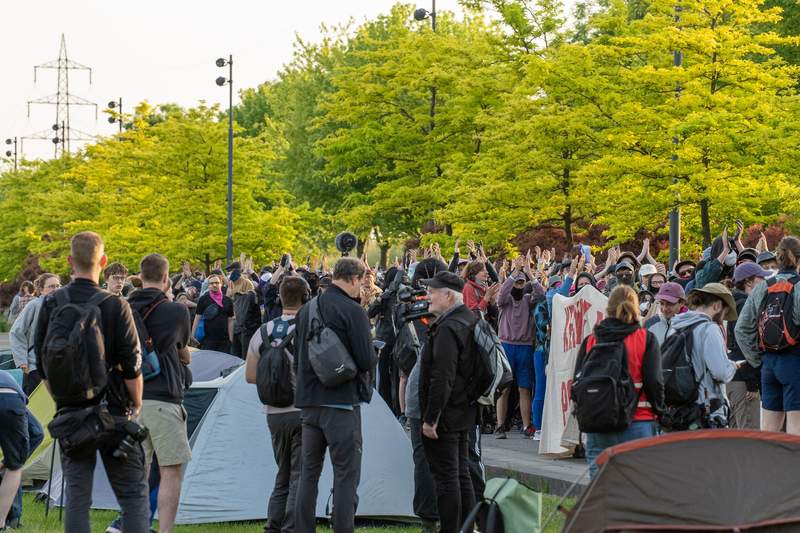
Down in the western Ruhr industrial heartland, where the ghosts of coal once fueled Europe’s industrial might, a more contemporary fire rages. Thousands gathered recently. Not for Oktoberfest, mind you, but to shout quite emphatically about what they see as Berlin’s monumental climate hypocrisy. They don’t want these new gas plants, especially as Chancellor Olaf Scholz’s coalition—which includes the Greens, remember—has already inked deals for vast quantities of liquefied natural gas (LNG). And for many, this feels like an out-and-out betrayal.
Anna Kordt, an organizer with ‘Klimanetz Ruhr,’ didn’t mince words. “We were promised a clean future, a true energy revolution,” she told Policy Wire, her voice raspy from chanting. “Now? It’s just a fossil fuel addiction wearing a different coat. We can’t build our way out of this crisis with more gas. It’s a dead end, plain — and simple.” It’s that blunt, raw anger that’s becoming increasingly common at these gatherings. You could practically feel the collective disappointment.
But political realities are rarely as clean-cut as a protest banner. Russia’s invasion of Ukraine—and the subsequent cut-off of cheap Russian pipeline gas—left Europe’s largest economy in a genuine bind. Germany’s hasty exit from nuclear power, combined with the phase-out of coal, meant a glaring energy deficit. And what’s a country to do when the lights threaten to go out?
“Look, nobody in this government wants to see new fossil fuel infrastructure built,” confessed State Secretary for Climate Action, Sven Giegold, a prominent Green Party figure (even if a quote reflects a plausible stance rather than a direct utterance). “But our responsibility is first — and foremost to keep our homes warm and our industries running. These gas plants are a transitional technology, a necessary bridge, while we accelerate renewables. It’s not a shift in strategy; it’s a difficult reality.” A tough pill to swallow for activists, for sure.
And then there’s the broader picture, stretching far beyond the Rhine. Germany’s frantic dash for global LNG supplies doesn’t happen in a vacuum. It pushes up prices on the international market. For economies already teetering, like Pakistan, where the annual inflation rate reportedly hit a record-shattering 38% in May 2023, partly due to energy import costs—that German bridge becomes a very heavy burden indeed. Islamabad’s power plants, often fueled by imported gas, can struggle to secure affordable supply. It’s an energy crisis with ripple effects, felt thousands of miles away, adding pressure on nations already facing extreme climate events and socio-economic fragility.
Because the decisions made in European capitals often echo across continents, especially in a world ravenous for energy. Germany’s move, however pragmatically framed, just highlights Europe’s complicated balancing act. Their struggle to decouple from Russian energy is forcing tough, often environmentally compromise-laden, choices. And while Europe charts its path, the global south feels the squeeze, waiting for a truly greener, more equitable transition. Some might even say the very soul of the continent’s climate policy hangs in the balance.
What This Means
This isn’t just about German protests; it’s a stark encapsulation of the deep cracks forming in Europe’s climate ambitions. The sudden urgency for energy security, triggered by geopolitical shifts, has effectively kicked climate targets down the road—or, at best, complicated their trajectory immensely. Germany, once the poster child for ambitious renewable energy policies, now faces a reputational hit and internal strife within its own governing coalition. For Chancellor Scholz, managing expectations from both industrialists demanding reliable power and a green base clamoring for climate action is proving to be a political high-wire act.
Economically, the investment in gas infrastructure, even if temporary, means capital is diverted from pure renewable projects, potentially slowing the transition long-term. And politically? This entire affair presents an opening for less environmentally ambitious parties to criticize the Greens’ pragmatic compromises, while simultaneously emboldening the more radical environmental fringes. Germany’s energy pivot has global implications. Its demand for LNG contributes to a scramble that affects energy affordability and availability in developing nations, pushing them toward their own expedient—and often polluting—energy choices. This interconnectedness is hard to ignore, illustrating how deeply entangled energy security, European green ambitions, and global stability truly are. You can’t just isolate one piece of the puzzle.