

French Heatwave Brawls: Climate Stress Exposed
France's extreme heatwave led to supermarket brawls over AC units. Discover how climate stress, inequality, and resource scarcity are pushing even wealthy societies to their limits.

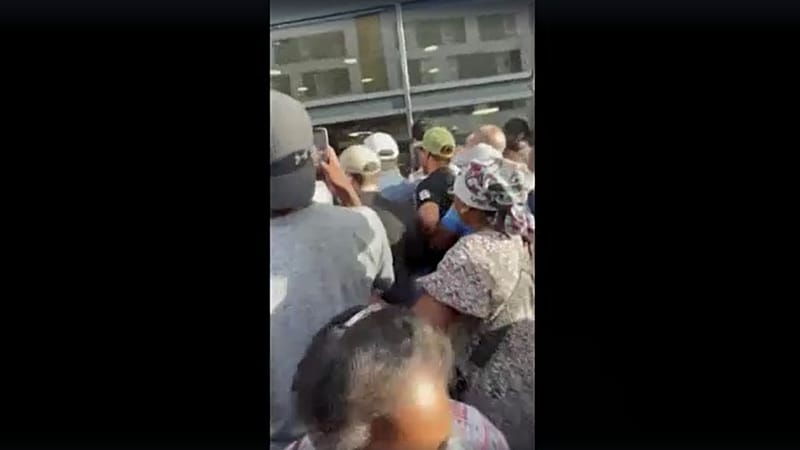
POLICY WIRE — Paris, France — It started, as many modern spectacles do, with a tweet—a short, shaky video clip capturing not the elegance of French consumerism, but its raw, frantic underbelly. Shoppers, ordinarily reserved in their pursuit of groceries, weren’t politely queuing for croissants or artisanal cheeses. They were, in no uncertain terms, tussling for the last portable air conditioner. Not in some beleaguered, emerging market, but right here, in the heart of economically developed France, at a discount supermarket chain.
The scene, replicated across multiple Lidl stores from Lyon to Lille, depicted an unexpected, if rather unsettling, shift. Imagine the precise choreography of supermarket trolley traffic giving way to outright brawling over cooling units, each a temporary shield against an encroaching, relentless heatwave. The country was simmering, temperatures persistently soaring into the high 30s and low 40s Celsius, turning daily life into a sweaty endurance test. And folks were simply losing their collective cool, literally — and figuratively. [QUOTE_PLACEHOLDER]
It wasn’t an isolated incident. Reports from various outlets cataloged dozens of instances of frayed nerves — and physical altercations. The irony isn’t lost on observers: a nation famed for its revolutionary spirit, its grand philosophical traditions, now sees its citizens exchanging blows over basic comfort appliances. It’s a snapshot, albeit a chaotic one, of how easily civility erodes when primal needs are stoked by environmental extremes.
For weeks, France—indeed, much of Western Europe—had been baking under what meteorologists were already tagging as one of the hottest summers on record. But for some, particularly the elderly or those in apartments ill-equipped for such thermal assaults, a personal cooling unit became more than a luxury; it was a perceived necessity. And when a limited supply hit the shelves of budget retailers, the predictable became utterly unglued.
The phenomenon at Lidl stores points to more than just high temperatures. It whispers about income inequality, too. High-end department stores likely saw an orderly, if brisk, sale of premium units. But at Lidl, where bargains beckon — and household budgets are tighter, the competition was fierce. It’s an inconvenient truth: climate adaptation often comes with a price tag, one that not everyone can comfortably afford.
This European struggle—for it truly is one—draws some stark, if ironic, parallels to experiences routinely faced thousands of miles east. In places like Pakistan or parts of Bangladesh, extended heatwaves, often exceeding 45 degrees Celsius, combined with widespread electricity blackouts, routinely plunge communities into humanitarian crises. It’s not uncommon for daily life there to become a battle against nature, sometimes with even graver outcomes than a supermarket skirmish. The French scuffles, in their minor scale, can feel almost quaint when compared to the daily desperation of, say, Karachi’s power outages during Ramadan in July. Yet, the underlying driver—a climate-driven scramble for essential resources—is strikingly similar, stripping away the thin veneer of modernity and reminding us of our shared vulnerability.
📄 POLICY WIRE WHITEPAPER PUBLISHED: PAKISTAN'S NATIONAL SECURITY POLICY PRIORITIES
👉 READ BY CLICKING HEREA recent analysis published by Statista indicates that over the past decade, the average number of heatwave days in France has increased by 75 percent. That’s a dramatic climb, — and it suggests these ‘unprecedented’ events are becoming distressingly commonplace. So while the brawls in aisle five might seem like a quirky news item, they’re actually a pretty grimy canary in the coal mine.
It isn’t just about French retailers. It’s about how societies—even wealthy ones—cope when their systems are pushed to their limits. Governments here aren’t just grappling with energy costs; they’re navigating human psychology under stress, a variable far trickier than economic models predict. And no, you won’t find economists predicting consumer free-for-alls in quarterly reports.
What This Means
The sporadic, violent episodes in French Lidl stores over portable air conditioners, while perhaps comedic from a distance, symbolize a brewing cauldron of socio-economic and political challenges that governments cannot afford to ignore. Economically, they expose how inflation, combined with climate-driven demand, places disproportionate strain on lower-income households. People can’t always afford central air, nor the electricity to run it full-blast if they’ve it, so these cheaper, albeit temporary, solutions become hyper-contested commodities. It highlights a burgeoning market for resilience infrastructure—both personal and communal—that governments will increasingly be pressured to subsidize or provide. We’re talking cooling centers, better insulated public housing, and revised urban planning to combat the ‘heat island’ effect. The short-term demand shocks on retail supply chains are just the beginning.
Politically, these scuffles are an unscripted dress rehearsal for what could be broader civil discontent if climate change impacts continue to intensify without adequate state responses. When citizens resort to physical confrontation for basic comfort, it’s a stark indicator of diminishing trust in collective solutions or perceived governmental inaction. For one, it challenges the romanticized notion of a harmonious European society, showcasing instead a fragile veneer of order that quickly crumbles under climatic pressure. it adds urgency to international climate agreements — and adaptation strategies. It isn’t just distant nations facing resource wars; it’s increasingly happening in developed countries, turning consumer aisles into flashpoints. And yes, it suggests that even in wealthy nations, we’re not so different from those parts of the world where extreme weather is a fact of life, often sparking societal friction. The lessons gleaned from countries grappling with severe climate impacts could suddenly become quite relevant to European policy makers.