


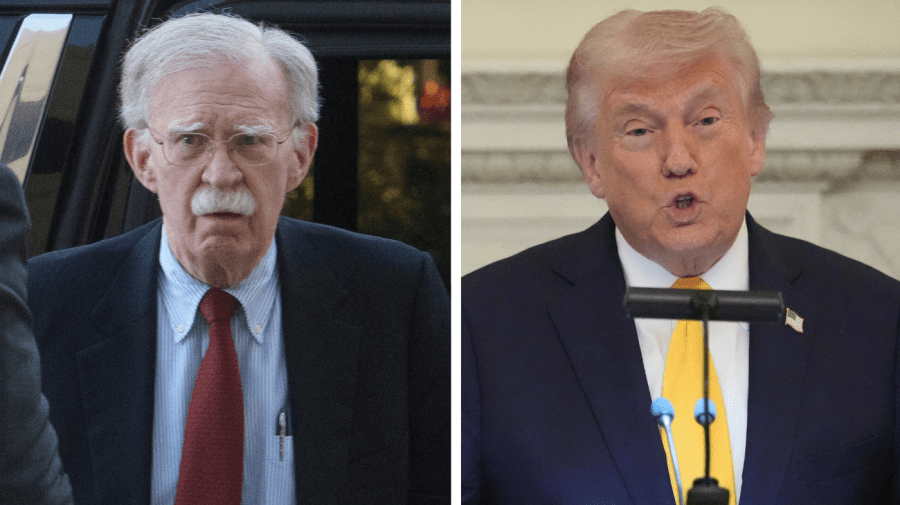
Fraying Loyalties: Former National Security Adviser’s Plea Rattles D.C.
POLICY WIRE — Washington D.C., USA — Just when one might think Washington’s capacity for political theatre had reached its nadir, another act begins, drenched in familiar recrimination. It...

POLICY WIRE — Washington D.C., USA — Just when one might think Washington’s capacity for political theatre had reached its nadir, another act begins, drenched in familiar recrimination. It isn’t the scandal itself that holds much novelty these days, but rather the sheer bluntness of the principal actor’s critique.
An architect of America’s security architecture—once a trusted confidant at the highest echelons—has pleaded guilty. This isn’t just a routine legal maneuver; it’s a seismic tremor through the delicate, often shadowy, foundations of presidential loyalty. We’re talking about someone who sat at the very core of sensitive national security deliberations, now acknowledging culpability in a manner that seems to have profoundly rankled his former commander-in-chief.
The President, never one to mince words or soften a perceived slight, didn’t hold back. His reaction? Pure, unadulterated public castigation, broadcast across his preferred digital pulpit. It wasn’t merely a statement of disapproval; it was an unequivocal demand for punitive action. And it left no ambiguity about what fate he envisioned for the man who once whispered strategies into his ear. [QUOTE_PLACEHOLDER] read the digital decree.
It’s a declaration that raises more than eyebrows; it throws gasoline on an already smouldering inferno of questions surrounding the independence of the justice system and the intense personal dynamics that inevitably color federal prosecutions of former officials. After all, when a former top aide admits wrongdoing, the reverberations aren’t confined to a courtroom; they splash onto the political landscape with surprising force. The implication, for some, is clear: a plea isn’t just a concession of guilt; it’s a betrayal, to be met with maximal retribution. It’s a rough business, this governing thing.
But the raw immediacy of the presidential comment also reveals a discomforting truth about contemporary American politics: a zero-sum game where personal loyalty often eclipses institutional decorum. This former national security adviser, once indispensable, now finds himself politically excommunicated, publicly shamed by the very power he served. Such an abrupt fall from grace, and the open call for a severe penalty, presents a rather stark illustration of the consequences of crossing—or being perceived to have crossed—a certain line in this administration.
Consider the international ripple effects of such open hostility within former administrations. Nations, particularly those navigating complex geopolitical currents, pay attention. In countries like Pakistan, for instance, where political fidelity and public accountability are often debated against a backdrop of deep historical divisions, the sight of a US president publicly condemning a former top adviser isn’t just news; it’s fodder for discussion on the fragility of institutions, even in established democracies. It begs the question of where the true power lies, — and how secure any position might truly be.
the frequency of such public feuds within US leadership circles doesn’t exactly project an image of unwavering stability. For observers in the Muslim world, watching these internecine struggles unfold, it can lead to further questions about the consistency and predictability of American foreign policy. How can one rely on assurances or long-term strategic partnerships when the internal architecture of US power appears to be perpetually in flux, vulnerable to such intense, personalistic clashes? It’s a point not lost on foreign ministries. Over 90% of federal criminal cases in the United States are resolved by plea bargain, according to data from the Bureau of Justice Statistics, yet rarely do they elicit such public, presidential anathema.
📄 POLICY WIRE WHITEPAPER PUBLISHED: PAKISTAN'S NATIONAL SECURITY POLICY PRIORITIES
👉 READ BY CLICKING HEREWhat This Means
This whole situation isn’t just juicy tabloid fare for cable news. It’s got layers, deep and uncomfortable. For one, it intensifies the perception of a weaponized justice system, or at least one whose outcomes are eagerly awaited—and often celebrated—by political figures. When a president, past or present, openly demands harsh treatment for an adversary, it muddies the waters of judicial impartiality. It puts implicit pressure on the system, regardless of intent, to deliver a particular kind of justice. And that’s not exactly what justice is supposed to be about, is it?
Politically, it reinforces the tribalism that defines much of today’s discourse. Any defection, or even perceived disloyalty, is met with an immediate, unforgiving response. There’s no room for nuanced disagreement; only friend or foe. This stance inevitably narrows the circle of trusted advisers, preferring unquestioning allegiance over independent counsel. Such an environment, one could argue, isn’t conducive to sound policymaking—especially when the stakes involve national security.
Economically, there’s not a direct market reaction, but confidence is a funny thing. Continued public infighting at the highest levels, the perception of unstable government functions—they’ve got a way of making investors, domestic and foreign, just a touch more cautious. It hints at a fundamental unease at the core of government, which can eventually, albeit subtly, trickle down into broader economic uncertainty. Stability, even of the political variety, counts for something. And this, my friends, ain’t it. It’s more of a warning shot, frankly, about the fragility of political alliances and the long shadow of past administrations.