



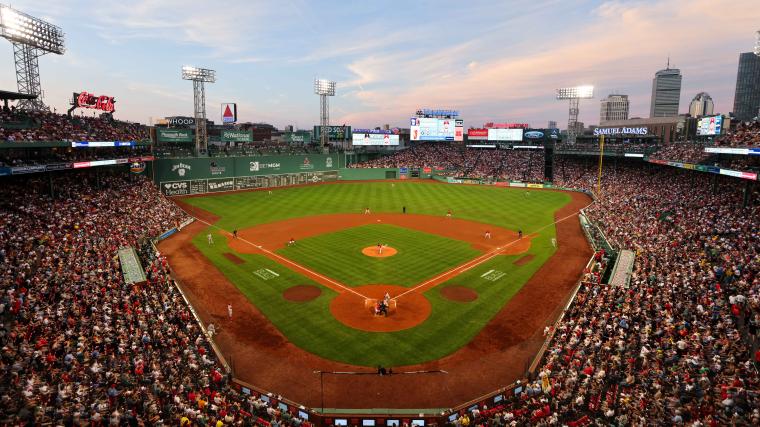
Fenway Fiasco: Boston’s Curious Contradiction at Home
POLICY WIRE — Boston, USA — Across the bustling globe, from the passionate cricket stadiums of Lahore to the grand, storied arenas of North America, sports often serve as an emotional barometer for a...

POLICY WIRE — Boston, USA — Across the bustling globe, from the passionate cricket stadiums of Lahore to the grand, storied arenas of North America, sports often serve as an emotional barometer for a region. They’re more than just games; they embody collective identity, community spirit, and sometimes, a frustrating, perplexing inconsistency that defies all logic. Boston, for all its boisterous self-confidence, now finds itself grappling with such an enigma, as its celebrated Red Sox stumble awkwardly within the friendly confines of their very own ballpark.
It isn’t a slump; it’s an absolute freefall—a perplexing abandonment of Fenway Park as a bastion of Bostonian grit. Fans watching on don’t just see a few bad games; they’re witnessing a team that just can’t seem to get out of its own way when the Green Monster looms large. It’s got a lot of folks scratching their heads, and honestly, wondering if anyone in the front office actually looked at a calendar or a roster before putting this crew together.
The Red Sox were a frightful mess at home even before this latest indignity. Following a rather thorough sweeping by the Minnesota Twins, their home record sits at an astonishing 8-17 with a minus-23 run differential at home this year. That’s a real kicker, putting them dead last. We’re talking about a team that, even with a rotating cast of characters, usually makes opponents shiver when they step onto that peculiar patch of green. Not anymore, it seems. And that’s a brutal pill to swallow for a fan base that’s known such triumph.
The stats tell a grim story, devoid of the usual Fenway magic. The club has managed just [QUOTE_PLACEHOLDER]—that’s not just a rough patch, it’s an abyss. They’ve managed to capture [QUOTE_PLACEHOLDER], a reality described as [QUOTE_PLACEHOLDER] This wasn’t some ancient history, mind you. Just last year, in 2025, Boston was riding high, claiming a commanding [QUOTE_PLACEHOLDER] record. That success hasn’t carried over into 2026, an observation that feels like an understatement.
What the heck happened? Pundits are floating theories, but one stands out with stark clarity: the team’s build just doesn’t fit the venue. [QUOTE_PLACEHOLDER] You heard that right. This hallowed ground, built for blasting baseballs into oblivion, now hosts a team designed to prevent such a thing. That’s a square peg in a round hole, folks. As NBC Sports analyst Michael Holley quite rightly pointed out, [QUOTE_PLACEHOLDER] But he then added the critical context: “And if you have common sense, you build your team around the quirky ballpark that you have.” This team, alas, didn’t heed that advice.
Boston’s lost its heavy artillery. Having parted ways with powerhouses like Rafael Devers and Alex Bregman within the last calendar year, the roster is decidedly short on sluggers—especially the right-handed bats that typically feast on Fenway’s quirks. So, while other teams come to mash, the Sox are, well, not. The team is currently [QUOTE_PLACEHOLDER] That’s not a championship offense; that’s barely a professional one. It’s a road show masquerading as a home squad. Their [QUOTE_PLACEHOLDER] speaks volumes about this tactical blunder. The irony isn’t subtle; it’s a gut punch.
What This Means
The malaise gripping Fenway Park transcends the foul lines. A chronically underperforming home team in a major sports market like Boston carries tangible economic and political ripples. Economically, fewer wins mean fewer full stands, less merchandise sold, and less foot traffic for the businesses nestled around the historic park. It’s not just a problem for the franchise; it’s a direct hit to the local economy, dampening the usual spring and summer influx of tourist and local dollars that sports teams often attract. Think of it: an off-year for a significant cultural institution impacts countless smaller players. Policy-makers, especially in cities like Boston where sports teams are so deeply entwined with urban identity, tend to keep a watchful eye on such downturns, though rarely publicly acknowledging their broader political implications. Public morale can be a strange, fickle thing, often bolstered by shared triumphs — and eroded by persistent let-downs.
For nations globally, from Pakistan’s fervent dedication to cricket to Japan’s disciplined reverence for baseball, sports teams aren’t merely enterprises; they’re expressions of national or regional pride. A consistent home team dominance, like the Red Sox once boasted, fosters a sense of collective achievement, a rare unifying force in an often-polarized political landscape. This current misstep, therefore, reflects a sort of mismanaged policy — a failure of strategic alignment. The front office’s strategy, seemingly well-intentioned for generalized baseball, has proven to be spectacularly unsuited for its unique operating environment, Fenway. It’s a textbook example of how a one-size-fits-all approach, applied to a context requiring bespoke solutions, can lead to costly and frustrating underperformance. Perhaps, when it comes to national pastimes, a little more common sense, as Mr. Holley suggests, could serve everyone – from fans to policymakers – rather well. But then, we often find common sense is the least common commodity in any arena, be it sports or politics.
