


Fentanyl Fiasco: New Mexico Battles DEA Over Alleged Inaction, Ignites Political Firestorm
POLICY WIRE — Albuquerque, New Mexico — It’s a particularly chilling scenario: the very agency sworn to protect communities from narcotics allegedly stood idly by, observing a torrent of deadly...

POLICY WIRE — Albuquerque, New Mexico — It’s a particularly chilling scenario: the very agency sworn to protect communities from narcotics allegedly stood idly by, observing a torrent of deadly fentanyl infiltrate state lines. This isn’t the stuff of B-grade crime dramas; it’s the increasingly stark reality emerging from New Mexico, where state leaders are now in open confrontation with the federal Drug Enforcement Administration.
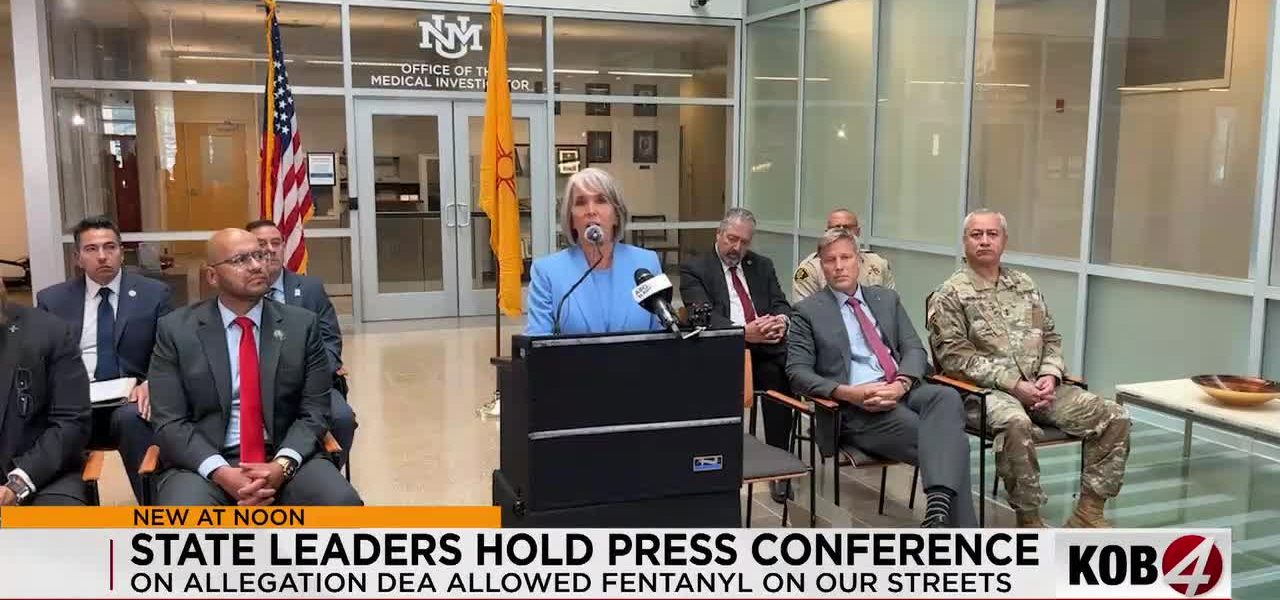
Because, really, how does a law enforcement agency square the circle of letting illicit drugs run free? That’s the unnerving question echoing across the desert air. New Mexico Gov. Michelle Lujan Grisham, with a steely resolve that didn’t brook much argument, laid the blame squarely at the DEA’s feet this week. She hasn’t just suggested it either; she’s vowing a direct appeal to the White House itself, though, she notes, more tangible evidence is still needed to solidify the claims and determine if these tactics persist. [QUOTE_PLACEHOLDER]
The core of the matter, as presented at a recent news conference featuring Grisham alongside Albuquerque Mayor Tim Keller and Bernalillo County District Attorney Sam Bregman, involves accusations so outlandish they’d typically invite guffaws if not for their grim implications. A whistleblower — we’re told — has stepped forward, claiming the DEA allowed hundreds of thousands of fentanyl pills into New Mexico over a multi-year period. This wasn’t some unfortunate oversight. Oh no. The allegation suggests it was a calculated move, all part of a larger, long-game strategy to build bigger cases against drug traffickers.
One might wonder, what sort of public safety calculation deems allowing vast quantities of a substance potent enough to kill with a few grains a worthwhile precursor to an arrest?
It’s a bizarre twist in the seemingly unending war on drugs, an echo of historical quandaries where the line between controlled infiltration and outright complicity blurs beyond recognition. In places like Pakistan, navigating drug routes from Afghanistan – the world’s primary opium producer – requires its own murky dance with informal networks and sometimes unsavory contacts. Border agencies there grapple constantly with how far one can lean into illicit channels to disrupt them without becoming a part of the problem. This New Mexico revelation — while geographically distant — presents an equally fraught moral and operational tightrope. The means, however noble the supposed ends, appear to be poisoning the very well of public trust — and safety.
Gov. Grisham minced no words, stating unequivocally, The DEA stood silently by — and watched. Thousands of fentanyl pills get distributed with no arrest, no effort, no notice that we know of to anywhere else, completely complicitly online. And what we sort of know is it’s about 1.8 million over the two-year time frame, so says a whistleblower.
Yes, that’s right: 1.8 million
fentanyl pills, purportedly watched as they flooded streets. The source, as cited by the Governor, is this undisclosed whistleblower, making it a critical — if presently unverified — datum point that casts a long shadow over federal operations.
📄 POLICY WIRE WHITEPAPER PUBLISHED: PAKISTAN'S NATIONAL SECURITY POLICY PRIORITIES
👉 READ BY CLICKING HERENew Mexico Attorney General Raul Torrez didn’t waste time either, confirming on Friday that a full-blown criminal investigation is now underway. And so, the machinery of state inquiry grinds into action against an arm of the federal government, a truly remarkable inter-governmental skirmish brewing in the arid Southwest. This isn’t just a localized spat; it’s got tentacles reaching far beyond Albuquerque, hinting at systemic issues within federal drug enforcement strategies. You’ve gotta ask, doesn’t any internal alarm bell go off?
What This Means
The allegations out of New Mexico aren’t just a regional headache; they’re a potential national scandal with serious ramifications for federal-state relations and public confidence in law enforcement. Politically, this puts the Biden administration in a tough spot. They’re ostensibly fighting a fentanyl crisis, but if their own agencies are being accused of tacitly enabling its spread—even for what they might term strategic reasons—it makes a mockery of broader policy objectives. Expect intense congressional scrutiny; senators and representatives won’t stand for such revelations, particularly those whose home states are ravaged by the opioid epidemic. Economically, a flood of cheap, deadly fentanyl exacerbates public health costs, strains emergency services, and deepens the existing labor shortage crisis by incapacitating or killing productive citizens. But also, think about the immense erosion of public trust. When federal agencies tasked with protecting citizens are accused of such profound, seemingly reckless gambits, it undermines the rule of law itself. Citizens already suspicious of institutional overreach won’t easily forgive, nor should they, if these allegations bear out. It’s an inconvenient truth for agencies—sometimes, in the pursuit of the big fish, you torch the village. New Mexico leaders aren’t having any of it, — and neither should anyone else concerned about government accountability.