


EU Court Expands RT Ban: Digital Iron Curtain Rises
A new EU court ruling expands the RT ban to all "free websites," creating a digital "Iron Curtain." Explore the implications for information warfare, free speech, and global content control.

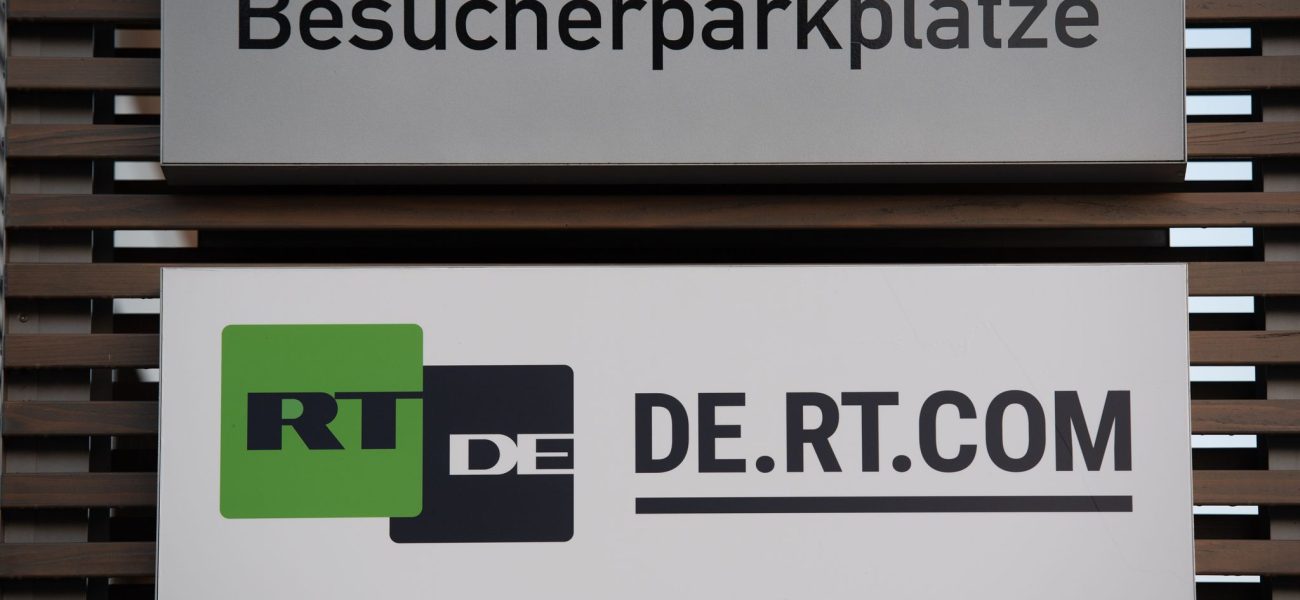
POLICY WIRE — Brussels, Belgium — Forgetting, for a moment, the predictable fury emanating from Moscow’s media channels, a seemingly arcane legal decision handed down in Luxembourg quietly reset the battlefield for information warfare this week. Europe’s General Court didn’t just reaffirm a ban on Russian state media, RT, within the bloc’s borders; it tightened the noose, clarifying this prohibition now ropes in content distributed via any and all [QUOTE_PLACEHOLDER] It’s a move that sidesteps nuance, drawing a stark line in the digital sand—or so the EU hopes—with profound, perhaps unintended, implications for how information is consumed, policed, and debated globally.
It’s no small potatoes. The initial sanctions against RT and Sputnik after Russia’s invasion of Ukraine aimed to cut off what the EU deemed propaganda arms, not legitimate news. But the digital realm’s hydra-headed nature means simply yanking official channels wasn’t enough. Content, as we all know, finds a way. And that’s where this latest ruling lands. The EU wants to stop this, plain and simple, pushing platforms to act as enforcers against indirectly distributed RT material. But that’s a mighty tall order in a world awash in content creators — and algorithmic whims. What they’re really saying is, folks like you and me—or, say, a freelance blogger in Berlin with an opinion on Russian foreign policy—could, hypothetically, face legal heat for sharing, or even linking to, an RT video that’s now buried three layers deep on a content aggregator site.
And let’s be frank, the debate isn’t merely about stopping verifiable falsehoods; it’s about controlling narratives. It always is, eventually. The court essentially endorsed the EU Council’s stance, which sees RT and Sputnik not just as news, but as a deliberate and ‘significant influence over news providers.’ It’s the kind of blunt, declarative language that raises eyebrows in certain circles. They’ve gone and called these measures ‘necessary and proportionate’ to counter what they call a ‘threat to public order and security.’ That phrase, it echoes, doesn’t it?
Consider the knock-on effects, for instance, in regions far removed from the cold realities of European geopolitics. Take Pakistan. Information ecosystems there, like much of South Asia and the Muslim world, are already vibrant, fragmented, and deeply susceptible to competing foreign narratives. Governments often struggle with balancing national security interests against media freedom. How does such a precedent set by a powerful bloc like the EU translate into that context? Does it legitimize local moves to curtail speech based on ‘public order’—a phrase, again, open to wide interpretation—under the guise of fighting foreign influence? It’s a question without easy answers, but one that policy wonks and civil liberties advocates are sure to be wrestling with, particularly as information sources fragment and diversify, challenging traditional media’s authority (for example, see how regional infrastructure woes impact even local sports reporting, as discussed in Uttar Pradesh T20 League Bounces Venues, Signaling Broader Infra Woes).
It’s important to note the court previously rejected a similar challenge from RT France, signaling a consistent judicial line. Critics have certainly not been quiet. Multiple human rights organizations have voiced concerns over media bans. They argue that these broad restrictions, even when aimed at state-controlled outlets accused of propaganda, can infringe on freedom of expression. But. The EU isn’t blinking. A spokesperson for the court confirmed the scope of the ruling includes indirect distribution of RT’s material. That means pretty much anything goes, wherever it shows up. It’s a grand experiment in digital control, attempting to bottle a global torrent.
📄 POLICY WIRE WHITEPAPER PUBLISHED: PAKISTAN'S NATIONAL SECURITY POLICY PRIORITIES
👉 READ BY CLICKING HEREJust how significant is RT’s reach, anyway? Before the widespread bans, the UK regulator Ofcom noted in a 2021 report that RT had an average weekly reach of 0.2% among British adults, according to its annual PSB Bulletin. That’s not a lot in absolute terms, but it’s consistent influence in an open media landscape. Now, try to quantify ‘indirect distribution’—good luck with that, even with the most sophisticated algorithms. This ruling is a bit like trying to put toothpaste back in the tube; an ambitious, maybe even impossible, task in the internet age. And it comes at a time when many Europeans are already weary of sanctions — and the perceived information war. Just look at the broader conversation around Europe’s Relentless Burden: Sanctions Fatigue Looms Amid Escalating Conflict for a dose of context.
But make no mistake. This isn’t merely about RT. It’s a dress rehearsal. For what? That’s the unsettling part. The EU is setting a legal benchmark, essentially equipping itself with powerful tools to define acceptable speech and content across the digital sphere, even if indirectly sourced. Who’s next on that list? What else will be deemed a ‘threat to public order’ down the road? History suggests these powers, once granted, have a habit of expanding, not retracting. We’ve certainly seen it before. The court, having spoken, leaves platforms, policymakers, and an increasingly jaded public to grapple with a world where ‘free’ online suddenly comes with a rather large asterisk.
What This Means
The EU’s judicial affirmation against RT’s digital footprint isn’t just another legal footnote; it’s a critical recalibration of how major democracies intend to combat foreign information operations, particularly those originating from adversarial states. Politically, it signals a deeper, more interventionist posture towards online content. It’s an acknowledgment that information, or disinformation, is a weapon and requires a state-level defensive mechanism, even if that means bending traditional interpretations of free speech online. Economically, this puts immense pressure on internet service providers and social media platforms—they’ll be forced to develop more robust, and undoubtedly more expensive, content moderation and compliance mechanisms. Non-compliance, presumably, means facing EU penalties. This creates a digital ‘Iron Curtain’ effect, where European internet users might experience a different, more curated web than their counterparts elsewhere. However, the legal precedent could be leveraged by less democratic regimes—in places like parts of Central Asia or Africa—to justify their own content restrictions, invoking the very ‘public order and security’ arguments now blessed by a European court. That’s a problematic mirror image for democracies to face, underscoring the tightrope walk between combating hostile propaganda and preserving a truly free internet.